Personalizing Allogeneic Hematopoietic Cell Transplantation in Adult AML Using Measurable Residual Disease Testing
measurable residual diseaseAllogeneic Hematopoietic Cell Transplantationpersonalized medicineacute myeloid leukemia
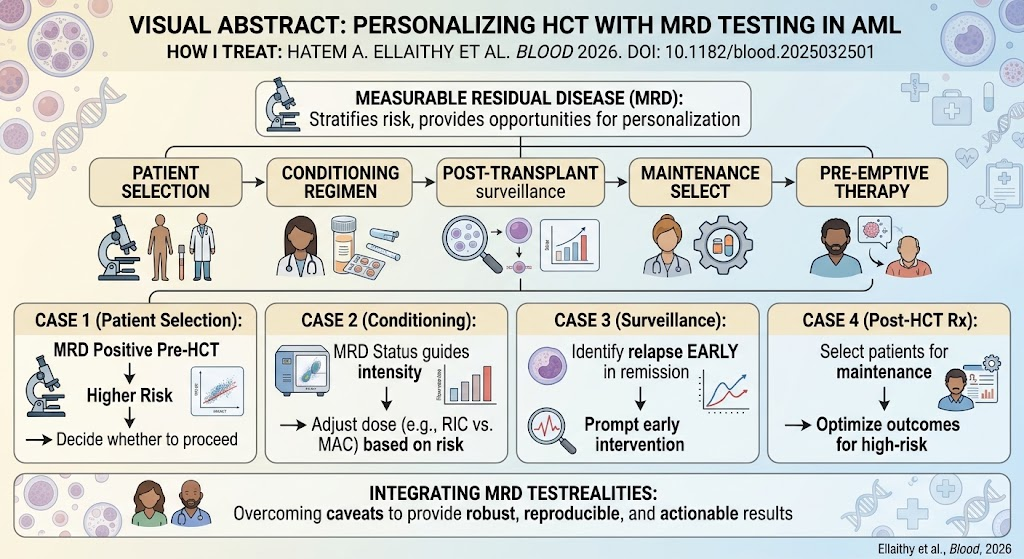
Highlight
- MRD testing stratifies AML patients in remission by relapse risk post-allogeneic HCT.
- MRD guides decisions on transplantation eligibility, conditioning regimen intensity, and post-transplant surveillance.
- Emerging MRD-based interventions include post-transplant maintenance and pre-emptive therapy to reduce relapse.
- Clinicians face challenges interpreting MRD results amid evolving methodologies and incomplete standardization.
Study Background
MedXY registered readers
Sign in free to continue reading
Create or use your MedXY account to unlock the complete article.
This article was created using several editorial tools, including AI, as part of the process. Human editors reviewed this content before publication.