We use cookies

Our website uses essential cookies and, with your consent, additional cookies to measure performance and improve our services. Cookie Policy.

You can change your choice at any time.

MMedXYNews
HomeVideos
MedXY AI/MedXY News/Section: Cardiology

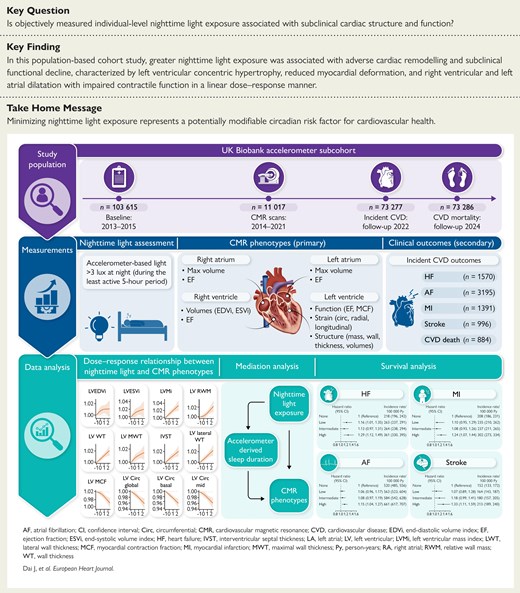
Illuminating the Night: How Nighttime Light Exposure Impacts Cardiac Structure, Function, and Cardiovascular Risk
MedXY Editorial Team•Sep 15, 2026•Cardiology
sleep durationcardiovascular riskNighttime Light ExposureCardiac Remodeling

Highlight

• High nighttime light exposure (>3 lux) associates with left ventricular concentric hypertrophy and subtle declines in myocardial function.
• Nighttime light impacts multiple cardiac chambers, including right ventricular volume increase and left atrial enlargement with reduced ejection fraction.
• These structural and functional changes correlate with elevated long-term risks of heart failure, atrial fibrillation, myocardial infarction, stroke, and cardiovascular mortality.
• Shorter sleep duration partly mediates these adverse cardiovascular effects, highlighting the role of circadian disruption as a potential mechanism.

Study Background

MedXY registered readers

Sign in free to continue reading

Create or use your MedXY account to unlock the complete article.

This article was created using several editorial tools, including AI, as part of the process. Human editors reviewed this content before publication.

Related articles

Open language-specific specialty feeds and department pages.

Proteomic and Metabolomic Insights into Cardiac Remodeling in Breast Cancer Patients Undergoing Cardiotoxic TherapyThis study identifies novel proteomic and metabolomic biomarkers linked to cardiac dysfunction and remodeling in breast cancer patients treated with cardiotoxic therapies, revealing potential pathways for early detection and intervention.Sep 19, 2026Targeting the CCND1-PDK4 Axis to Promote Reparative Macrophage Phenotype and Mitigate Post-Myocardial Infarction Cardiac RemodelingThis article discusses the role of cyclin D1 (CCND1) in promoting reparative macrophage transition post-myocardial infarction, highlighting its therapeutic potential in reducing adverse cardiac remodeling through metabolic reprogramming.Sep 19, 2026Subclinical Liver Disease as a Silent Driver of Cardiovascular Risk: Insights from a Large-Scale Prospective StudySubclinical liver disease, marked by steatosis, fibrosis, and functional impairment, independently and synergistically increases cardiovascular disease risk. Incorporating non-invasive liver biomarkers could enhance CVD risk prediction andSep 15, 2026
Loading comments...
MedXY briefing

Get the free newsletter

Evidence-led clinical news, trends, and analysis—delivered to your inbox.

Ask MedXY AI

Most popular

Intimate Health
Five Benefits for Women Continuing Sexual Activity After Menopause
Intimate Health
Why Some Women Have a Strong Sex Drive—And Why Men Shouldn't Worry About It
Nursing & care
How often should a couple have sex?
Intimate Health
Classic Intimacy Recommendations: How to Help Women Reach Orgasm and Enjoy Mutual Pleasure
Intimate Health
What Makes a Woman "Physiologically Addicted" Is Never Money, But These Two Relationship Qualities
© 2026 MedXY
Contact usAbout usPrivacy PolicyMedXY story
Menopausal Hormone Therapy and Cardiovascular Risk in Midlife Women with Vasomotor Symptoms: Insights from the SWAN Study
Initiation of menopausal hormone therapy during perimenopause or early postmenopause in women with vasomotor symptoms is associated with a reduced cardiovascular risk, especially among Black women and those starting therapy within 10 years
Sep 13, 2026
Tropical Cyclones and Acute Coronary Syndromes: Unraveling the Cardiovascular Burden in Mainland ChinaA nationwide Chinese study reveals that exposure to tropical cyclones increases acute coronary syndrome risk by 14%, delays treatment times, and disproportionately affects vulnerable populations. Coordinated public health and clinical stratSep 12, 2026
Macrotroponin Complexes and Risk of Cardiovascular Events: Implications for Cardiac Troponin Testing in Population Risk StratificationMacrotroponin complexes commonly cause discordant cardiac troponin elevations in the general population, notably troponin I, without conferring increased cardiovascular risk, underscoring the need to recognize assay interference for accuratSep 11, 2026