Decoding Pseudomonas aeruginosa Subtypes: Implications for Clinical Variability in Bronchiectasis
Introduction
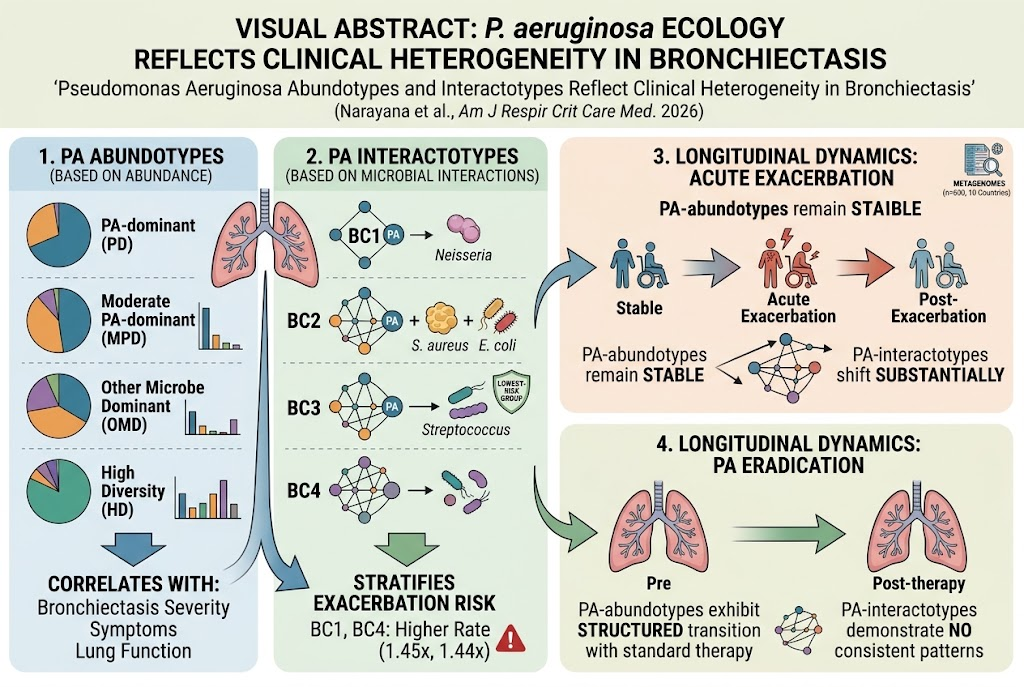
Bronchiectasis is a chronic respiratory condition characterized by irreversible dilation of bronchi, leading to recurrent infections, persistent inflammation, and progressive lung damage. Among pathogens implicated in bronchiectasis exacerbations, Pseudomonas aeruginosa (PA) holds a pivotal role due to its association with poorer clinical outcomes. However, clinical manifestations and responses to treatment in PA-colonized patients vary substantially, reflecting underlying microbial and host heterogeneity. Understanding the ecological and functional diversity of PA within the airway microbiome may clarify drivers of disease variability and guide tailored therapeutic strategies.
Study Background
Sign in free to continue reading
Create or use your MedXY account to unlock the complete article.
This article was created using several editorial tools, including AI, as part of the process. Human editors reviewed this content before publication.