Introduction
The ongoing evolution of the SARS-CoV-2 virus and emerging variants have underscored the critical need for effective and adaptable COVID-19 vaccination strategies, especially in adolescents. PHH-1V is a novel bivalent protein-based COVID-19 vaccine, distinct from mRNA vaccines, which incorporates an adjuvant to enhance immune response. Previously evaluated in adults, PHH-1V demonstrated strong immunogenicity and a favorable safety profile as a booster dose. This study focused on assessing PHH-1V as a heterologous booster—that is, a booster different from the original vaccine series—in healthy adolescents previously vaccinated with the Pfizer-BioNTech mRNA vaccine (BNT162b2).
Study Design and Methods
The HIPRA-HH-3 trial was a phase IIb, open-label, multicenter, noninferiority clinical trial involving 240 healthy adolescents aged 12 to under 18 years, all of whom had been primed with two doses of BNT162b2. The key objective was to assess whether PHH-1V administered as a heterologous booster would produce immune responses at least comparable (noninferior) to those observed in young adults (18 to 25 years old) from a previous study who had also received PHH-1V as a booster.
Immunogenicity evaluation included measuring neutralizing antibody titers against multiple SARS-CoV-2 variants of concern: Omicron BA.1 (the primary endpoint), Beta, Delta, and the original Wuhan-Hu-1 (WH1) strain. Total binding antibodies were also quantified. These assessments involved 90 adolescent participants compared to 81 young adults. Additionally, cellular immunity was evaluated by measuring T-cell responses 14 days after booster administration. Participants were monitored for safety outcomes and adverse events for up to 336 days (approximately 11 months) post-booster to assess antibody durability and adverse event profiles.
Results
PHH-1V elicited significantly higher neutralizing antibody responses in adolescents compared to young adults for all tested variants, with statistical significance (P < .001) and robust noninferiority margins (less than 1.5 fold difference). Notably, neutralizing titers against the Omicron BA.1 variant—a prevalent and highly immune-evasive form—were markedly elevated, highlighting the vaccine’s potential utility against circulating strains.
Total binding antibody levels also exceeded those in young adults, indicating a strong overall humoral response. Beyond humoral immunity, cellular immunity analysis revealed a significant increase in T-cell responses targeting the Beta and Omicron BA.1 variants by day 14 post-booster, which is important for long-lasting protection and the potential to mitigate severe disease.
Importantly, the vaccine-induced antibody titers remained well above baseline levels throughout the 336-day follow-up period, suggesting durable immunity. This is a crucial feature given waning immunity concerns with COVID-19 vaccines over time.
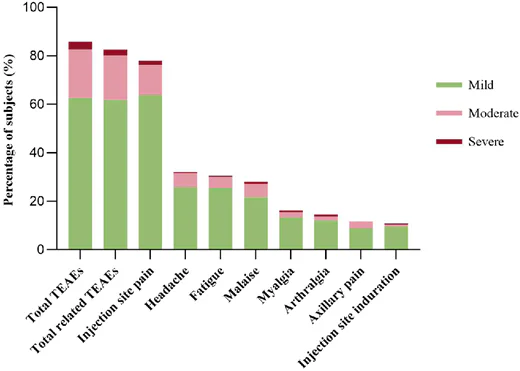
Regarding safety, adverse events (AEs) reported were primarily mild or moderate in intensity and mostly involved common reactions such as injection-site pain and headaches within 28 days post-vaccination. No serious adverse events related to PHH-1V were reported during the entire monitoring period, supporting a favorable safety profile in adolescents.
Discussion
The PHH-1V vaccine demonstrated its capacity as a heterologous booster to safely induce robust, variant-spanning immune responses in adolescents primed with the BNT162b2 mRNA vaccine. The broader neutralizing activity against variants of concern—especially Omicron, which remains a dominant lineage globally—supports PHH-1V’s potential role in updating vaccination programs to address the evolving virus landscape.
The sustained antibody and T-cell responses suggest that PHH-1V booster vaccination could confer extended protection during the critical adolescent years when social interactions and school attendance increase exposure risks. Moreover, the protein-based formulation with an adjuvant offers an alternative to mRNA platforms, which may be preferred or required in certain populations due to medical or logistic reasons.
Although the data are promising, further research is necessary to evaluate PHH-1V’s effectiveness and safety in younger children under 12 years and specific high-risk groups, such as immunocompromised adolescents or those with chronic conditions.
Clinical Implications
This study supports the consideration of PHH-1V as a heterologous booster option within adolescent vaccination strategies. Its use could potentially enhance immune coverage against current and future SARS-CoV-2 variants, contributing to broader community protection and reducing COVID-19 burden in this age group.
Healthcare providers should monitor ongoing data and official guidance as more evidence emerges, including real-world effectiveness, and adapt vaccination recommendations accordingly.
Conclusion
Administered as a heterologous booster in adolescents previously vaccinated with BNT162b2, PHH-1V is a safe and immunogenic COVID-19 vaccine that induces strong and durable humoral and cellular immunity against multiple SARS-CoV-2 variants. These findings reinforce its potential utility in adolescent immunization programs aimed at optimizing protection in the face of evolving viral variants.
Further studies focusing on younger children and high-risk adolescents remain necessary to fully establish the breadth of PHH-1V’s protective benefits.
References
Esteban Riera I, Pérez-Caballero R, Natalini Martínez S, et al. Immunogenicity and Safety of PHH-1V COVID-19 Vaccine as a Heterologous Booster in Adolescents. Pediatrics. 2026 Oct 23. PMID: 42914139. Available at: https://pubmed.ncbi.nlm.nih.gov/42914139/