We use cookies

Our website uses essential cookies and, with your consent, additional cookies to measure performance and improve our services. Cookie Policy.

You can change your choice at any time.

MMedXYNews
HomeVideos
MedXY AI/MedXY News/Section: Cardiology

Unveiling the Cardiovascular Toll of Long-Term Wildfire Smoke PM2.5 Exposure in Older Americans
MedXY Editorial Team•Sep 15, 2026•Cardiology
older adultsPM2.5cardiovascular diseasekhói cháy rừngair pollution

Highlight

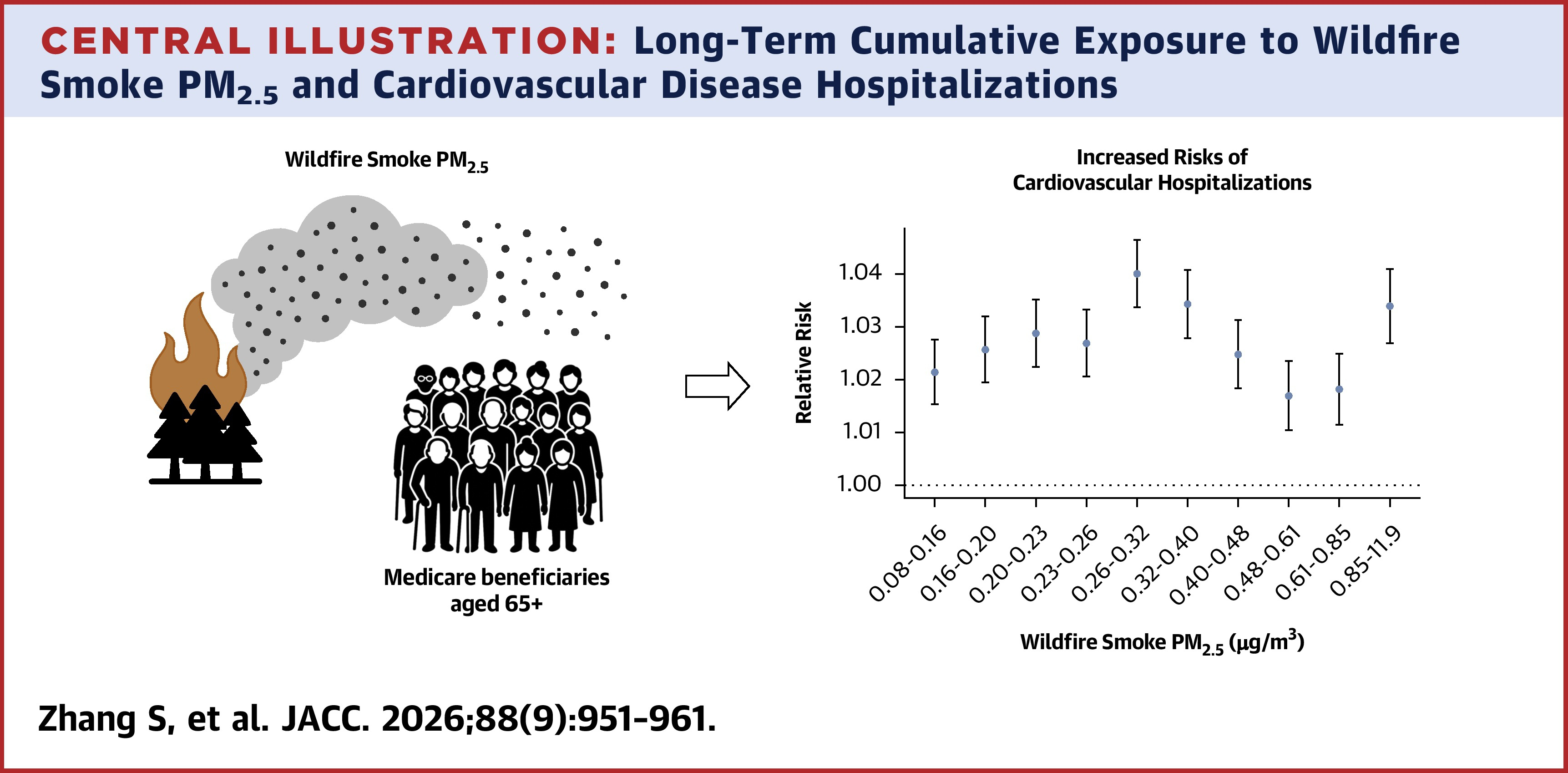
This population-based cohort study involving over 65 million U.S. Medicare beneficiaries demonstrates that long-term cumulative exposure to wildfire smoke-derived fine particulate matter (PM2.5) is associated with a measurable increase in cardiovascular disease (CVD) hospital admissions among older adults, especially ischemic heart disease and arrhythmias. The relationship shows a nonlinear pattern, with moderate exposure levels posing the highest relative risk. Lower socioeconomic groups appear more vulnerable, underscoring health disparities linked to environmental exposures.

Study Background and Disease Burden

MedXY registered readers

Sign in free to continue reading

Create or use your MedXY account to unlock the complete article.

This article was created using several editorial tools, including AI, as part of the process. Human editors reviewed this content before publication.

Related articles

Open language-specific specialty feeds and department pages.

Cardiovascular Risks of CAR-T Therapy in Older Adults: Insights from US Medicare DataAmong older adults receiving CAR-T therapy, 5.8% experienced major adverse cardiovascular events (MACE), associated with increased mortality. Pre-existing cardiac conditions heightened risk, underscoring the need for cardiovascular monitoriSep 19, 2026Rethinking Surgical Quality Metrics: The Role of Operative-to-Nonoperative Management Ratio in Elderly Emergency General Surgery OutcomesThis study analyzes how the balance between operative and nonoperative management in emergency general surgery for older adults relates to their odds of discharge home, proposing ONR as a novel quality benchmark beyond traditional metrics.Sep 15, 2026Subclinical Liver Disease as a Silent Driver of Cardiovascular Risk: Insights from a Large-Scale Prospective StudySubclinical liver disease, marked by steatosis, fibrosis, and functional impairment, independently and synergistically increases cardiovascular disease risk. Incorporating non-invasive liver biomarkers could enhance CVD risk prediction andSep 15, 2026
Loading comments...
MedXY briefing

Get the free newsletter

Evidence-led clinical news, trends, and analysis—delivered to your inbox.

Ask MedXY AI

Most popular

Intimate Health
Five Benefits for Women Continuing Sexual Activity After Menopause
Intimate Health
Why Some Women Have a Strong Sex Drive—And Why Men Shouldn't Worry About It
Nursing & care
How often should a couple have sex?
Intimate Health
Classic Intimacy Recommendations: How to Help Women Reach Orgasm and Enjoy Mutual Pleasure
Intimate Health
What Makes a Woman "Physiologically Addicted" Is Never Money, But These Two Relationship Qualities
© 2026 MedXY
Contact usAbout usPrivacy PolicyMedXY story
Designing Cardiovascular Outcomes Trials in Clonal Hematopoiesis: A Precision Medicine Imperative
Clonal hematopoiesis of indeterminate potential (CHIP) poses a novel cardiovascular risk. This article explores challenges and strategies for designing cardiovascular outcomes trials tailored to CHIP’s genetic heterogeneity and clinical com
Sep 15, 2026
Linking Air Pollution to Heart Health: Chronic PM2.5 Exposure and Coronary Endothelial DysfunctionChronic exposure to fine particulate matter (PM2.5) is linked to epicardial coronary endothelial dysfunction, an early marker of coronary artery disease, as demonstrated by invasive coronary vasoreactivity testing.Sep 11, 2026
Improved Glycaemic Control and Vascular Outcomes After MiniMed 780G Usage in Older Adults with Type 1 Diabetes: A Randomised Controlled TrialThis study demonstrates that using the MiniMed 780G hybrid closed-loop system significantly improves glycaemic management and shows a trend toward better microvascular function in adults aged 65 and above with type 1 diabetes, without increSep 8, 2026