Universal Aspirin Dispensation for Prevention of Preeclampsia in High-Risk Pregnancies: Evidence Synthesis and Clinical Implications
Highlights
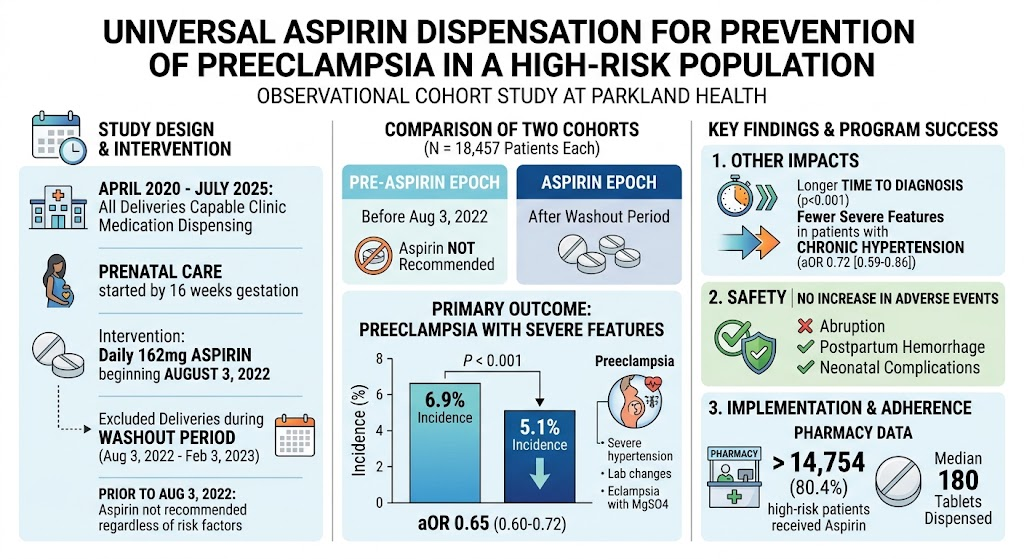
- Universal aspirin administration (162 mg daily) starting early in pregnancy reduces incidence and delays onset of preeclampsia with severe features in high-risk populations.
- Implementation of direct aspirin dispensation during prenatal visits leads to high adherence (~80%) and favorable maternal and neonatal outcomes without increased bleeding or abruption risk.
- Early aspirin initiation (before 12 weeks’ gestation) further improves hypertensive and neonatal outcomes beyond standard practice.
- Advanced first-trimester screening algorithms incorporating biomarkers (e.g., PlGF) enhance risk identification but may benefit from complementing universal aspirin strategies in high-prevalence settings.
Background
MedXY registered readers
Sign in free to continue reading
Create or use your MedXY account to unlock the complete article.
This article was created using several editorial tools, including AI, as part of the process. Human editors reviewed this content before publication.