Tobacco Use Treatment: Key Points from the 2026 VA/DoD Clinical Practice Guideline
Introduction and Context
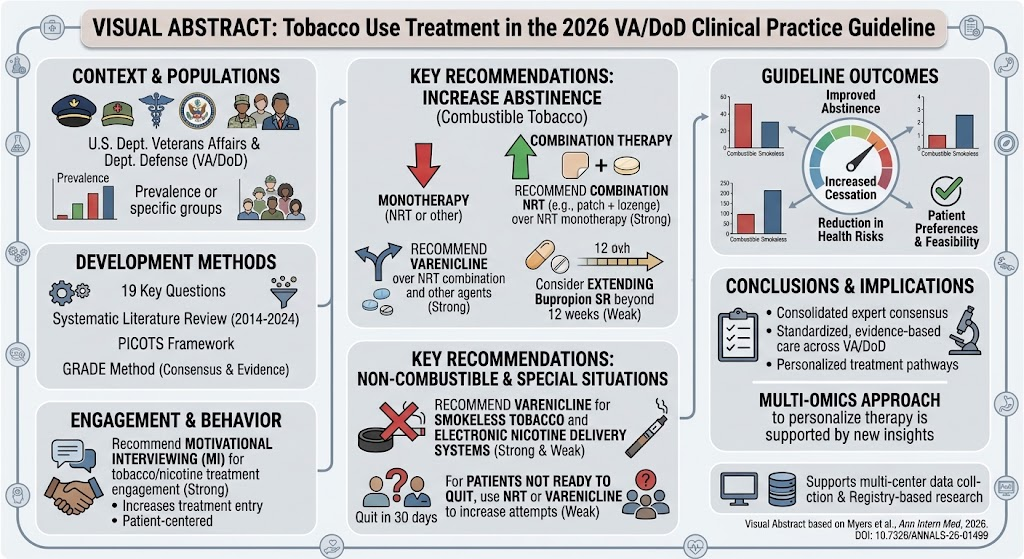
Tobacco and nicotine use remain leading, preventable causes of disease and death among U.S. adults, with particular importance in the Veterans Affairs (VA) and Department of Defense (DoD) populations given higher prevalence of combustible tobacco and high comorbidity with mental health conditions. The VA/DoD work group released a new 2026 Clinical Practice Guideline (CPG) that updates recommendations for diagnosis, counseling, pharmacotherapy, and follow-up across commercially available tobacco and nicotine products (combustible cigarettes, smokeless tobacco, and electronic nicotine delivery systems [ENDS]). The guideline addresses important clinical gaps that emerged since the prior VA/DoD guidance: accumulating randomized trial data about varenicline and e-cigarettes for cessation, stronger evidence for combination nicotine replacement therapy (NRT), pragmatic questions about treating people not ready to make an immediate quit attempt, and evolving safety and feasibility considerations in diverse VA/DoD care settings.
This synopsis distills the guideline’s scope, the evidence base, core recommendations (including strength), changes from prior guidance, committee perspectives, and practical implications for clinicians and health systems.
Sign in free to continue reading
Create or use your MedXY account to unlock the complete article.
This article was created using several editorial tools, including AI, as part of the process. Human editors reviewed this content before publication.