We use cookies

Our website uses essential cookies and, with your consent, additional cookies to measure performance and improve our services. Cookie Policy.

You can change your choice at any time.

MMedXYNews
HomeVideos
MedXY AI/MedXY News/Section: Clinical Updates

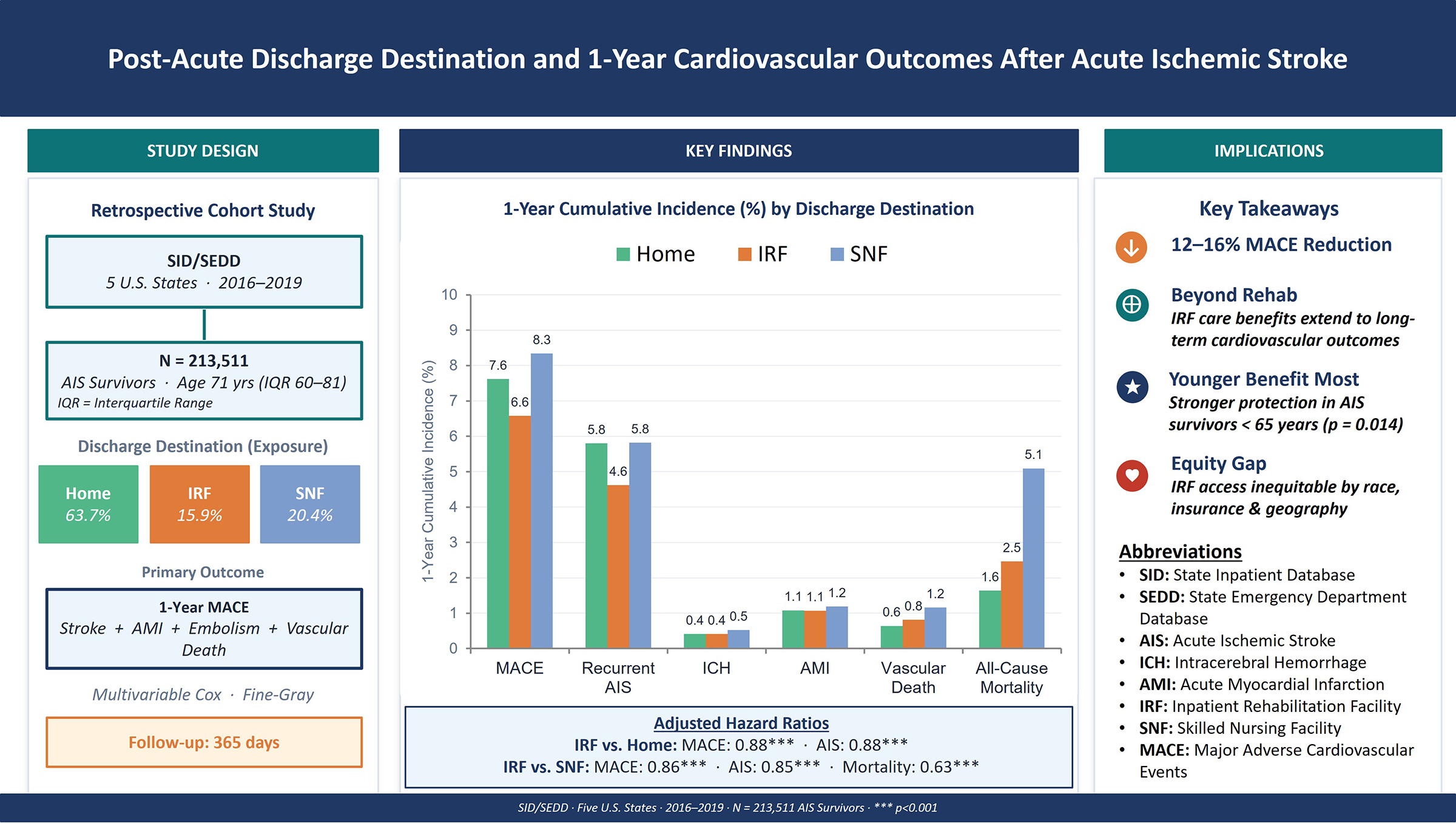
Inpatient Rehabilitation and Major Adverse Cardiovascular Events After Ischemic Stroke: Clinical Implications and Evidence Synthesis
MedXY Editorial Team•Sep 19, 2026•Clinical Updates
major adverse cardiovascular eventsinpatient rehabilitationSecondary Preventionischemic stroke

Highlights

  • Postacute discharge to inpatient rehabilitation facilities (IRFs) is linked to a significantly lower 1-year incidence of major adverse cardiovascular events (MACE) among acute ischemic stroke (AIS) survivors, compared with discharge to home or skilled nursing facilities (SNFs).
  • The protective association of IRF discharge against MACE is more pronounced in patients younger than 65 years, suggesting age-related differences in benefits of rehabilitation intensity or access.
  • Multistate, large-scale cohort evidence supports the postacute care setting as a modifiable system-level target for secondary prevention strategies following AIS.
  • Risk factors for post-stroke MACE include functional status on admission, smoking, atrial fibrillation, and facility characteristics, highlighting multidimensional intervention opportunities.

Background

MedXY registered readers

Sign in free to continue reading

Create or use your MedXY account to unlock the complete article.

This article was created using several editorial tools, including AI, as part of the process. Human editors reviewed this content before publication.

Related articles

Open language-specific specialty feeds and department pages.

Emergent Interfacility Transfers for Ischemic Stroke in the U.S.: Patterns and Implications from 2016 to 2022This study analyzes national trends in emergent interfacility ischemic stroke transfers among Medicare beneficiaries, revealing shifts in transfer rates, patient characteristics, and hospital features associated with transferred versus nontSep 19, 2026Cardiovascular Risks of CAR-T Therapy in Older Adults: Insights from US Medicare DataAmong older adults receiving CAR-T therapy, 5.8% experienced major adverse cardiovascular events (MACE), associated with increased mortality. Pre-existing cardiac conditions heightened risk, underscoring the need for cardiovascular monitoriSep 19, 2026Evaluating Stroke Risk in Asymptomatic Carotid Stenosis: Transcarotid Artery Revascularization versus Carotid Artery StentingThis comparative analysis assesses ischemic stroke outcomes in patients with asymptomatic carotid stenosis undergoing transcarotid artery revascularization (TCAR) versus carotid artery stenting (CAS), highlighting no significant differenceSep 17, 2026
Loading comments...
MedXY briefing

Get the free newsletter

Evidence-led clinical news, trends, and analysis—delivered to your inbox.

Ask MedXY AI

Most popular

Intimate Health
Five Benefits for Women Continuing Sexual Activity After Menopause
Intimate Health
Why Some Women Have a Strong Sex Drive—And Why Men Shouldn't Worry About It
Nursing & care
How often should a couple have sex?
Intimate Health
Classic Intimacy Recommendations: How to Help Women Reach Orgasm and Enjoy Mutual Pleasure
Intimate Health
What Makes a Woman "Physiologically Addicted" Is Never Money, But These Two Relationship Qualities
© 2026 MedXY
Contact usAbout usPrivacy PolicyMedXY story
Global Trends in the Burden of Ischemic Stroke Attributable to Diabetes Versus Atrial Fibrillation
This study analyzes global trends comparing ischemic stroke burdens linked to diabetes and atrial fibrillation, revealing a rising impact of diabetes-related stroke and highlighting the need for targeted interventions.
Sep 12, 2026
Tenecteplase Efficacy in Distal Cerebral Artery Occlusions: Insights From the Secondary Analysis of the TASTE Randomized Clinical TrialSecondary analysis of the TASTE trial reveals tenecteplase confers superior functional outcomes versus alteplase in patients with distal middle cerebral artery occlusions, supporting its use in more peripheral ischemic stroke territories.Sep 6, 2026
Immigration Status and Acute Stroke ICU Care: Insights from Ontario’s Population-Based StudyThis retrospective cohort study explores how immigration status influences ICU admission rates and length of stay among ischemic stroke patients in Ontario, revealing longer ICU stays for immigrants despite similar admission rates comparedSep 8, 2026