We use cookies

Our website uses essential cookies and, with your consent, additional cookies to measure performance and improve our services. Cookie Policy.

You can change your choice at any time.

MMedXYNews
HomeVideos
MedXY AI/MedXY News/Tag: Peripheral Artery Disease
MedXY News
EnglishTag

Peripheral Artery Disease

Ask MedXY AI
type 2 diabetesclinical trialheart failureimmunotherapyobesitycardiovascular riskatrial fibrillationbiomarkerscritical careclinical trialsHypertensionartificial intelligenceCardiologyoncologypublic healthtype 1 diabetesdiabetesMortalityAlzheimer's diseasecardiovascular diseasebreast cancerepidemiology

Latest news

Tag

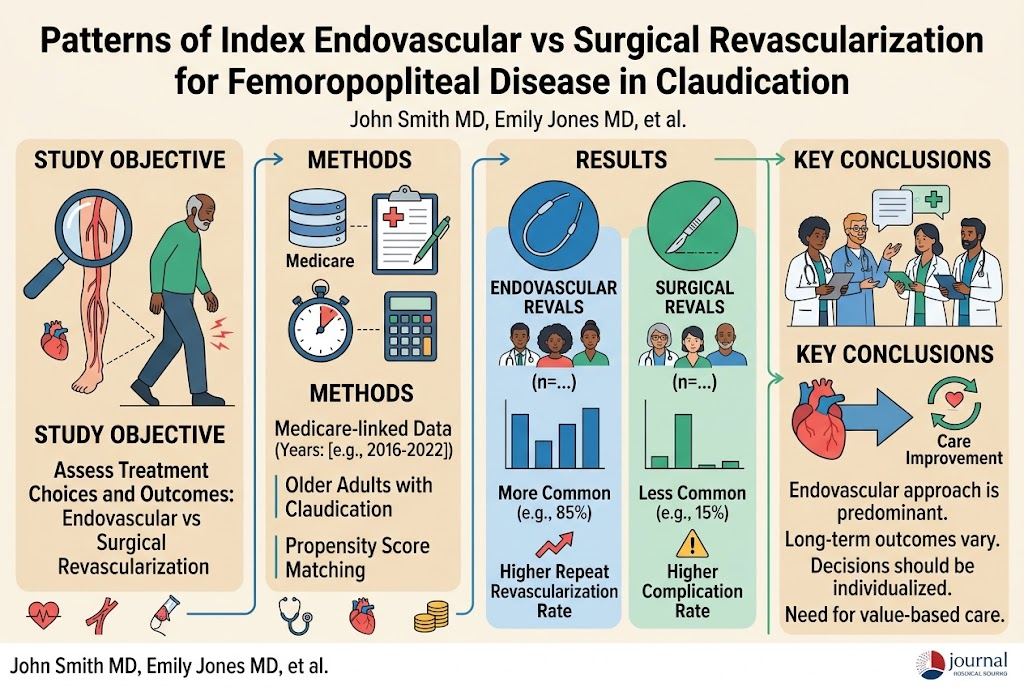
Comparing Endovascular and Surgical Revascularization Outcomes in Claudication Due to Femoropopliteal Disease: Insights from Medicare-Linked Data
CardiologyPeripheral Artery DiseaseClaudication

Comparing Endovascular and Surgical Revascularization Outcomes in Claudication Due to Femoropopliteal Disease: Insights from Medicare-Linked Data

By MedXY|Sep 17, 2026

This study compares long-term outcomes of endovascular versus open bypass interventions for femoropopliteal disease in patients with claudication, finding similar rates of major adverse limb events and progression to critical limb ischemia
Harnessing Genetic Insights: Polygenic Risk Score Enhances Prediction of Peripheral Artery Disease and Limb Events
Cardiology
© 2026 MedXY
Contact usAbout usPrivacy PolicyMedXY story
polygenic risk score
major adverse limb events

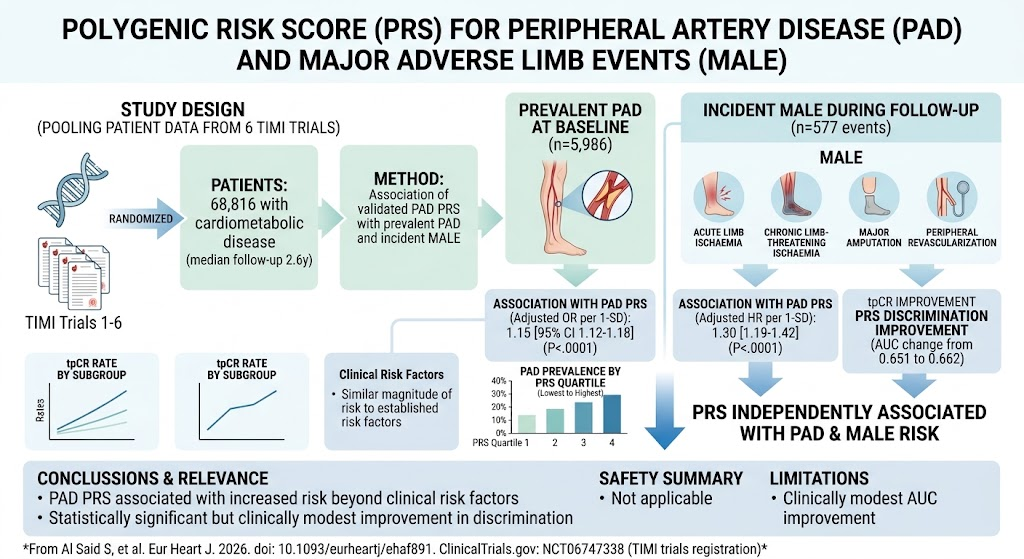
Harnessing Genetic Insights: Polygenic Risk Score Enhances Prediction of Peripheral Artery Disease and Limb Events

By MedXY|Sep 6, 2026

A validated polygenic risk score (PRS) independently predicts peripheral artery disease (PAD) and major adverse limb events (MALE) in patients with cardiometabolic disease, adding modest but significant predictive value beyond traditional c

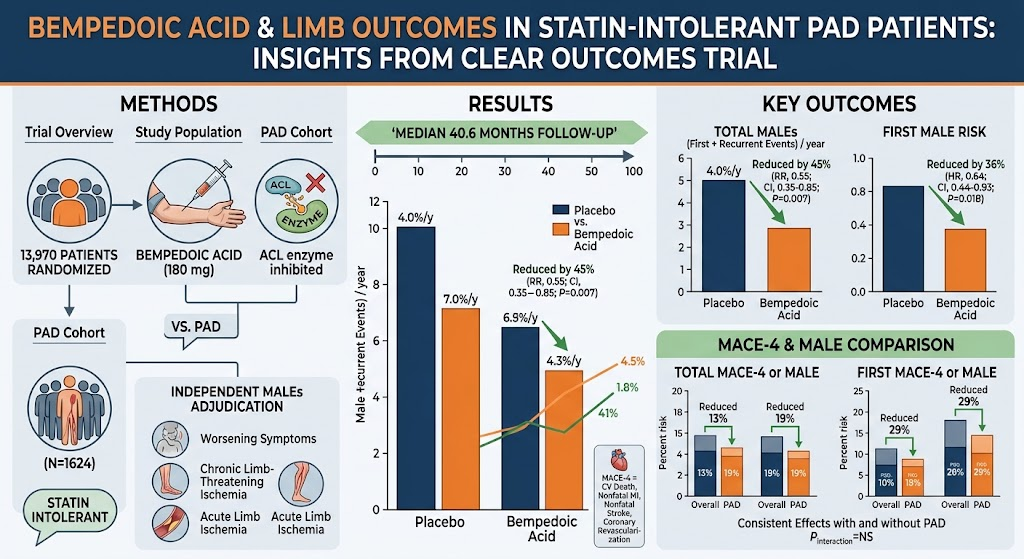
Bempedoic Acid Significantly Reduces Limb and Cardiovascular Events in Statin-Intolerant Patients with Peripheral Artery Disease: Insights from the CLEAR Outcomes Trial
Cardiologymajor adverse limb eventstatin intolerance

Bempedoic Acid Significantly Reduces Limb and Cardiovascular Events in Statin-Intolerant Patients with Peripheral Artery Disease: Insights from the CLEAR Outcomes Trial

By MedXY|Aug 22, 2026

Bempedoic acid reduces the risk of major adverse limb and cardiovascular events in statin-intolerant patients with peripheral artery disease, illustrating its potential to enhance vascular risk management.

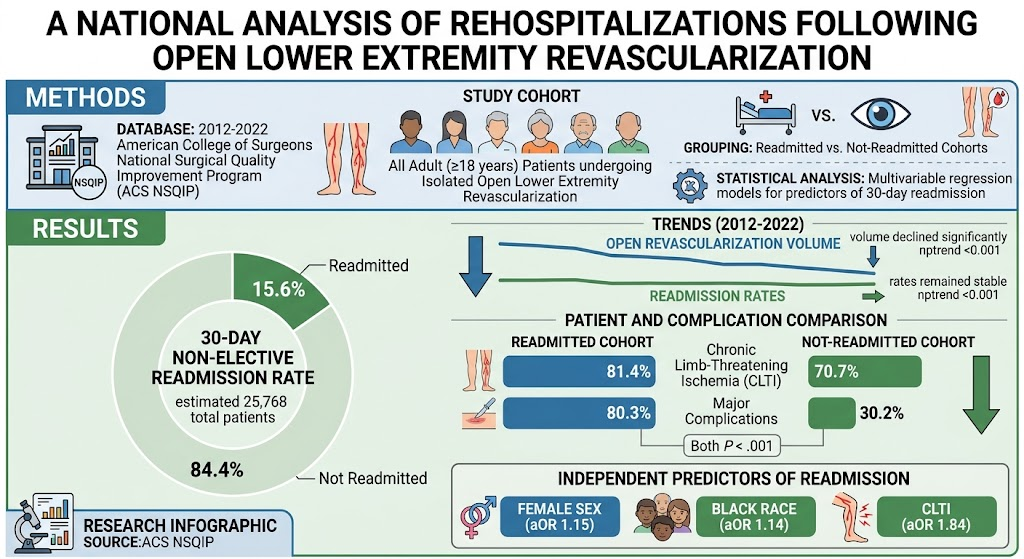
Declining Use But Persistent Readmissions: A National Analysis of Open Lower Extremity Revascularization Outcomes
CardiologyChronic Limb-Threatening IschemiaPeripheral Artery Disease

Declining Use But Persistent Readmissions: A National Analysis of Open Lower Extremity Revascularization Outcomes

By MedXY|Aug 19, 2026

This national study identifies key factors linked to 30-day nonelective readmissions after open lower extremity revascularization, highlighting stable readmission rates despite reduced procedure volume and the need for standardized discharg

Peripheral Artery Disease: Emerging Advances in Medical Therapy to Reduce Cardiovascular and Limb Risks
CardiologyAntithrombotic treatmentLipid lowering

Peripheral Artery Disease: Emerging Advances in Medical Therapy to Reduce Cardiovascular and Limb Risks

By MedXY|Jul 18, 2026

This article reviews recent advances in the medical management of peripheral artery disease, emphasizing comprehensive risk factor control, novel pharmacotherapies, and individualized approaches to improve cardiovascular and limb outcomes i

Long-Term SAFE-PAD Data Reassure on Mortality After Paclitaxel-Coated Femoropopliteal Interventions
Cardiologyfemoropopliteal interventionMortality

Long-Term SAFE-PAD Data Reassure on Mortality After Paclitaxel-Coated Femoropopliteal Interventions

By MedXY|May 6, 2026

In Medicare patients undergoing femoropopliteal revascularization, drug-coated devices were not associated with higher long-term mortality, supporting the safety of paclitaxel-coated technology after years of regulatory concern.

Intramuscular Adipose Tissue Accumulation as a Key Determinant of Muscle Dysfunction in Peripheral Artery Disease
CardiologyCLTIPeripheral Artery Disease

Intramuscular Adipose Tissue Accumulation as a Key Determinant of Muscle Dysfunction in Peripheral Artery Disease

By MedXY|Mar 10, 2026

This review synthesizes evidence that intramuscular adipose tissue (IMAT) accumulation, driven by fibroadipogenic progenitors, is a primary driver of limb dysfunction in PAD/CLTI, identifying IMAT as a novel therapeutic target.

VOYAGER-PAD Insight: Prior Revascularization History Mandates More Aggressive Antithrombotic Therapy
CardiologyPeripheral Artery DiseaseRevascularization

VOYAGER-PAD Insight: Prior Revascularization History Mandates More Aggressive Antithrombotic Therapy

By MedXY|Mar 2, 2026

A VOYAGER-PAD sub-analysis reveals that patients with prior limb revascularization are at significantly higher risk for adverse events but derive a greater relative benefit from low-dose rivaroxaban plus aspirin.

Metformin Fails to Improve Walking Performance in Peripheral Artery Disease: Results of the PERMET Randomized Trial
Cardiologyclinical trialsmetformin

Metformin Fails to Improve Walking Performance in Peripheral Artery Disease: Results of the PERMET Randomized Trial

By MedXY|Feb 23, 2026

The PERMET randomized clinical trial found that metformin did not improve the 6-minute walk distance or secondary walking outcomes in patients with peripheral artery disease without diabetes, suggesting no benefit for functional impairment

Semaglutide Delivers Consistent Functional Gains in Peripheral Artery Disease Regardless of Sex: Evidence from the STRIDE Trial
CardiologyPeripheral Artery Diseasesemaglutide

Semaglutide Delivers Consistent Functional Gains in Peripheral Artery Disease Regardless of Sex: Evidence from the STRIDE Trial

By MedXY|Jan 17, 2026

A post hoc analysis of the STRIDE trial reveals that once-weekly semaglutide 1.0 mg significantly improves walking distance and quality of life in both men and women with type 2 diabetes and peripheral artery disease, despite notable differ

Safety Profile Favors Apixaban Over Rivaroxaban in High-Risk Patients with Atrial Fibrillation and Peripheral Artery Disease
Cardiologyanticoagulationatrial fibrillation

Safety Profile Favors Apixaban Over Rivaroxaban in High-Risk Patients with Atrial Fibrillation and Peripheral Artery Disease

By MedXY|Jan 5, 2026

A large-scale cohort study reveals that while rivaroxaban and apixaban offer similar protection against limb events and stroke in patients with AF and PAD, rivaroxaban is associated with a 55% higher risk of major bleeding, suggesting apixa

Polygenic Risk Score Predicts Peripheral Artery Disease and Major Adverse Limb Events but Offers Modest Incremental Discrimination
Cardiologygeneticsmajor adverse limb events

Polygenic Risk Score Predicts Peripheral Artery Disease and Major Adverse Limb Events but Offers Modest Incremental Discrimination

By MedXY|Dec 2, 2025

In pooled analyses of six TIMI trials (n=68,816), a validated PAD polygenic risk score was independently associated with prevalent PAD (OR per 1-SD 1.15) and incident major adverse limb events (HR per 1-SD 1.30), but added only modest impro

Metformin Does Not Improve Walking Distance in Peripheral Artery Disease: Results from the PERMET Randomized Trial
CardiologymetforminPeripheral Artery Disease

Metformin Does Not Improve Walking Distance in Peripheral Artery Disease: Results from the PERMET Randomized Trial

By MedXY|Nov 8, 2025

The PERMET randomized, double-blind trial found that 6 months of metformin did not improve 6-minute walk distance or other functional endpoints in people with lower extremity peripheral artery disease (PAD) without diabetes.

Paclitaxel-coated vs Uncoated Devices in Infrainguinal Revascularisation: Insights from the SWEDEPAD 2 Trial
Cardiologyendovascular revascularisationpaclitaxel-coated devices

Paclitaxel-coated vs Uncoated Devices in Infrainguinal Revascularisation: Insights from the SWEDEPAD 2 Trial

By MedXY|Oct 8, 2025

The SWEDEPAD 2 trial reveals that paclitaxel-coated devices do not improve quality of life at 1 year and raise concerns about increased 5-year mortality in patients with intermittent claudication undergoing lower limb revascularisation.

Timing Matters: Determining the Optimal Duration of Supervised Exercise for Meaningful Improvements in Peripheral Artery Disease
Clinical UpdatesPeripheral Artery Disease

Timing Matters: Determining the Optimal Duration of Supervised Exercise for Meaningful Improvements in Peripheral Artery Disease

By MedXY|Oct 6, 2025

A supervised treadmill exercise program lasting over 6 weeks is essential to achieve significant walking improvements in peripheral artery disease, with peak patient-reported benefits observed at 12 weeks but diminishing by 26 weeks.

Consistent Improvement in Walking Function Across Diabetes Profiles with Semaglutide in Peripheral Artery Disease: Lessons from the STRIDE Trial
Clinical UpdatesPeripheral Artery Diseasesemaglutide

Consistent Improvement in Walking Function Across Diabetes Profiles with Semaglutide in Peripheral Artery Disease: Lessons from the STRIDE Trial

By MedXY|Oct 6, 2025

The STRIDE trial demonstrates that once-weekly semaglutide significantly enhances walking capacity in patients with symptomatic peripheral artery disease and type 2 diabetes, irrespective of baseline diabetes duration, BMI, HbA1c levels, or

Lipoprotein(a) as a Prognostic Indicator for Extracoronary Atherosclerotic Disease Progression: Insights from the UK Biobank
CardiologyatherosclerosisCarotid Stenosis

Lipoprotein(a) as a Prognostic Indicator for Extracoronary Atherosclerotic Disease Progression: Insights from the UK Biobank

By MedXY|Oct 6, 2025

Elevated lipoprotein(a) levels significantly predict incident peripheral artery disease and carotid stenosis, as well as progression to major limb events, underscoring its value as a prognostic biomarker for extracoronary atherosclerotic va

Early Warnings of Vascular Blockage: Don’t Ignore These 4 Signs in Your Hands and Feet
Cardiologyblood circulationPeripheral Artery Disease

Early Warnings of Vascular Blockage: Don’t Ignore These 4 Signs in Your Hands and Feet

By MedXY|Oct 4, 2025

Discover the crucial early signs of vascular blockage in hands and feet, simple self-check methods, and expert insights to protect your circulatory health effectively.

Lipoprotein(a) as an Independent Predictor of Peripheral Artery Disease and Carotid Stenosis: Insights from a Large UK Biobank Study
Cardiologycardiovascular riskCarotid Stenosis

Lipoprotein(a) as an Independent Predictor of Peripheral Artery Disease and Carotid Stenosis: Insights from a Large UK Biobank Study

By MedXY|Sep 30, 2025

A landmark UK Biobank study demonstrates that elevated lipoprotein(a) independently predicts both the onset and progression of peripheral artery disease and carotid stenosis, beyond traditional cardiovascular risk factors.

Ask MedXY AI

Most popular

Intimate Health
Five Benefits for Women Continuing Sexual Activity After Menopause
Intimate Health
Why Some Women Have a Strong Sex Drive—And Why Men Shouldn't Worry About It
Nursing & care
How often should a couple have sex?
Intimate Health
Classic Intimacy Recommendations: How to Help Women Reach Orgasm and Enjoy Mutual Pleasure
Intimate Health
What Makes a Woman "Physiologically Addicted" Is Never Money, But These Two Relationship Qualities