Comparing Endovascular and Surgical Revascularization Outcomes in Claudication Due to Femoropopliteal Disease: Insights from Medicare-Linked Data
Highlight
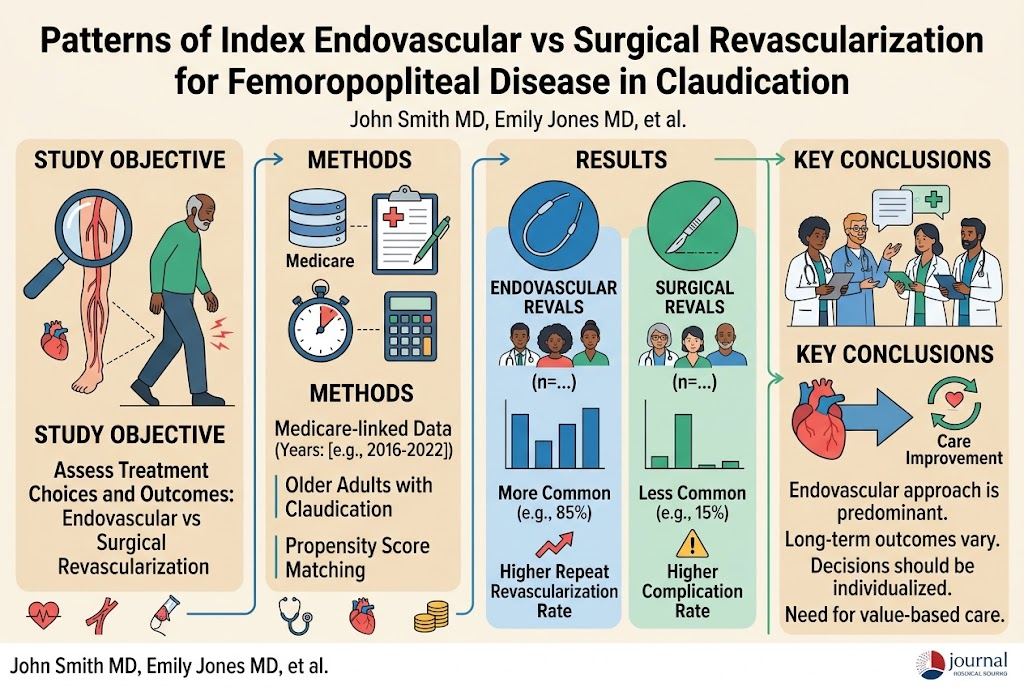
This retrospective analysis of Medicare-linked data compared the long-term efficacy and safety of endovascular versus open surgical bypass revascularization for femoropopliteal disease in patients presenting with claudication. Key findings include similar 5-year rates of major adverse limb events (MALE), progression to critical limb-threatening ischemia (CLTI), reintervention, and mortality between the two treatment modalities. Early differences at 1 year favored open bypass in terms of MALE, but this difference dissipated over time. These findings support the use of endovascular intervention as a viable initial approach in appropriate patients with claudication.
Study Background
Sign in free to continue reading
Create or use your MedXY account to unlock the complete article.
This article was created using several editorial tools, including AI, as part of the process. Human editors reviewed this content before publication.