We use cookies

Our website uses essential cookies and, with your consent, additional cookies to measure performance and improve our services. Cookie Policy.

You can change your choice at any time.

MMedXYNews
HomeVideos
MedXY AI/MedXY News/Tag: coronary artery disease
MedXY News
EnglishTag

coronary artery disease

Ask MedXY AI
type 2 diabetesclinical trialheart failureimmunotherapyobesitycardiovascular riskatrial fibrillationbiomarkerscritical careclinical trialsHypertensionartificial intelligenceCardiologyoncologypublic healthtype 1 diabetesdiabetesMortalityAlzheimer's diseasecardiovascular diseasebreast cancerepidemiology

Latest news

Tag

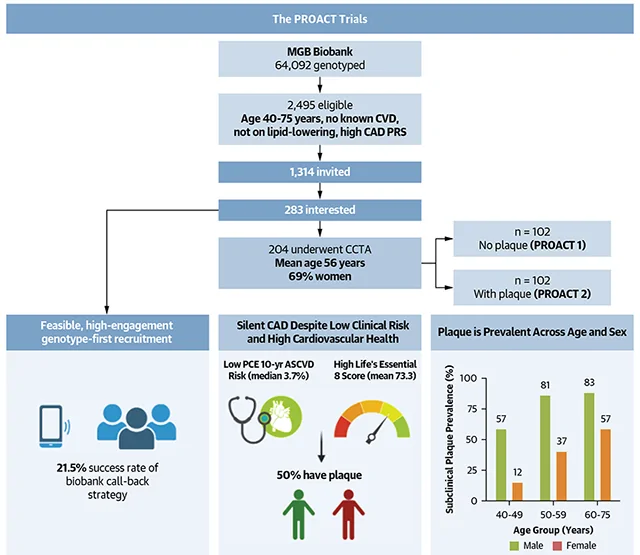
Polygenic Risk Based Detection and Treatment of Subclinical Coronary Atherosclerosis in the PROACT Clinical Trials: A Genotype-First Precision Prevention Approach
Cardiologycoronary artery diseasepolygenic risk score

Polygenic Risk Based Detection and Treatment of Subclinical Coronary Atherosclerosis in the PROACT Clinical Trials: A Genotype-First Precision Prevention Approach

By MedXY|Sep 15, 2026

This review synthesizes emerging evidence from the PROACT trials on genotype-first identification of subclinical coronary atherosclerosis using polygenic risk scores (PRS), highlighting feasibility, engagement, and high prevalence of silent
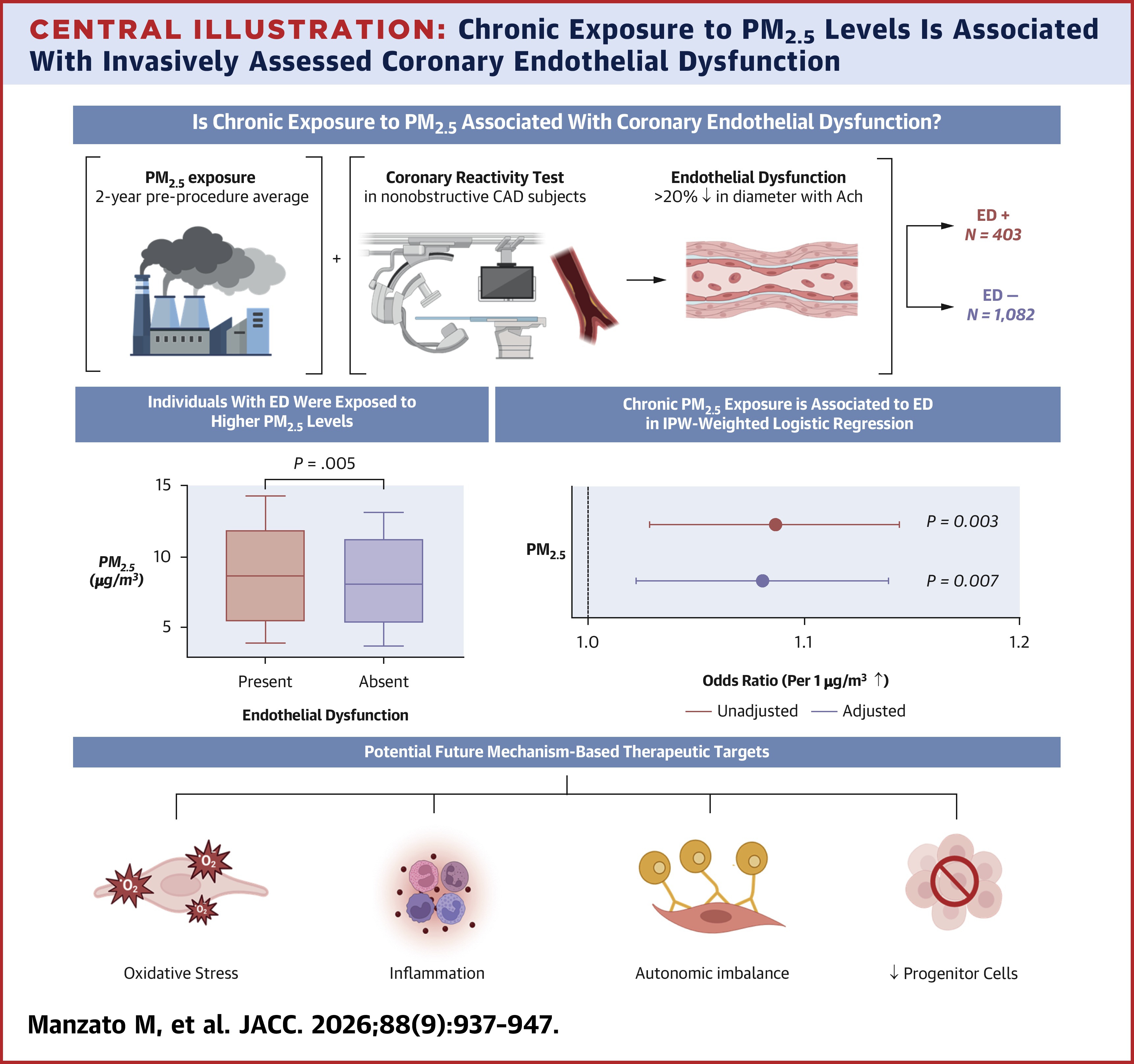
Linking Air Pollution to Heart Health: Chronic PM2.5 Exposure and Coronary Endothelial Dysfunction
Cardiologycoronary artery diseasePM2.5

Linking Air Pollution to Heart Health: Chronic PM2.5 Exposure and Coronary Endothelial Dysfunction

By MedXY|Sep 11, 2026

Chronic exposure to fine particulate matter (PM2.5) is linked to epicardial coronary endothelial dysfunction, an early marker of coronary artery disease, as demonstrated by invasive coronary vasoreactivity testing.

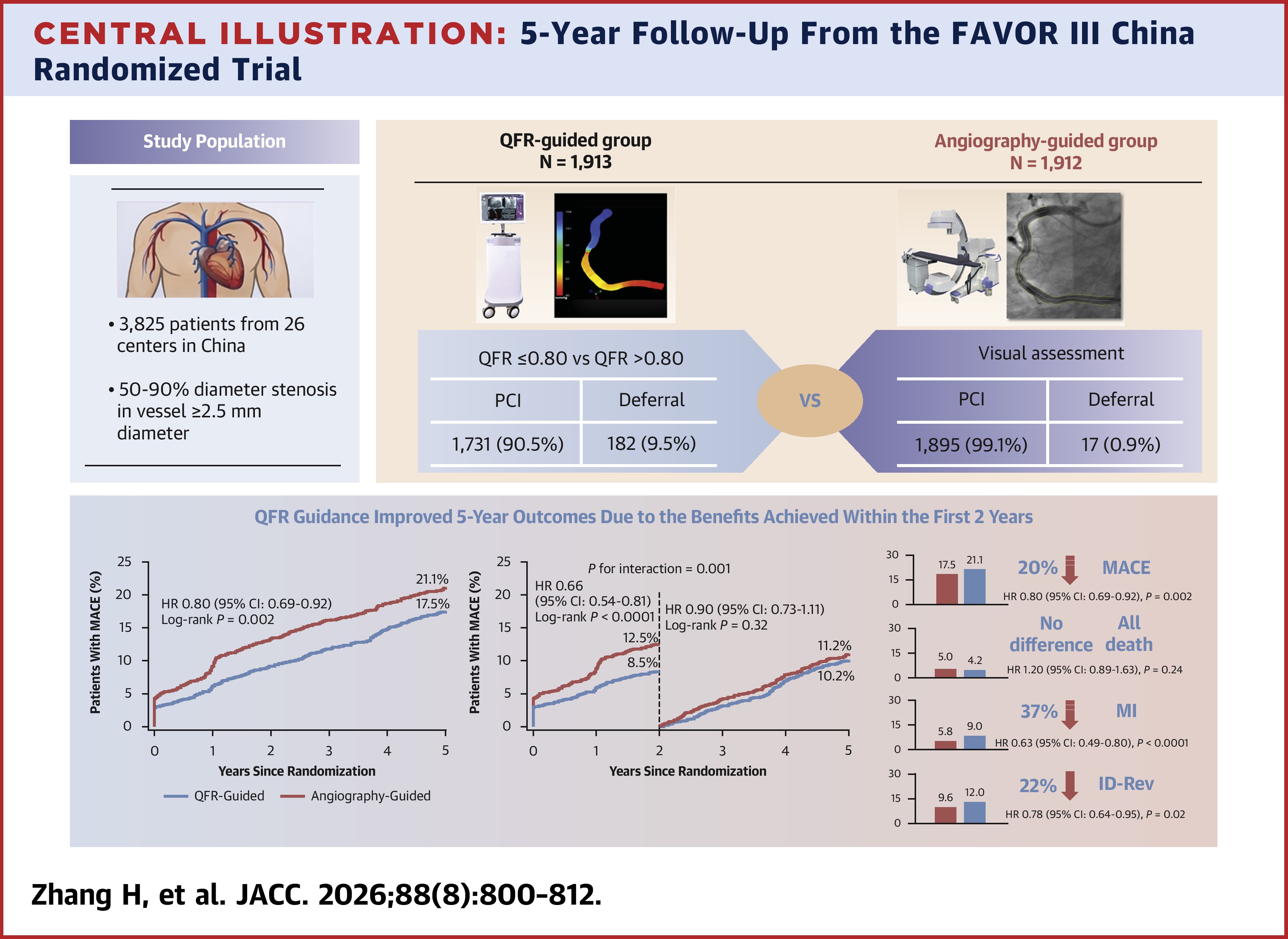
Long-Term Benefits of Quantitative Flow Ratio-Guided PCI: Insights from the 5-Year FAVOR III China Trial
Cardiologycoronary artery diseaselong-term outcomes

Long-Term Benefits of Quantitative Flow Ratio-Guided PCI: Insights from the 5-Year FAVOR III China Trial

By MedXY|Sep 11, 2026

The FAVOR III China trial demonstrates that QFR-guided percutaneous coronary intervention significantly reduces major adverse cardiac events over 5 years, mainly by decreasing myocardial infarction and ischemia-driven revascularization comp

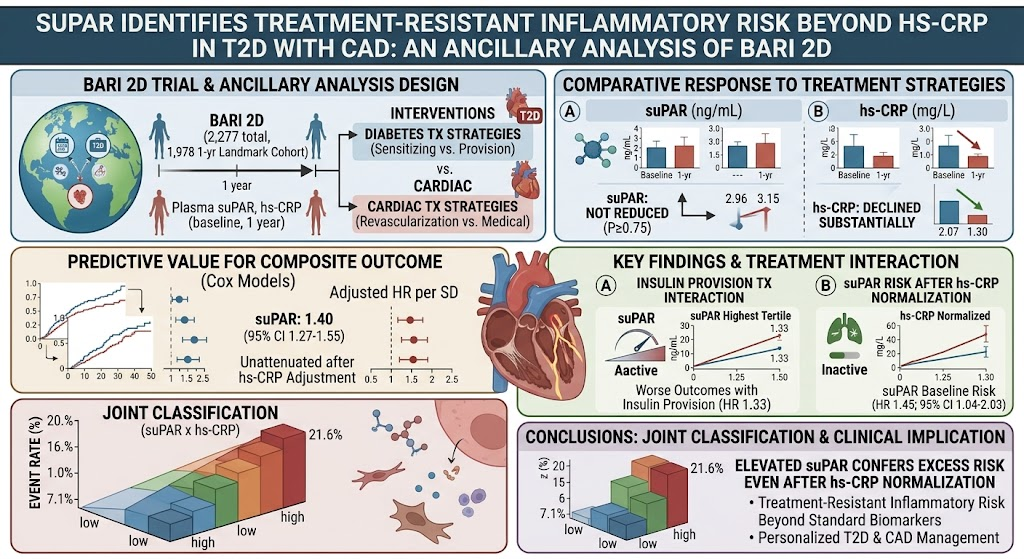
suPAR as a Novel Marker for Residual Inflammatory Risk Beyond hs-CRP in Type 2 Diabetes with Coronary Artery Disease
Cardiologycoronary artery diseasehs-CRP

suPAR as a Novel Marker for Residual Inflammatory Risk Beyond hs-CRP in Type 2 Diabetes with Coronary Artery Disease

By MedXY|Aug 21, 2026

In type 2 diabetes patients with coronary artery disease, suPAR levels remain unchanged despite treatment and independently predict adverse cardiovascular events beyond hs-CRP, highlighting suPAR’s potential in identifying treatment-r

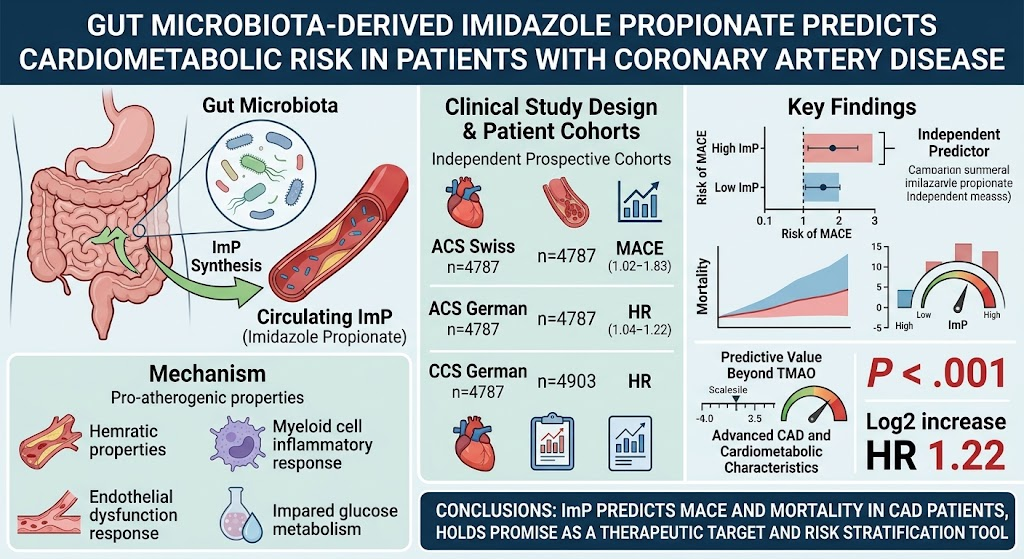
Gut Microbiota-Derived Imidazole Propionate as a Predictor of Cardiometabolic Risk in Coronary Artery Disease: Evidence and Clinical Implications
Cardiologycoronary artery diseasegut microbiota

Gut Microbiota-Derived Imidazole Propionate as a Predictor of Cardiometabolic Risk in Coronary Artery Disease: Evidence and Clinical Implications

By MedXY|Aug 18, 2026

Emerging evidence identifies circulating imidazole propionate, a gut microbiota-derived metabolite, as an independent predictor of major adverse cardiovascular events in patients with coronary artery disease, offering novel insights into pe

Ultra-Thin Sirolimus-Eluting Stents Show Noninferiority to Everolimus-Eluting Stents in Diabetic Multivessel CAD: Insights from TUXEDO-2 Trial
Cardiologycoronary artery diseaseDiabetes Mellitus

Ultra-Thin Sirolimus-Eluting Stents Show Noninferiority to Everolimus-Eluting Stents in Diabetic Multivessel CAD: Insights from TUXEDO-2 Trial

By MedXY|Jul 2, 2026

The TUXEDO-2 trial demonstrated that ultra-thin strut biodegradable polymer sirolimus-eluting stents are noninferior to durable polymer everolimus-eluting stents in diabetic patients with multivessel coronary artery disease at 1-year follow

Inflammation as a Modifier of Lipoprotein(a)–Associated Cardiovascular Risk: Insights from the UK Biobank
CardiologyAortic Valve Stenosiscoronary artery disease

Inflammation as a Modifier of Lipoprotein(a)–Associated Cardiovascular Risk: Insights from the UK Biobank

By MedXY|Jun 27, 2026

Elevated lipoprotein(a) increases coronary artery disease risk, but this study reveals that inflammation—particularly IL-6 levels—modulates this risk, highlighting the importance of inflammatory biomarkers in cardiovascular risk assessment

Determining the Physiological Threshold for Angina (ORBITA-FIRE): A Double-Blind, Randomized, Placebo-Controlled Study
CardiologyanginaCardiology

Determining the Physiological Threshold for Angina (ORBITA-FIRE): A Double-Blind, Randomized, Placebo-Controlled Study

By MedXY|Jun 10, 2026

ORBITA-FIRE shows that angina occurs at much lower, individualized FFR and RFR thresholds than standard ischemia cutoffs, and these thresholds rise with exercise intensity.

Great Debate: Is the New Risk Factor-Weighted Clinical Likelihood Model Useful for Estimating Pre-Test Probability of Obstructive Coronary Artery Disease?
CardiologyCardiologyclinical likelihood

Great Debate: Is the New Risk Factor-Weighted Clinical Likelihood Model Useful for Estimating Pre-Test Probability of Obstructive Coronary Artery Disease?

By MedXY|Jun 10, 2026

The RF-CL model is a new ESC-recommended tool for estimating the pre-test probability of obstructive CAD in suspected chronic coronary syndromes. It improves risk stratification and may reduce unnecessary testing, though symptom interpretat

Waist-to-Height Ratio Is Linked to Coronary Artery Disease Risk in Type 1 Diabetes: 19-Year Study
Cardiologycoronary artery diseasetype 1 diabetes

Waist-to-Height Ratio Is Linked to Coronary Artery Disease Risk in Type 1 Diabetes: 19-Year Study

By MedXY|Jun 7, 2026

A 19-year Finnish cohort study found that a higher waist-to-height ratio was linked to increased coronary artery disease risk in type 1 diabetes, especially in people without albuminuria.

Women with Chronic Coronary Artery Disease: Long-Term Outcomes After PCI vs CABG
Cardiologycoronary artery diseasePCI

Women with Chronic Coronary Artery Disease: Long-Term Outcomes After PCI vs CABG

By MedXY|Aug 18, 2026

In women with chronic severe coronary artery disease, CABG was linked to lower long-term rates of death, stroke, heart attack, repeat revascularization, and cardiovascular readmission than PCI.

Evolocumab in Patients With Prior Percutaneous Coronary Intervention and No Prior MI: Results From the VESALIUS-CV Trial
Cardiologycoronary artery diseaseEvolocumab

Evolocumab in Patients With Prior Percutaneous Coronary Intervention and No Prior MI: Results From the VESALIUS-CV Trial

By MedXY|May 19, 2026

In patients with prior PCI but no prior MI, evolocumab significantly lowered LDL-C and reduced major cardiovascular events, including myocardial infarction and urgent revascularization, supporting intensive lipid lowering after coronary int

Focal vs. Diffuse Coronary Artery Disease: How Disease Pattern Influences PCI’s Placebo-Controlled Symptom Relief in ORBITA-2
Cardiologycoronary artery diseaseORBITA-2

Focal vs. Diffuse Coronary Artery Disease: How Disease Pattern Influences PCI’s Placebo-Controlled Symptom Relief in ORBITA-2

By MedXY|Apr 22, 2026

ORBITA-2 reveals PCI’s superior placebo-controlled angina relief in focal vs. diffuse coronary artery disease, with physiological disease patterns guiding treatment decisions.

Precision Phenotyping in Cardiometabolic Medicine: Genetic Susceptibility of Diabetes Subtypes and Coronary Artery Disease Risk
Cardiologycoronary artery diseaseMendelian Randomization

Precision Phenotyping in Cardiometabolic Medicine: Genetic Susceptibility of Diabetes Subtypes and Coronary Artery Disease Risk

By MedXY|Apr 2, 2026

This review synthesizes evidence on the genetic architecture of adult-onset diabetes subtypes, highlighting that Moderate Obesity-related Diabetes (MOD) is uniquely and causally linked to coronary artery disease risk through polygenic and M

Chronic Inflammation via suPAR: The Missing Link Between Diabetes and Cardiovascular Mortality
Cardiologycardiovascular riskcoronary artery disease

Chronic Inflammation via suPAR: The Missing Link Between Diabetes and Cardiovascular Mortality

By MedXY|Mar 14, 2026

A landmark study in Diabetes Care reveals that soluble urokinase plasminogen activator receptor (suPAR) mediates over half of the increased risk for adverse cardiovascular outcomes in patients with diabetes and coronary artery disease, surp

Beyond Stenosis: The Prognostic Impact of Quantitative Plaque Volumetrics in Early Coronary Artery Disease
CardiologyCCTAcoronary artery disease

Beyond Stenosis: The Prognostic Impact of Quantitative Plaque Volumetrics in Early Coronary Artery Disease

By MedXY|Mar 11, 2026

This review synthesizes findings from a PROMISE trial substudy, revealing that quantitative coronary plaque volume and burden are independent predictors of MACE in symptomatic outpatients, even when total plaque levels are low.

Beyond Traditional Risk Factors: Deconstructing the Burden of Coronary Atherosclerosis in Liver Transplant Recipients
Clinical Updatescardiovascular riskcoronary artery disease

Beyond Traditional Risk Factors: Deconstructing the Burden of Coronary Atherosclerosis in Liver Transplant Recipients

By MedXY|Mar 7, 2026

A landmark nationwide study reveals that liver transplant recipients face significantly higher prevalence and severity of coronary atherosclerosis and high-risk plaque compared to matched controls, independent of traditional cardiovascular

Percutaneous Coronary Intervention Before TAVR: A Nationwide Synthesis of Clinical Outcomes and Bleeding Risks
Cardiologyclinical trialscoronary artery disease

Percutaneous Coronary Intervention Before TAVR: A Nationwide Synthesis of Clinical Outcomes and Bleeding Risks

By MedXY|Mar 2, 2026

A nationwide Swedish registry analysis demonstrates that routine PCI before TAVR for significant coronary artery disease does not improve survival or reduce urgent revascularization, but significantly increases bleeding risk while reducing

Sex-Specific Risk Thresholds in Coronary Artery Disease: Why Plaque Burden Metrics Demand Re-evaluation in Women
Cardiologycoronary artery diseaseCoronary CTA

Sex-Specific Risk Thresholds in Coronary Artery Disease: Why Plaque Burden Metrics Demand Re-evaluation in Women

By MedXY|Mar 2, 2026

A secondary analysis of the PROMISE trial reveals that women face elevated cardiovascular risk at significantly lower coronary plaque thresholds than men, necessitating a paradigm shift toward sex-stratified interpretation of coronary CT an

Global Variations in Patient Radiation Exposure for Coronary Artery Disease Diagnosis: A Synthesized Review of the INCAPS 4 Findings
Cardiologycoronary artery diseaseglobal health

Global Variations in Patient Radiation Exposure for Coronary Artery Disease Diagnosis: A Synthesized Review of the INCAPS 4 Findings

By MedXY|Mar 2, 2026

This review analyzes global radiation doses in CAD diagnostic imaging based on the INCAPS 4 study. It highlights significant disparities across modalities and regions, revealing that patients in low-income countries and those undergoing CCT

1 / 2
12
Next
Ask MedXY AI

Most popular

Intimate Health
Five Benefits for Women Continuing Sexual Activity After Menopause
Intimate Health
Why Some Women Have a Strong Sex Drive—And Why Men Shouldn't Worry About It
Nursing & care
How often should a couple have sex?
Intimate Health
Classic Intimacy Recommendations: How to Help Women Reach Orgasm and Enjoy Mutual Pleasure
Intimate Health
What Makes a Woman "Physiologically Addicted" Is Never Money, But These Two Relationship Qualities
© 2026 MedXY
Contact usAbout usPrivacy PolicyMedXY story