We use cookies

Our website uses essential cookies and, with your consent, additional cookies to measure performance and improve our services. Cookie Policy.

You can change your choice at any time.

MMedXYNews
HomeVideos
MedXY AI/MedXY News/Tag: anticoagulation
MedXY News
EnglishTag

anticoagulation

Ask MedXY AI
type 2 diabetesclinical trialheart failureimmunotherapyobesitycardiovascular riskatrial fibrillationbiomarkerscritical careclinical trialsHypertensionartificial intelligenceCardiologyoncologypublic healthtype 1 diabetesdiabetesMortalityAlzheimer's diseasecardiovascular diseasebreast cancerepidemiology

Latest news

Tag

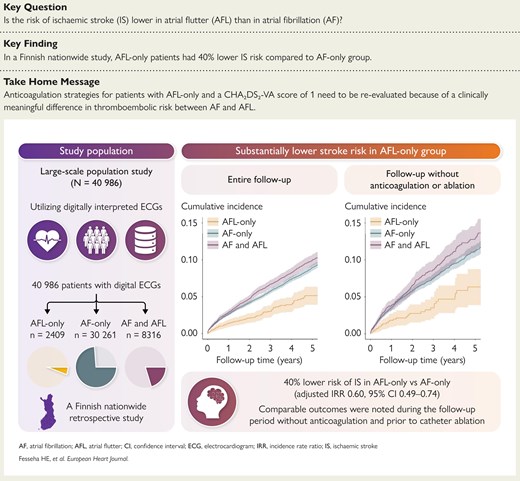
Ischaemic Stroke Risk in Atrial Flutter Versus Atrial Fibrillation: Insights from a Finnish Nationwide Registry Study
CardiologyanticoagulationIschaemic Stroke

Ischaemic Stroke Risk in Atrial Flutter Versus Atrial Fibrillation: Insights from a Finnish Nationwide Registry Study

By MedXY|Sep 9, 2026

This Finnish nationwide study demonstrates that patients with atrial flutter have a substantially lower risk of ischaemic stroke compared to those with atrial fibrillation, highlighting important differences in thromboembolic risk profiles
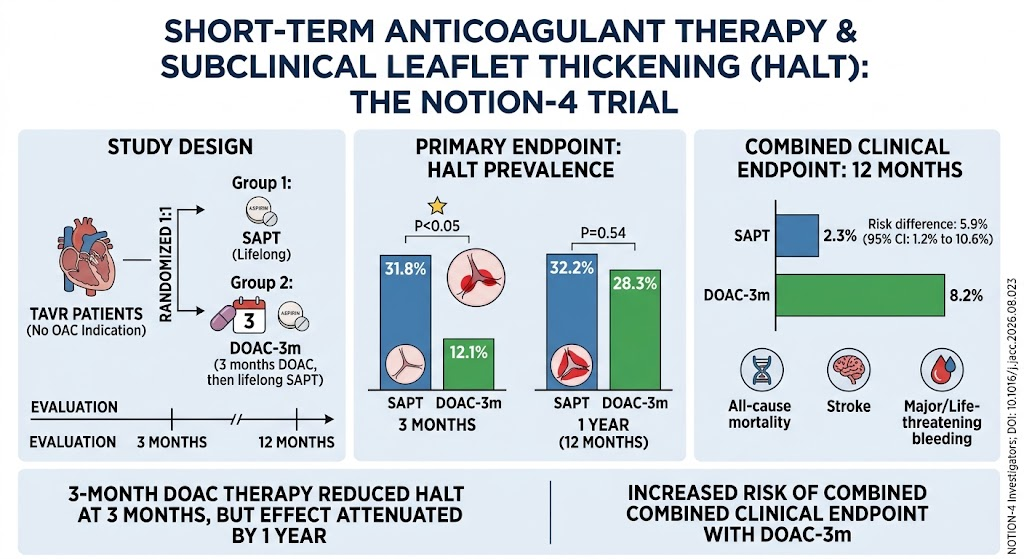

Short-Term Anticoagulant Therapy and Subclinical Leaflet Thickening in Transcatheter Aortic Valves: Evidence and Insights from the NOTION-4 Trial
CardiologyTAVRDOAC

Short-Term Anticoagulant Therapy and Subclinical Leaflet Thickening in Transcatheter Aortic Valves: Evidence and Insights from the NOTION-4 Trial

By MedXY|Sep 1, 2026

The NOTION-4 trial demonstrates that 3 months of DOAC therapy post-TAVR reduces early HALT incidence compared to SAPT, but benefits diminish after discontinuation, highlighting nuanced balance between thrombosis prevention and bleeding risk

Navigating Uncertainty: Rapid Evidence Generation and Translation of Anticoagulation Strategies in Noncritically Ill COVID-19 Patients
CardiologyanticoagulationCOVID-19

Navigating Uncertainty: Rapid Evidence Generation and Translation of Anticoagulation Strategies in Noncritically Ill COVID-19 Patients

By MedXY|Jul 30, 2026

This article reviews the accelerated evidence generation for anticoagulation in noncritically ill COVID-19 patients, highlighting how coordinated trials and data sharing influenced clinical guidelines and patient outcomes during the pandemi

Switching from Warfarin to Direct Oral Anticoagulants in Frail Elderly Asian Patients with Atrial Fibrillation: Insights from a Korean Nationwide Study
CardiologyanticoagulationAsian Population

Switching from Warfarin to Direct Oral Anticoagulants in Frail Elderly Asian Patients with Atrial Fibrillation: Insights from a Korean Nationwide Study

By MedXY|Jul 3, 2026

In frail elderly Asian AF patients stable on warfarin, transitioning to DOACs increased risks of bleeding, thromboembolic events, and mortality, emphasizing cautious individualized management.

Multilevel Stewardship to Optimize Antithrombotic Therapy in DOAC Users: Lessons from a Veterans Health Initiative
CardiologyanticoagulationAntiplatelet Therapy

Multilevel Stewardship to Optimize Antithrombotic Therapy in DOAC Users: Lessons from a Veterans Health Initiative

By MedXY|Jun 25, 2026

A multicomponent stewardship intervention significantly reduced inappropriate antiplatelet prescription among patients on DOACs, decreasing bleeding risk, particularly in stable coronary artery disease.

Postoperative Atrial Fibrillation After Cardiac Surgery: Common, Variably Treated, and Linked to Worse 1-Year Outcomes
Cardiologyanticoagulationcardiac surgery

Postoperative Atrial Fibrillation After Cardiac Surgery: Common, Variably Treated, and Linked to Worse 1-Year Outcomes

By MedXY|Jun 19, 2026

The VISION Cardiac Surgery cohort found POAF in about one-third of patients, with wide variation in discharge treatment. POAF strongly predicted later atrial fibrillation and was associated with higher 1-year mortality.

Patient Preference Phenotypes for Post-operative Anticoagulation After Hip or Knee Replacement
newsanticoagulationconjoint analysis

Patient Preference Phenotypes for Post-operative Anticoagulation After Hip or Knee Replacement

By MedXY|Jun 2, 2026

A survey study found three distinct patient preference patterns for anticoagulation after hip or knee replacement: clot-prevention focused, balanced, and cost-focused. These differences may help personalize postoperative blood thinner choic

Patient Preference Phenotypes for Post-operative Anticoagulation After Hip or Knee Replacement: A Cross-sectional Survey Study
newsanticoagulationconjoint analysis

Patient Preference Phenotypes for Post-operative Anticoagulation After Hip or Knee Replacement: A Cross-sectional Survey Study

By MedXY|Jun 2, 2026

A survey study found three distinct patient preference patterns for anticoagulation after hip or knee replacement, highlighting the importance of shared decision-making based on clot risk, bleeding risk, and cost.

Timing of Atrial Fibrillation Diagnosis Does Not Alter Early Anticoagulation Benefits in Stroke Patients: Insights from the OPTIMAS Trial
Cardiologyanticoagulationatrial fibrillation

Timing of Atrial Fibrillation Diagnosis Does Not Alter Early Anticoagulation Benefits in Stroke Patients: Insights from the OPTIMAS Trial

By MedXY|Apr 5, 2026

Subgroup analysis of the OPTIMAS trial reveals that neither the timing of atrial fibrillation diagnosis nor AF subtype modifies the treatment effect of early versus delayed direct oral anticoagulant initiation in acute ischemic stroke. Pers

Mechanical Heart Valves in Pregnancy: Navigating the High Risk of Thrombosis and the Biological Valve Advantage
CardiologyanticoagulationCardiology

Mechanical Heart Valves in Pregnancy: Navigating the High Risk of Thrombosis and the Biological Valve Advantage

By MedXY|Mar 20, 2026

The ESC EORP ROPAC III registry highlights a stark contrast in pregnancy outcomes between mechanical and biological heart valves, revealing that only 54% of women with mechanical valves achieve an uncomplicated live birth, largely due to an

Low-Dose Rivaroxaban Fails to Significantly Reduce Left Ventricular Thrombosis in Anterior STEMI: Results of the APERITIF Trial
CardiologyanticoagulationCardiac Magnetic Resonance

Low-Dose Rivaroxaban Fails to Significantly Reduce Left Ventricular Thrombosis in Anterior STEMI: Results of the APERITIF Trial

By MedXY|Mar 2, 2026

The APERITIF randomized clinical trial found that adding low-dose rivaroxaban to dual antiplatelet therapy (DAPT) did not significantly reduce the incidence of left ventricular thrombus at one month in anterior STEMI patients, while signifi

Pharmacist-Led Patient Self-Testing Superior to Usual Care for Warfarin Management in Mechanical Heart Valve Patients: Evidence from a Multicentre RCT in China
CardiologyanticoagulationCardiology

Pharmacist-Led Patient Self-Testing Superior to Usual Care for Warfarin Management in Mechanical Heart Valve Patients: Evidence from a Multicentre RCT in China

By MedXY|Feb 23, 2026

A multicentre RCT in China found that pharmacist-led patient self-testing (PST) significantly improves time in therapeutic range and reduces major bleeding and thromboembolism in patients with mechanical heart valves compared to traditional

Factor XI Inhibition Redefined: Catalytic Domain Blockade Emerges as a Superior Strategy for VTE Prevention
Hematology-OncologyanticoagulationPhẫu thuật chỉnh hình

Factor XI Inhibition Redefined: Catalytic Domain Blockade Emerges as a Superior Strategy for VTE Prevention

By MedXY|Jan 13, 2026

The ROXI-VTE trials demonstrate that inhibiting the Factor XI catalytic domain significantly reduces postoperative VTE compared to enoxaparin. While blocking Factor XIIa-mediated activation showed promise, it failed to meet superiority, hig

Rethinking First-Line Anticoagulation in Older Adults: Real-World Evidence Challenges Conventional AFib Management
Cardiologyanticoagulationatrial fibrillation

Rethinking First-Line Anticoagulation in Older Adults: Real-World Evidence Challenges Conventional AFib Management

By MedXY|Jan 7, 2026

A large-scale study of 144,969 Medicare beneficiaries reveals that initial anticoagulant prescriptions for atrial fibrillation may not reduce ischemic stroke risk in patients over 66, while significantly increasing major bleeding hazards, s

Significant 1-Year Risk of Cardiovascular Events in Cognitive Impairment Highlights Safety Concerns for Anti-Amyloid Therapy
CardiologyAlzheimer's diseaseanticoagulation

Significant 1-Year Risk of Cardiovascular Events in Cognitive Impairment Highlights Safety Concerns for Anti-Amyloid Therapy

By MedXY|Jan 6, 2026

A longitudinal study reveals that over 5% of patients with MCI or dementia develop new indications for anticoagulants or thrombolytics within a year, complicating the use of anti-amyloid monoclonal antibodies due to increased intracranial h

Safety Profile Favors Apixaban Over Rivaroxaban in High-Risk Patients with Atrial Fibrillation and Peripheral Artery Disease
Cardiologyanticoagulationatrial fibrillation

Safety Profile Favors Apixaban Over Rivaroxaban in High-Risk Patients with Atrial Fibrillation and Peripheral Artery Disease

By MedXY|Jan 5, 2026

A large-scale cohort study reveals that while rivaroxaban and apixaban offer similar protection against limb events and stroke in patients with AF and PAD, rivaroxaban is associated with a 55% higher risk of major bleeding, suggesting apixa

Is Female Sex a Truly Independent Risk Factor for Stroke in Atrial Fibrillation? Insights from a Large European Cohort
Cardiologyanticoagulationatrial fibrillation

Is Female Sex a Truly Independent Risk Factor for Stroke in Atrial Fibrillation? Insights from a Large European Cohort

By MedXY|Jan 4, 2026

A large European cohort study reveals that while women with atrial fibrillation are less likely to receive anticoagulants and show higher crude thromboembolism rates, female sex is not an independent risk factor after adjusting for comorbid

Does Anticoagulation After Successful AF Ablation Matter? The OCEAN Trial Shows No Clear Advantage of Rivaroxaban over Aspirin
Cardiologyanticoagulationatrial fibrillation

Does Anticoagulation After Successful AF Ablation Matter? The OCEAN Trial Shows No Clear Advantage of Rivaroxaban over Aspirin

By MedXY|Nov 10, 2025

In patients who underwent successful catheter ablation for atrial fibrillation at least one year earlier, rivaroxaban did not significantly reduce the composite of clinical or covert embolic stroke compared with aspirin over 3 years, while

Lower-Intensity Anticoagulation During Venovenous ECMO: A Pilot RCT Shows Feasibility and a Signal Toward Less Bleeding
Cardiologyanticoagulationbleeding

Lower-Intensity Anticoagulation During Venovenous ECMO: A Pilot RCT Shows Feasibility and a Signal Toward Less Bleeding

By MedXY|Nov 5, 2025

A 3-center randomized pilot trial found that randomized allocation to low- versus moderate-intensity anticoagulation during venovenous ECMO is feasible, with lower major bleeding rates in the low-intensity arm and no clear excess of thrombo

Rivaroxaban in Cirrhosis: A Promising Strategy to Prevent Portal Hypertension Complications
Gastroenterologyanticoagulationcirrhosis

Rivaroxaban in Cirrhosis: A Promising Strategy to Prevent Portal Hypertension Complications

By MedXY|Oct 28, 2025

The CIRROXABAN trial evaluates rivaroxaban’s efficacy and safety in preventing complications of portal hypertension in cirrhotic patients, suggesting improved complication-free survival without significantly increasing major bleeding

1 / 2
12
Next
Ask MedXY AI

Most popular

Intimate Health
Five Benefits for Women Continuing Sexual Activity After Menopause
Intimate Health
Why Some Women Have a Strong Sex Drive—And Why Men Shouldn't Worry About It
Nursing & care
How often should a couple have sex?
Intimate Health
Classic Intimacy Recommendations: How to Help Women Reach Orgasm and Enjoy Mutual Pleasure
Intimate Health
What Makes a Woman "Physiologically Addicted" Is Never Money, But These Two Relationship Qualities
© 2026 MedXY
Contact usAbout usPrivacy PolicyMedXY story