Sleep deprivation is when you aren’t sleeping enough, or you aren’t getting good, quality sleep. When it’s severe or happens over an extended period, it can cause very disruptive symptoms that interfere with even the most routine activities. Long-term sleep deprivation can worsen many major health conditions. This condition is usually treatable.
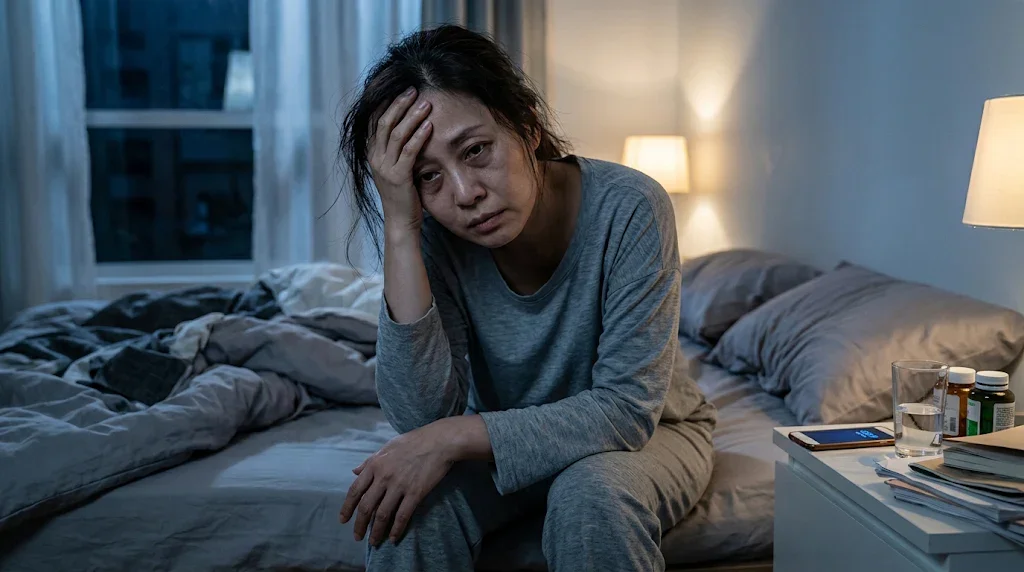
What is sleep deprivation?
Sleep deprivation is when a person doesn’t get enough sleep. This can be a short-term issue, affecting one or a few nights, or it can be a chronic concern that lasts weeks or even months. Sleep deprivation can happen for countless reasons, many of them harmless, but it’s also a key symptom of certain health conditions.
Sleep is something that everyone needs, and most people need a similar amount, depending on their age. That amount also changes with age. However, some people need more sleep to feel well-rested, while others need less, but these exceptions aren’t common. A change in your sleep patterns, gradual or sudden, is a reason to talk to a healthcare provider.
The average daily amount of sleep needed, by age, is:
Newborns (up to 3 months old): 14 to 17 hours.
Infants (4 to 12 months old): 12 to 16 hours, including naptime.
Young children (1 to 5 years old): 10 to 14 hours, including naptime.
School-aged children (6 to 12 years old): 9 to 12 hours.
Teenagers (13 to 18 years old): 8 to 10 hours.
Adults (18 years and up): 7 to 9 hours.
Sleep deprivation can also take different forms. For some people, sleep deprivation happens because they stay awake instead of sleeping. For others, they’re still sleeping, but they aren’t getting quality sleep, so they still wake up feeling tired.
Sleep deprivation usually isn’t a major problem in limited, isolated amounts. However, research shows that chronic sleep deprivation can cause or contribute to a variety of health issues.
Systems affected
Sleep deprivation has negative effects in multiple ways throughout your body. Those can affect the following body systems, organs and processes:
Heart and circulatory systems: Sleep deprivation has long-term damaging effects on your heart and circulatory health. People with chronic sleep deprivation are more likely to develop high blood pressure (hypertension) and high cholesterol (hyperlipidemia).
Metabolic systems: People with chronic sleep deprivation are at a much higher risk of developing Type 2 diabetes.
Immune system: Your body’s natural defenses against infections can’t work properly if you aren’t getting enough sleep.
Nervous system: It’s common for people who aren’t sleeping enough to have higher pain sensitivity, which means they feel pain more easily, the pain is more intense or both.
Brain: Sleep deprivation has very negative effects on how your brain works. While experts don’t fully understand sleep’s role in brain function, they do know it’s a key part of how people learn and remember. There’s also some evidence that sleep deprivation could play a role in the development of Alzheimer’s disease.
Mental health: Sleep deprivation also negatively affects your mental health, making it harder for you to manage and process your emotions. People with sleep deprivation are more likely to feel symptoms of depression and anxiety.
The effects of sleep deprivation depend on why it happens and how long it lasts. The longer a person has sleep deprivation, the greater — and more severe — the effects.
9 Physical Signs of Chronic Sleep Deprivation
Increased impulsivity: Sleep deprivation affects the brain's prefrontal cortex, the region primarily responsible for judgment, impulse control, and attention.
Frequent arguments: Sleep-deprived couples are more easily irritated, leading to friction and frequent quarrels.
Forgetfulness: Lack of sleep impairs memory formation and clouds logical thinking.
Heightened hunger: Insufficient sleep disrupts hormones such as leptin and ghrelin, increasing food cravings.
Clumsiness: Sleep loss can cause unsteady walking, poor physical coordination, and stumbling through tasks.
Easier distraction: Missing highway exits while driving, forgetting to turn, or struggling to focus on tasks can all be linked to inadequate sleep.
Relying on clichés: When sleep-deprived, people are more prone to slurred speech, overusing clichés, and speaking in a monotone voice.
Reading sentences twice: Having to look at or read a sentence twice to understand it is a classic sign of poor concentration and sleep deprivation.
Falling asleep the moment your head hits the pillow: Regularly falling asleep within five minutes of lying down may indicate severe sleep debt.
Adults Should Aim for 7–9 Hours of Sleep Each Night
According to Fengchun Yu, Chief Physician at the Sleep Medicine Center of Beijing Tsinghua Changgung Hospital, there is a "bidirectional dialogue" between sleep and the immune system. Sleep deprivation tricks the body into thinking it is in a state of stress, triggering a defensive response. As a result, pro-inflammatory cytokines in the blood rise significantly, while the activity of natural killer (NK) cells—which play vital antiviral and antitumor roles—declines, continuously amplifying inflammatory signals. Deeper mechanistic studies reveal that sleep loss triggers a cascade of inflammation in the brain, while the secretion of melatonin—a key hormone regulating the sleep-wake circadian rhythm—decreases under chronic sleep deprivation, leading to immune dysregulation.
When sleep disorders or sleep deprivation become chronic, the damage extends far beyond simple fatigue, affecting multiple systems—including the cardiovascular, metabolic, and immune systems—and disrupting normal physiological functions throughout the body.
Adults should ensure 7 to 9 hours of sleep per night and try to go to bed and wake up at the same time every day, including on weekends. Avoid electronic devices such as smartphones and computers for at least one hour before bedtime, as blue light suppresses melatonin secretion. Creating a quiet, dark, and temperature-appropriate sleep environment—using blackout curtains, earplugs, or an eye mask—can also effectively improve sleep quality.
The Right Way to Catch Up on Sleep Over the Weekend
Many people try to make up for lost sleep on weekends, but sleeping in for several extra hours all at once can disrupt the circadian rhythm, affecting hormone secretion and autonomic nervous system balance. If you need to recover from sleep debt, it is better to go to bed earlier the next evening rather than sleeping late in the morning, and to avoid consecutive late nights that invert your biological clock and overload your organs. For those who frequently stay up late on workdays, short daily naps or brief recovery periods are more effective than binge-sleeping during holidays.
References
https://my.clevelandclinic.org/health/diseases/23970-sleep-deprivation
https://valleysleepcenter.com/9-signs-youre-not-getting-enough-sleep/