Highlight
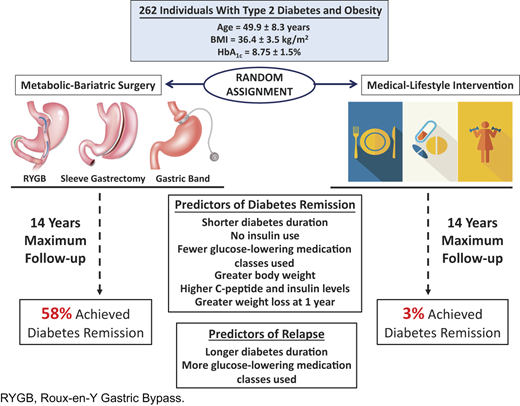
Metabolic-bariatric surgery (MBS) achieved diabetes remission in 58% of patients versus 3% with medical-lifestyle therapy over 11 years.
Shorter diabetes duration and absence of insulin use strongly predict sustained remission post-MBS.
Early weight loss within one year post-MBS is a critical factor associated with remission success.
Longer diabetes duration and more glucose-lowering medications increase risk of relapse after remission.
Study Background
Type 2 diabetes mellitus (T2D) continues to represent a major global public health burden due to its high prevalence, associated complications, and the substantial costs involved in its management. Metabolic-bariatric surgery (MBS) has emerged as an effective treatment modality, particularly for patients with obesity complicated by T2D, demonstrating superior rates of diabetes remission compared to conventional medical or lifestyle interventions. Nevertheless, not all patients achieve remission, and among those who do, relapse of diabetes is a clinical challenge. Understanding patient-specific predictors of diabetes remission and relapse can aid in tailoring treatment approaches and optimizing long-term outcomes.
Study Design
The Alliance of Randomized Trials of Medicine vs. Metabolic Surgery in Type 2 Diabetes (ARMMS-T2D) is a rigorous, multicenter study conducted over 14 years involving 262 participants with established T2D. Participants were randomized to one of two treatment strategies: metabolic-bariatric surgery (n = 166) or intensive medical-lifestyle management (n = 96). The patient cohort comprised 68% women, with a mean age of 49.9 years, mean body mass index (BMI) of 36.4 kg/m2, and mean baseline HbA1c of 8.5%. Various bariatric procedures were employed in the surgical arm.
The primary outcomes were diabetes remission—defined as hemoglobin A1c (HbA1c) <6.5% without glucose-lowering medications—and subsequent relapse. Predictors of these outcomes were assessed using univariate time-to-event analyses and multivariate least absolute shrinkage and selection operator (LASSO) regression models. The study evaluated multiple candidate predictors measured at baseline and during follow-up, including diabetes duration, insulin use, number and classes of glucose-lowering medications, body weight, fasting C-peptide and insulin levels, and weight change at 1 year post-intervention.
Key Findings
Over a median follow-up of 11 years (maximum 14 years), 58% of patients randomized to MBS achieved remission of T2D, compared to only 3% in the medical-lifestyle group. This finding underscores the potent therapeutic effect of bariatric surgery on glycemic control beyond standard medical care.
Predictors of Diabetes Remission
Univariate Analyses: Shorter duration of diabetes, absence of baseline insulin therapy, fewer classes of glucose-lowering medications, higher baseline body weight, elevated fasting C-peptide and insulin levels, and greater weight loss at 1 year post-surgery were all associated with increased likelihood of remission (all P < 0.05).
Multivariate Analyses: After adjusting for interrelated variables, baseline diabetes duration, insulin use, and weight change at 1 year remained independent, significant predictors of remission (all P < 0.01). Specifically, shorter duration and no insulin use reflect preserved beta-cell function, correlated with better metabolic response. Weight loss within the first year is a modifiable factor strongly associated with remission.
Predictors of Diabetes Relapse After Remission
Among patients who initially achieved remission following MBS, factors predicting relapse included longer baseline diabetes duration and a greater number of glucose-lowering medication classes used prior to surgery. These findings suggest that more advanced or refractory disease predisposes patients to loss of glycemic control over time despite initial improvement.
Expert Commentary
The ARMMS-T2D study offers invaluable long-term data elucidating which patients derive the greatest sustained benefit from metabolic-bariatric surgery. The integration of baseline clinical metrics such as duration of diabetes and insulin dependence with early weight loss highlights opportunities for clinicians to personalize therapeutic decisions. Importantly, these findings reinforce the concept that earlier surgical intervention in the course of diabetes may maximize remission potential.
While the study robustly demonstrates efficacy and prognostic factors, limitations include variability in surgical procedures and the challenge of adherence in long-term lifestyle management. The extremely low remission rates in the medical-lifestyle arm also reflect the difficulty of achieving diabetes remission without surgical intervention among patients with obesity and T2D. Future research may focus on refining patient selection criteria combining clinical, biochemical, and potentially genetic markers to further enhance predictive models.
Biologically, improved beta-cell function and insulin sensitivity following MBS are known mechanisms underpinning remission. Higher fasting C-peptide and insulin at baseline indicate residual pancreatic function, aligning with better post-surgical outcomes. Weight loss attenuates insulin resistance, a core pathogenic component of T2D.
Conclusion
The ARMMS-T2D study definitively confirms metabolic-bariatric surgery as a highly effective treatment to induce long-term remission of type 2 diabetes in select patients. Key baseline factors such as shorter diabetes duration, absence of insulin therapy, and early postoperative weight loss identify individuals most likely to benefit. Conversely, longer disease duration and multiple medication use predict relapse, highlighting the necessity for individualized therapeutic strategies and ongoing monitoring.
Incorporating these predictors into clinical practice can optimize patient counseling, guide timing and choice of interventions, and potentially improve outcomes in the challenging management of type 2 diabetes complicated by obesity.
Funding and Registration
Details regarding study funding and clinical trial registration were not specified in the available abstract.
References
Simonson DC, Cummings DE, Schauer PR, et al. Predictors of Type 2 Diabetes Remission and Relapse After Metabolic-Bariatric Surgery or Medical-Lifestyle Therapy in the ARMMS-T2D Study. Diabetes Care. 2026 Oct 20. PMID: 42900776.