Optimizing Antithrombotic Therapy After PCI in Atrial Fibrillation Patients: Insights from a Network Meta-Analysis
Introduction
Every year, millions of patients worldwide face the complex challenge of managing atrial fibrillation (AF) alongside coronary artery disease requiring percutaneous coronary intervention (PCI). AF, the most common sustained cardiac arrhythmia, significantly increases stroke risk, necessitating anticoagulant therapy. Concurrently, PCI — a procedure to open obstructed coronary arteries — requires antiplatelet therapy to prevent stent thrombosis. However, combining these therapies significantly raises the bleeding risk, complicating clinical decisions. Recent advances have introduced newer direct oral anticoagulants (DOACs) as alternatives to vitamin K antagonists (VKAs), sparking a need to clarify the optimal antithrombotic regimen balancing efficacy and safety for AF patients undergoing PCI.
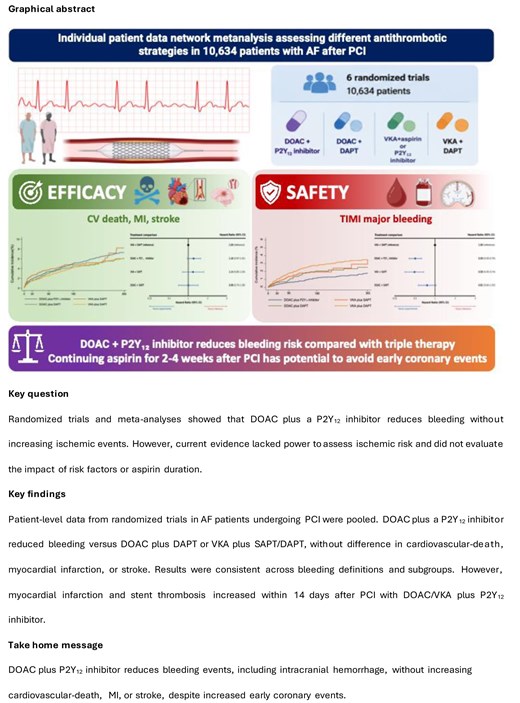
Understanding which combination of antithrombotic treatments minimizes cardiovascular events without excess bleeding is vital for personalized patient care. To address this, an individual patient data network meta-analysis pooled data from six major randomized trials involving over 10,000 patients. This article summarizes key findings, clinical implications, and practical recommendations derived from this landmark analysis.
Sign in free to continue reading
Create or use your MedXY account to unlock the complete article.
This article was created using several editorial tools, including AI, as part of the process. Human editors reviewed this content before publication.