Molecular Subtyping of Salivary Adenoid Cystic Carcinomas Enhances Prognostic Precision
Introduction
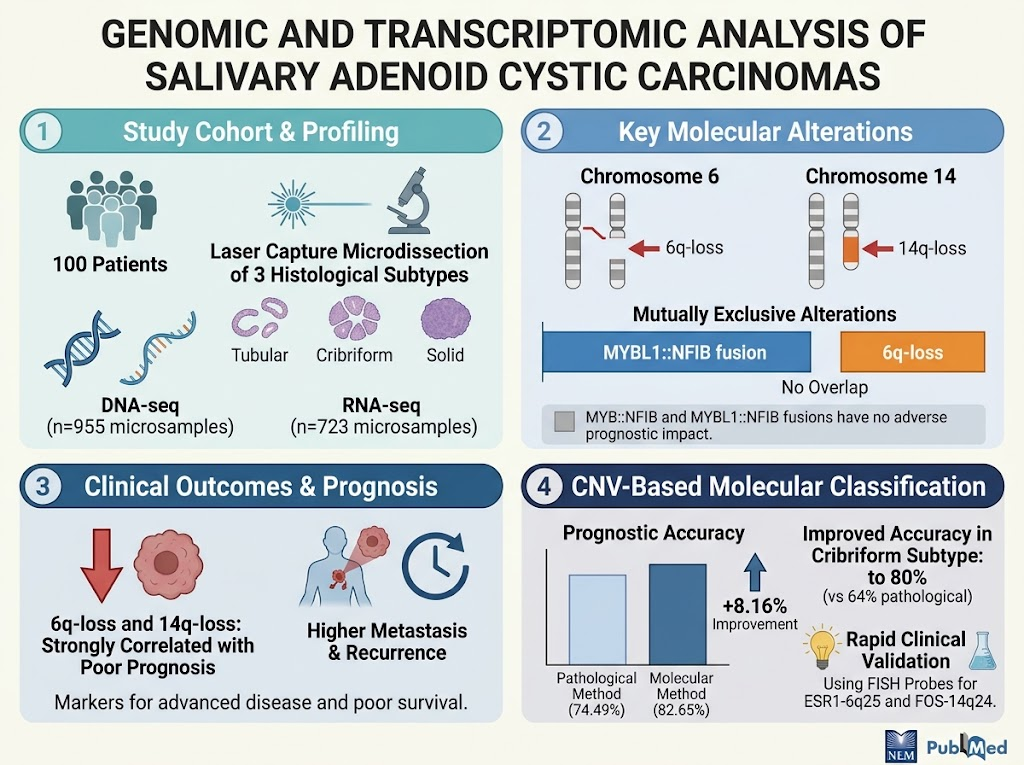
Adenoid cystic carcinoma (ACC) is a rare malignancy predominantly affecting salivary glands, characterized by heterogeneous histopathologic features including tubular, cribriform, and solid components. ACC is known for its indolent yet relentless clinical course marked by frequent local recurrences, perineural invasion, and late distant metastases. Despite pathological classifications developed over decades, challenges persist in establishing standardized grading systems due to the morphological complexity and coexistence of different histologic patterns within single tumors.
The lack of robust, reliable prognostic biomarkers further complicates management strategies, necessitating novel molecular tools to augment clinical pathological assessment. The study by Liu et al. addresses this unmet need by performing comprehensive genomic and transcriptomic profiling of ACC to delineate molecular subtypes associated with clinical outcomes.
Sign in free to continue reading
Create or use your MedXY account to unlock the complete article.
This article was created using several editorial tools, including AI, as part of the process. Human editors reviewed this content before publication.