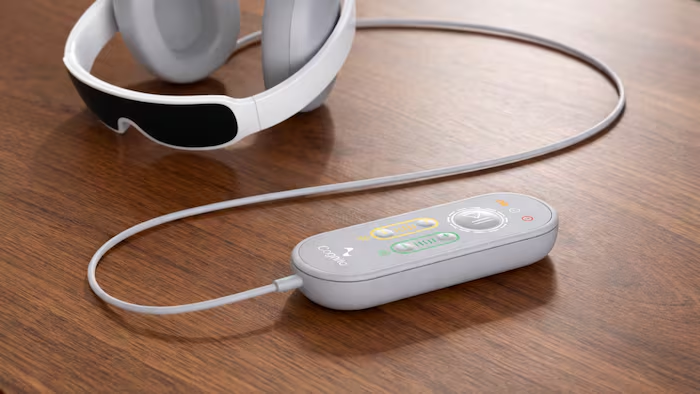
Cognito’s Spectris AD missed primary endpoints in its pivotal trial, but saw better outcomes for patients with mild symptoms. (Cognito Therapeutics)
Cognito Therapeutics’ light-and-sound therapy, Spectris AD, missed its primary endpoint in the Phase 3 HOPE trial for Alzheimer’s disease, tempering expectations for the non-invasive, at-home device despite encouraging signs in a milder patient subset.
In the primary analysis of 663 participants, 12-month changes from baseline on the integrated Alzheimer’s Disease MMSE and ADCS-ADL Rating Scale showed no meaningful difference between Spectris and a sham control.
Mild Alzheimer’s Subgroup: Signal or Statistical Noise?
A prespecified subgroup analysis focusing on patients with mild Alzheimer’s pointed to slower decline on measures of cognition and daily functioning—including CDR-SB, daily function, and instrumental activities of daily living. Proponents, including the Alzheimer’s Drug Discovery Foundation (ADDF), which supported the study through a research grant, suggested the contrast between mild and moderate cases could point to benefits from earlier intervention.
“While the HOPE study did not meet its primary endpoint, the signal in the mild Alzheimer’s subgroup raises important questions that are worth exploring further,” said Laura Nisenbaum, PhD, Interim Chief Science Officer of the ADDF.
Still, because the positive findings come from a subgroup analysis rather than the primary endpoint, their reliability remains open to question. Subgroup signals in late-stage trials frequently require independent confirmation before carrying regulatory or clinical weight, even as Cognito plans to discuss a potential path toward authorization for early symptomatic Alzheimer’s with the FDA.
From Animal Models to Human Trials
The trial’s mixed outcome also underscores a familiar hurdle in neurodegeneration research: translating promising preclinical results from animal models into consistent human clinical benefit. Sensory stimulation approaches designed to engage brain activity and preserve structure and function have generated strong interest—particularly for patients who cannot take conventional anti-amyloid monoclonal antibodies, such as the estimated 40% to 65% of Alzheimer’s patients who carry the APOE4 gene. Yet bridging the gap between animal experiments and complex human disease progression remains notoriously difficult.
What Comes Next for the Field
Whether the HOPE results represent a temporary setback that can be addressed through refined trial designs, earlier patient selection, or technical adjustments—or signal deeper limits for light-and-sound stimulation in Alzheimer’s—remains to be seen. Further data and regulatory feedback will be critical in determining whether this approach can move forward as a viable treatment option.