We use cookies

Our website uses essential cookies and, with your consent, additional cookies to measure performance and improve our services. Cookie Policy.

You can change your choice at any time.

MMedXYNews
HomeVideos
MedXY AI/MedXY News/Tag: Alzheimer disease
MedXY News
EnglishTag

Alzheimer disease

Ask MedXY AI
type 2 diabetesclinical trialheart failureimmunotherapyobesitycardiovascular riskatrial fibrillationbiomarkerscritical careclinical trialsHypertensionartificial intelligenceCardiologyoncologypublic healthtype 1 diabetesdiabetesMortalityAlzheimer's diseasecardiovascular diseasebreast cancerepidemiology

Latest news

Tag

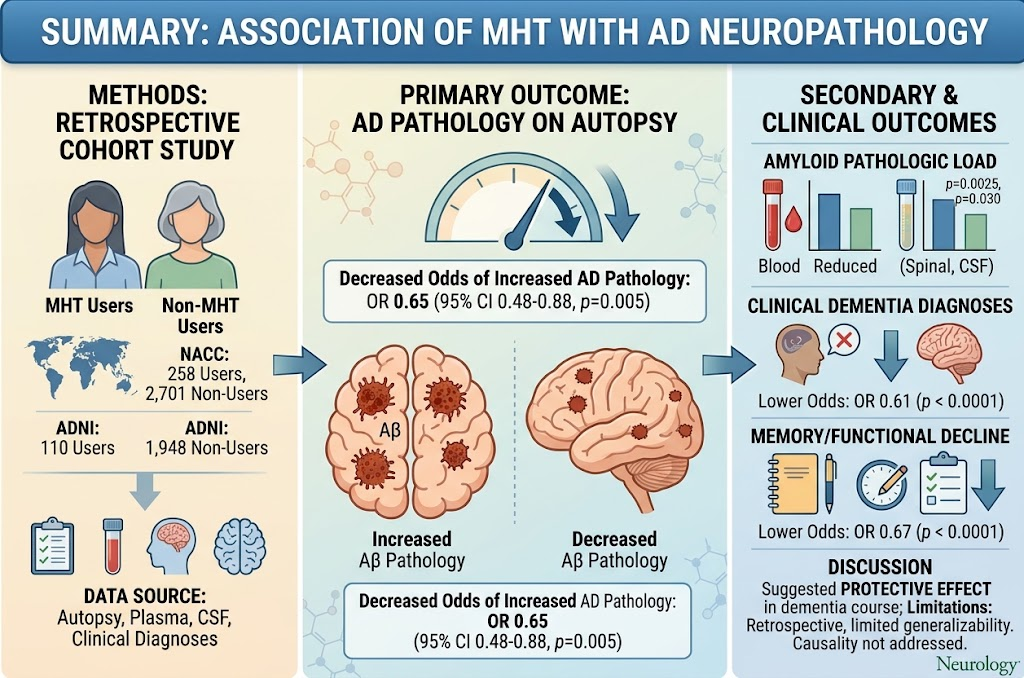
Association Between Menopausal Hormone Therapy and Alzheimer Disease Neuropathology: Insights from Large Cohort Studies
Clinical Updatesdementia riskneuropathology

Association Between Menopausal Hormone Therapy and Alzheimer Disease Neuropathology: Insights from Large Cohort Studies

By MedXY|Aug 18, 2026

This review synthesizes recent evidence linking menopausal hormone therapy (MHT), particularly estrogen-only regimens, with decreased Alzheimer disease neuropathology and clinical dementia risk, highlighting biomarker correlations, clinical
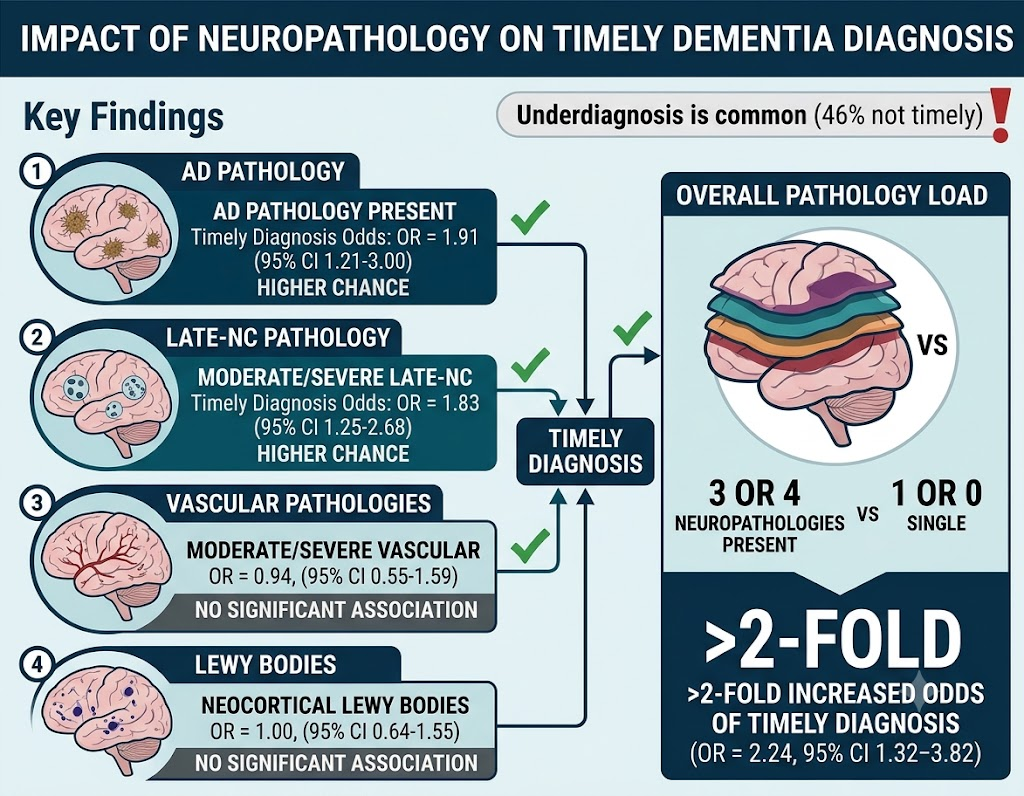

Alzheimer and LATE-NC Pathologies Associated With Timely Dementia Diagnosis in Healthcare Settings
NeurologyLATE-NCDementia
© 2026 MedXY
Contact usAbout usPrivacy PolicyMedXY story

Alzheimer and LATE-NC Pathologies Associated With Timely Dementia Diagnosis in Healthcare Settings

By MedXY|Jul 26, 2026

Among older adults with incident dementia, Alzheimer disease and LATE-NC pathologies were independently linked to higher odds of receiving a timely diagnosis, while vascular pathology and Lewy bodies showed no significant association.

Long-Term Economic Impact of Early-Onset Dementia: A 15-Year Retrospective Analysis of Income and Productivity Loss
NeurologyAlzheimer diseaseEarly-onset dementia

Long-Term Economic Impact of Early-Onset Dementia: A 15-Year Retrospective Analysis of Income and Productivity Loss

By MedXY|Jul 10, 2026

This study reveals significant income and productivity losses up to 15 years before diagnosis in early-onset dementia, varying across subtypes, underscoring the urgent need for earlier detection and support.

Retinal Microvascular Clues to Alzheimer Disease: What Swept-Source OCT Angiography Reveals About Neurovascular Dysfunction
NeurologyAlzheimer diseaseneurovascular dysfunction

Retinal Microvascular Clues to Alzheimer Disease: What Swept-Source OCT Angiography Reveals About Neurovascular Dysfunction

By MedXY|Jun 19, 2026

SS-OCTA identified retinal and choriocapillaris microvascular changes associated with cognitive status in Alzheimer disease, including thinner GCC in dementia and a biphasic CCFD pattern, suggesting a promising noninvasive biomarker platfor

A Two-Marker Plasma Model Closely Mirrors PET-Based Biological Staging of Alzheimer Disease
NeurologyAlzheimer diseaseDấu hiệu sinh học huyết tương

A Two-Marker Plasma Model Closely Mirrors PET-Based Biological Staging of Alzheimer Disease

By MedXY|Jun 7, 2026

Plasma %p-tau217 plus eMTBR-tau243 showed strong agreement with amyloid/tau PET staging, tracked clinical severity, and aligned with neuropathology, supporting a scalable blood-based approach to Alzheimer disease biological staging.

Midlife Central Obesity Tracks With Higher Late-Life Plasma P-tau217 and Biomarker-Verified Alzheimer Dementia, While the Association Reverses in Old Age
NeurologyAlzheimer diseaseBody Mass Index

Midlife Central Obesity Tracks With Higher Late-Life Plasma P-tau217 and Biomarker-Verified Alzheimer Dementia, While the Association Reverses in Old Age

By MedXY|Jun 3, 2026

In the HUNT Study, higher midlife waist-to-height ratio and BMI predicted higher late-life plasma p-tau217 and biomarker-verified Alzheimer dementia, whereas higher adiposity in late life was associated with lower biomarker levels and lower

Dementia Screening for Family Members: No Clear Benefit or Harm Found in Landmark Trial
Family Medicine & NutritionAlzheimer diseasecaregiver outcomes

Dementia Screening for Family Members: No Clear Benefit or Harm Found in Landmark Trial

By MedXY|Apr 24, 2026

A randomized clinical trial found that dementia screening for family members of older adults did not improve quality of life or caregiver preparedness, nor did it increase depression or anxiety.

Why Women Show Higher Amyloid Burden: New Evidence on Sex, Race, and APOE ε4 Interactions in Alzheimer’s Pathology
NeurologyAlzheimer diseaseAPOE ε4

Why Women Show Higher Amyloid Burden: New Evidence on Sex, Race, and APOE ε4 Interactions in Alzheimer’s Pathology

By MedXY|Apr 13, 2026

A Brazilian autopsy study of 2,268 individuals reveals that female sex, APOE ε4 status, and African ancestry jointly influence amyloid pathology. Women showed 65% higher adjusted odds of neuritic plaques, and protective effects against amyl

Sex, Race, and Ancestry Converge to Shape Amyloid Pathology: Evidence from a Large-Scale Admixed Autopsy Study
NeurologyAlzheimer diseaseAPOEε4

Sex, Race, and Ancestry Converge to Shape Amyloid Pathology: Evidence from a Large-Scale Admixed Autopsy Study

By MedXY|Mar 2, 2026

This cross-sectional study of 2,268 autopsies reveals that female sex, APOEε4 status, and African ancestry independently and jointly influence neuritic plaque burden, suggesting that current Alzheimer’s biomarker thresholds may need refinem

Higher Serum Klotho Levels May Protect Cognitive Function Against Age-Related Brain Atrophy
NeurologyAlzheimer diseaseneurodegeneration

Higher Serum Klotho Levels May Protect Cognitive Function Against Age-Related Brain Atrophy

By MedXY|Feb 6, 2026

Research indicates that circulating levels of the longevity protein klotho can moderate the relationship between cerebral atrophy and cognitive performance in older adults, suggesting a biological mechanism for cognitive resilience even in

Precision Screening for Preclinical Alzheimer Disease: The Ascendance of Plasma p-tau217 as a Scalable Biomarker
Clinical UpdatesAlzheimer diseasebiomarkers

Precision Screening for Preclinical Alzheimer Disease: The Ascendance of Plasma p-tau217 as a Scalable Biomarker

By MedXY|Jan 2, 2026

This review synthesizes recent high-impact evidence on plasma p-tau217, demonstrating its superior utility in identifying amyloid pathology, predicting cognitive decline, and optimizing recruitment for primary prevention trials in cognitive

Home-Based Gamma tACS Improves Cognitive Function and Daily Living in Alzheimer Disease: Results from a Randomized Clinical Trial
NeurologyAlzheimer diseaseneuromodulation

Home-Based Gamma tACS Improves Cognitive Function and Daily Living in Alzheimer Disease: Results from a Randomized Clinical Trial

By MedXY|Dec 22, 2025

A randomized clinical trial demonstrates that home-based gamma transcranial alternating current stimulation (tACS) over the precuneus safely improves cognitive outcomes and activities of daily living in patients with prodromal and mild Alzh

White Matter Microstructure and Cognitive Decline in Aging and Alzheimer Disease: A Comprehensive Review of Recent Advances
Clinical UpdatesAlzheimer diseasecognitive decline

White Matter Microstructure and Cognitive Decline in Aging and Alzheimer Disease: A Comprehensive Review of Recent Advances

By MedXY|Dec 10, 2025

This review synthesizes recent large-scale multi-cohort studies revealing white matter microstructural abnormalities—especially free water increases—in limbic tracts as critical markers of cognitive decline in aging and Alzheimer’s di

Free Water Collapse in Limbic White Matter Predicts Memory Decline in Aging and Alzheimer Disease
NeurologyAlzheimer diseasediffusion MRI

Free Water Collapse in Limbic White Matter Predicts Memory Decline in Aging and Alzheimer Disease

By MedXY|Dec 10, 2025

A large multisite analysis (n=4,467) finds white matter free water (FW), especially in limbic tracts (cingulum, fornix), strongly associates with cross-sectional cognition and longitudinal decline; FW interacts with amyloid, APOE ε4, and gr

Lower Posttreatment Amyloid Predicts Slower Clinical Decline and Reduced Tau/Glial Biomarkers After Donanemab: Secondary Analysis of TRAILBLAZER‑ALZ 2
NeurologyAlzheimer diseaseamyloid PET

Lower Posttreatment Amyloid Predicts Slower Clinical Decline and Reduced Tau/Glial Biomarkers After Donanemab: Secondary Analysis of TRAILBLAZER‑ALZ 2

By MedXY|Dec 7, 2025

A secondary analysis of TRAILBLAZER‑ALZ 2 found that lower posttreatment amyloid plaque levels after donanemab correlate strongly with less clinical decline and reductions in plasma p‑tau217, p‑tau181, and GFAP over 76 weeks, supporting pla

Dietary Patterns and Dementia Risk: Insights from a Large UK Biobank Cohort Study
Family Medicine & NutritionAlzheimer diseaseDementia

Dietary Patterns and Dementia Risk: Insights from a Large UK Biobank Cohort Study

By MedXY|Oct 20, 2025

Higher adherence to Mediterranean, MIND, and Recommended Food Score diets is linked to reduced risk of all-cause dementia and Alzheimer disease, highlighting diet as a modifiable factor in dementia prevention.

Enlarged Perivascular Spaces as Early Neurovascular Biomarkers in Alzheimer Disease: Integrating Serum and MRI Findings from Multicultural Cohorts
Clinical UpdatesAlzheimer diseasebiomarkers

Enlarged Perivascular Spaces as Early Neurovascular Biomarkers in Alzheimer Disease: Integrating Serum and MRI Findings from Multicultural Cohorts

By MedXY|Oct 20, 2025

Enlarged perivascular spaces (EPVS) correlate with serum biomarkers of neuroinflammation and amyloid pathology and associate with cognitive impairment, supporting their role as early MRI markers for Alzheimer disease (AD) vascular contribut

Ask MedXY AI

Most popular

Intimate Health
Five Benefits for Women Continuing Sexual Activity After Menopause
Intimate Health
Why Some Women Have a Strong Sex Drive—And Why Men Shouldn't Worry About It
Nursing & care
How often should a couple have sex?
Intimate Health
Classic Intimacy Recommendations: How to Help Women Reach Orgasm and Enjoy Mutual Pleasure
Intimate Health
What Makes a Woman "Physiologically Addicted" Is Never Money, But These Two Relationship Qualities