Intra-amniotic Categories of Preterm Prelabor Rupture of Membranes: Gestational Age-Specific Distribution, Amniotic Fluid Microbial Profiles, and Neonatal Outcomes
Introduction
Preterm prelabor rupture of membranes (PROM), defined as rupture of the fetal membranes before the onset of labor and prior to 37 completed weeks of gestation, remains a significant cause of preterm birth and neonatal morbidity. It involves a disruption of the amniotic sac integrity, which can expose the amniotic cavity to microbial invasion, triggering inflammation and potentially leading to adverse perinatal outcomes. Understanding the intra-amniotic environment during preterm PROM is critical to optimizing neonatal outcomes and tailoring clinical interventions.
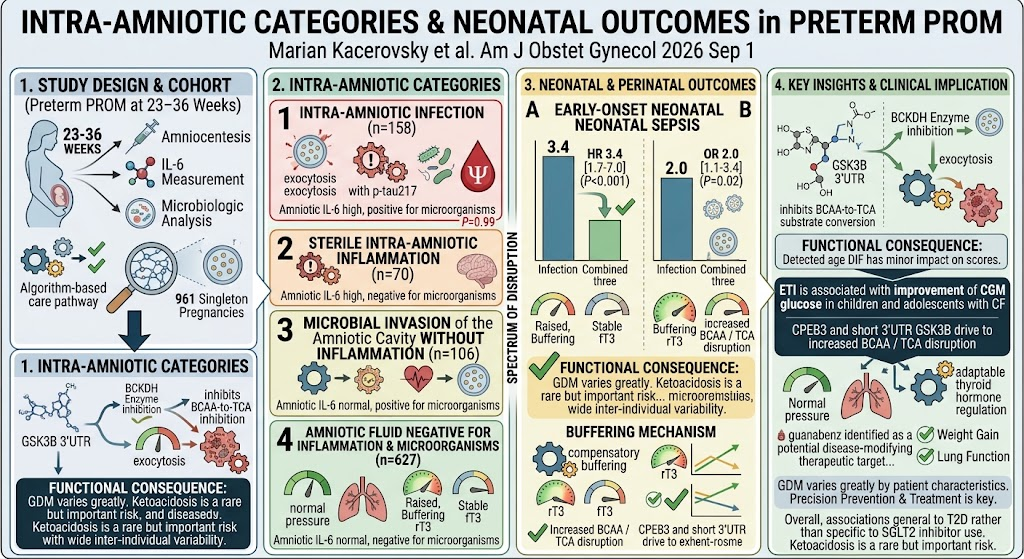
Historically, intra-amniotic involvement in preterm PROM has been characterized predominantly by the presence or absence of infection, often neglecting the spectrum of inflammatory and microbial states. This study categorizes intra-amniotic conditions into four distinct types based on the presence or absence of inflammation and microbial invasion, providing a gestational age-specific overview and associated neonatal outcomes.
Sign in free to continue reading
Create or use your MedXY account to unlock the complete article.
This article was created using several editorial tools, including AI, as part of the process. Human editors reviewed this content before publication.