Study Background
Early childhood development is critically influenced by parenting practices and the mental health status of caregivers. In rural China, children face developmental risks due to socioeconomic and environmental factors. Parenting interventions aimed at enhancing caregiving skills have become central public health strategies to foster child cognitive and language development. However, the effectiveness of these interventions may be moderated by caregiver psychological well-being, which influences caregivers’ ability to engage and benefit from parenting programs. Previous research lacks clarity on how depressive, anxiety, and stress symptoms in caregivers affect child developmental outcomes following parenting interventions, especially in low-resource, rural settings.
Study Design and Methods
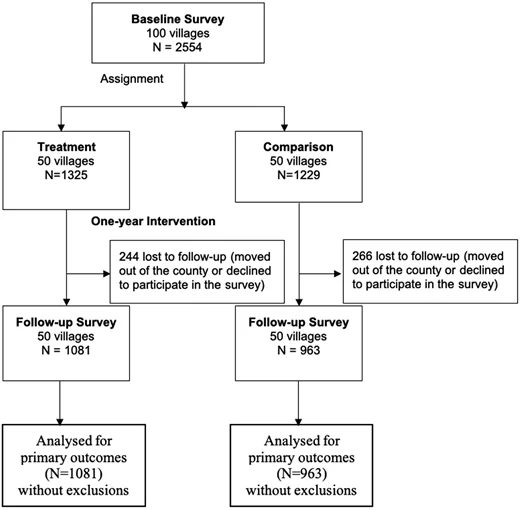
This investigation employed a clustered randomized controlled trial (RCT) design to rigorously evaluate the influence of caregiver mental health on a parenting intervention’s impact on child development. Conducted from 2016 to 2019, 100 rural villages in China were randomized either to an intervention group, which received weekly individualized parenting sessions at community parenting centers, or to a pure comparison group without intervention. The study enrolled 2,554 caregiver-child dyads with children aged 6 to 24 months at baseline; 2,044 dyads (an 80% follow-up rate) completed the one-year post-intervention assessment.
Child development was measured with the Bayley Scales of Infant Development, Third Edition (BSID-III), a validated tool capturing cognitive, language, and motor domains. Caregiver mental health was assessed via the Depression Anxiety and Stress Scale-21 (DASS-21), which quantifies symptoms of depression, anxiety, and stress. Ordinary least squares regression models with interaction terms analyzed whether baseline mental health symptoms moderated the intervention effects.
Key Findings
The study’s primary outcomes revealed that the parenting intervention significantly enhanced children’s cognitive and language development, but this effect was predominantly observed in children whose caregivers exhibited no depressive symptoms at baseline. Specifically, cognitive development improved by 0.17 standard deviations (SD) (95% CI: 0.045 to 0.29), and language development improved by 0.10 SD (95% CI: 0.00 to 0.21) in this subgroup.
Further stratification showed positive cognitive outcomes among children of caregivers with low anxiety (β=0.13 SD; 95% CI: 0.00 to 0.26) and low stress levels (β=0.15 SD; 95% CI: 0.03 to 0.27). Conversely, for children whose caregivers had significant depressive, anxiety, or stress symptoms at baseline, the intervention did not yield statistically significant gains in any developmental domain.
The heterogeneity in intervention impact was primarily linked to differences in stimulating parenting practices post-intervention. Caregivers without mental health symptoms were more likely to adopt and sustain developmentally supportive behaviors. Importantly, attendance rates at parenting sessions and parental beliefs about parenting did not differ substantially by mental health status, suggesting that the differential developmental outcomes were driven by the caregivers’ mental health influencing the translation of knowledge into practice.
Expert Commentary
This well-powered RCT contributes significant insights into the nuanced role of caregiver mental health in modulating early childhood interventions. The finding that caregiver depressive, anxiety, and stress symptoms attenuate intervention benefits aligns with psychobiological understanding that depression and anxiety can impair motivation, responsiveness, and consistency in parenting. The study underscores the importance of integrating caregiver mental health screening and support within parenting interventions to maximize child developmental gains.
However, some limitations warrant consideration. The study population was restricted to rural Chinese villages, potentially limiting generalizability to urban or culturally distinct populations. The reliance on self-reported mental health measures, while standardized, may introduce reporting biases. Moreover, the trial did not test interventions explicitly targeting caregiver mental health alongside parenting support, which may represent an important area for future research.
Conclusions and Implications
This study demonstrates that early childhood parenting interventions yield meaningful improvements in cognitive and language outcomes primarily among children of caregivers who are free from mental health symptoms at baseline. Caregiver mental health thus emerges as a critical moderator that can enable or impede the success of developmental programs.
For policy and practice, these findings advocate for a dual focus approach combining parenting education with mental health assessment and interventions for caregivers. Addressing caregiver depression, anxiety, and stress may enhance the fidelity and effectiveness of parenting interventions, thereby optimizing developmental trajectories in vulnerable rural populations.
Future research should explore integrated models that concurrently tackle caregiver mental health and parenting to better support child development holistically, and investigate mechanisms through which mental health influences parenting behaviors.
Funding and Study Registration
Detailed funding sources and trial registration information were not provided in the source abstract but are typically accessible via the publisher or clinical trial registries.
References
Jiang Q, Qian Y, Wang B, Rozelle S, Fernald L. Association of Caregiver Mental Health and a Childhood Parenting Intervention in China. Pediatrics. 2026 Nov 1;158(5). PMID: 42863843.
Additional relevant literature addressing caregiver mental health and child development includes:
– Cooper PJ, Murray L. Postnatal depression. BMJ. 1998;316(7148):1884-6.
– Rahman A, et al. Impact of a maternal depression intervention on child development in rural Pakistan. Lancet. 2008;372(9642):1459–67.
– Feldman R, et al. Maternal depression and parenting: differential impact on infants’ and toddlers’ development. Child Psychiatry Hum Dev. 2009;40(3):243-59.