Highlight
Hydrocephalus involves disrupted cerebrospinal fluid (CSF) flow, absorption, or overproduction causing ventricular enlargement in the brain.
Current mainstay surgical treatments include CSF diversion via shunting and endoscopic third ventriculostomy (ETV).
Innovations such as smart shunts and antifouling catheter coatings are in development to reduce shunt malfunction and infection.
Research into cellular and molecular pathways, including aquaporin-mediated CSF regulation, informs future therapeutic strategies.
Background: Clinical Context and Disease Burden
Hydrocephalus is a complex neurological condition characterized by an abnormal accumulation of cerebrospinal fluid within the brain’s ventricular system leading to ventricular enlargement and increased intracranial pressure. Affecting both pediatric and adult populations, hydrocephalus can arise from congenital malformations—such as aqueductal stenosis or neural tube defects—or be acquired due to hemorrhage, infection, tumors, or traumatic brain injury.
The clinical presentation varies by age and etiology but often includes headache, nausea, cognitive impairment, gait disturbance, and in infants, macrocephaly and developmental delays. Diagnosis relies primarily on brain imaging modalities such as magnetic resonance imaging (MRI) or computed tomography (CT), with invasive intracranial pressure monitoring reserved for selected complex cases.
Hydrocephalus imposes significant morbidity and healthcare burden globally, necessitating timely diagnosis and effective treatment to prevent irreversible neurological damage. Despite surgical interventions, challenges persist including high rates of shunt malfunction and complications, underscoring the need for improved therapeutic solutions and deeper mechanistic understanding.
Current Surgical Treatments and Technologies
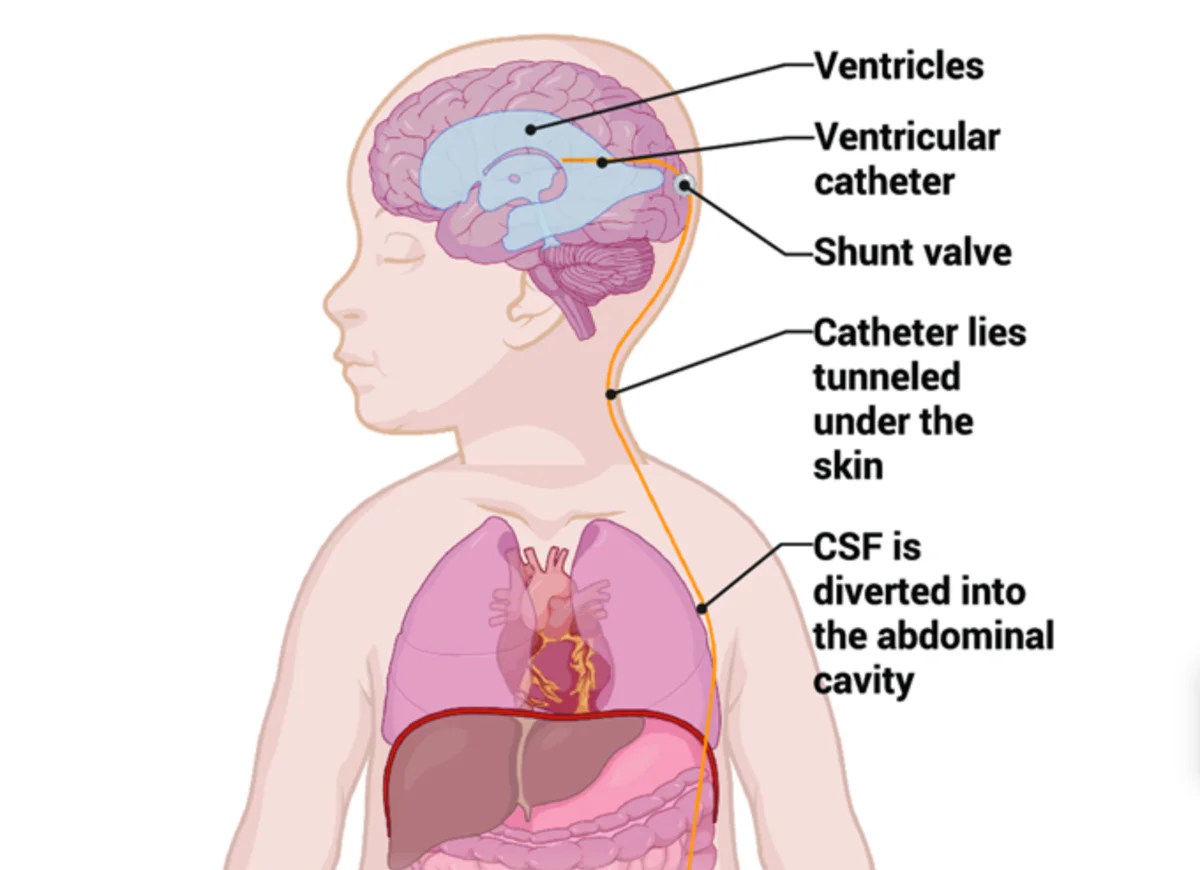
Surgical intervention remains the cornerstone of hydrocephalus management. The traditional and most widely employed method is CSF diversion using implanted shunt systems, which channel excess CSF from the ventricles to other body cavities (e.g., peritoneal cavity) to relieve pressure.
Commercially available shunts typically include a ventricular catheter, a valve mechanism to regulate flow, and a distal catheter. Although effective, shunts are prone to complications such as obstruction, infection, and mechanical failure, often necessitating multiple revision surgeries over a patient’s lifetime.
Endoscopic third ventriculostomy (ETV) has emerged as an alternative treatment, especially in obstructive hydrocephalus. ETV creates an opening in the floor of the third ventricle, enabling CSF to bypass obstructions and be absorbed naturally without implanted devices. This approach reduces dependence on shunts but is not suitable for all hydrocephalus subtypes.
Next-Generation Shunt Technologies
Ongoing research focuses on enhancing shunt designs to mitigate malfunction rates. Smart shunts integrate pressure and flow sensors enabling real-time monitoring and potential adjustment of flow dynamics to adapt to physiological needs. Furthermore, antifouling catheter coatings aim to prevent cellular and protein deposition that commonly cause shunt obstruction. These innovations promise to improve long-term outcomes but require further clinical validation.
Cellular and Molecular Research Insights
At the bench research level, studies are elucidating cellular and molecular mechanisms contributing to hydrocephalus development. Disruption of the ventricular lining, comprising ependymal cells, has been implicated in impaired CSF dynamics and ventricular enlargement.
Additionally, aquaporins—integral membrane water channels—play a crucial role in fluid transport within the central nervous system and are a focus in understanding CSF regulation. Alterations in aquaporin expression or function may impact CSF production and absorption, representing potential therapeutic targets.
Such mechanistic insights offer promising avenues for non-surgical interventions and may inform the design of pharmacologic strategies to modulate CSF dynamics more precisely.
Challenges and Future Directions
Despite advances, several critical challenges remain in hydrocephalus treatment. Shunt-related complications continue to limit success, and the heterogeneity of hydrocephalus etiologies demands personalized therapeutic approaches.
Improved diagnostic modalities for early detection, combined with innovations in biomaterials and bioengineering, are essential to develop more durable and patient-friendly devices. Furthermore, integration of molecular research findings could enable adjunct pharmacologic therapies that complement surgical management.
Multidisciplinary collaboration among neurosurgeons, neurologists, bioengineers, and basic scientists is paramount to translate emerging research into clinical practice improvements.
Summary
Hydrocephalus remains a multifaceted neurological disorder with significant clinical and therapeutic challenges. Surgical CSF diversion via shunting and ETV represent current standards of care, although limitations such as shunt malfunction and infection necessitate advancement.
Next-generation shunt technology, including smart systems and antifouling coatings, holds promise for enhancing patient outcomes. Meanwhile, basic research exploring cellular integrity of the ventricular lining and aquaporin-mediated fluid dynamics is expanding our understanding of hydrocephalus pathophysiology, potentially guiding future pharmacological therapies.
Continued innovation and cross-disciplinary research are crucial to overcoming the limitations of current treatments and improving quality of life for patients with hydrocephalus.
References
1. Shahriari A, et al. Hydrocephalus: Treatment, Current Research, and Challenges. Pediatrics. 2026;10(23):e42914136.
2. Kahle KT, et al. Hydrocephalus: Mechanisms and Management. Neurosurgery. 2016;79(4):623–635.
3. Richards MA, et al. Update on shunt technology and failures. Childs Nerv Syst. 2021;37(4):1165–1176.
4. Luciano MG, Buxton D. Endoscopic third ventriculostomy: past, present, and future. Childs Nerv Syst. 2018;34(10):1921–1929.
5. Thrane AS, et al. Aquaporin-4 and brain water regulation in hydrocephalus. Fluids Barriers CNS. 2018;15(1):20.
6. Wellons JC 3rd, et al. Risk factors for shunt failure in pediatric hydrocephalus. J Neurosurg Pediatr. 2020;25(2):226–234.