Highlight
Problematic social media use shows a bidirectional, year-specific relationship with depressive symptoms in adolescents over a 5-year period.
No significant longitudinal association was found between problematic social media use and anxiety symptoms in the same timeframe.
Female adolescents exhibit stronger bidirectional associations between problematic social media use and depressive symptoms than males.
Findings emphasize the importance of considering developmental timing and sex differences in mental health screening and interventions.
Study Background
Social media platforms have become central to adolescent social interactions, yet their impact on mental health remains complex and incompletely understood. Cross-sectional studies frequently link problematic social media use—characterized by compulsive engagement and difficulties controlling use—with increased depressive and anxiety symptoms. However, longitudinal evidence clarifying temporal and potentially causal associations is limited. Understanding these dynamic relationships is critical to identify periods of heightened vulnerability and to devise targeted prevention and intervention strategies. Furthermore, sex differences in susceptibility to mental health impacts of social media warrant detailed exploration to inform personalized clinical approaches. This study addresses these gaps by analyzing within-person, year-to-year associations between problematic social media use and depressive and anxiety symptoms across five annual assessments in a large, diverse adolescent cohort.
Study Design
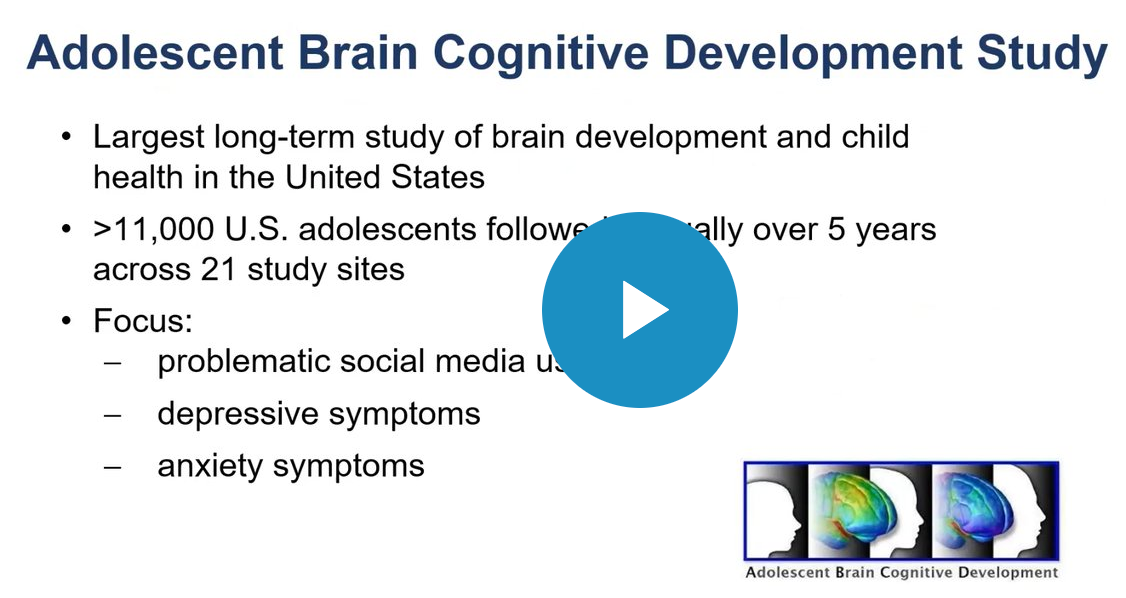
This prospective cohort study utilized data from the Adolescent Brain Cognitive Development (ABCD) Study collected during years 2 through 6. The analytic sample included 11,279 adolescents, average age approximately 12 years at baseline year 2, with 47.6% female representation. Participants had at least one measurement of problematic social media use and self-reported depressive or anxiety symptoms during the follow-up period.
Problematic social media use was operationalized using validated measures capturing compulsive-like engagement, impaired control, and negative consequences related to social media platforms. Depression and anxiety symptoms were assessed using standardized questionnaires appropriate for adolescent populations.
The primary analytic approach involved random-intercept cross-lagged panel models (RI-CLPMs), which permit disentangling within-person longitudinal relations from stable between-person differences, thereby improving causal inference. Multigroup analyses investigated sex differences in these lagged associations. Time points corresponded to annual assessments over the five-year period.
Key Findings
The study observed positive, bidirectional lagged associations between problematic social media use and depressive symptoms during the periods from year 3 to year 4 and year 4 to year 5. These findings indicate that elevated problematic social media use in one year predicted increased depressive symptoms the following year and vice versa, highlighting a potentially reinforcing cycle.
Interestingly, no significant prospective lagged associations were found between problematic social media use and depressive symptoms from year 2 to year 3 or from year 5 to year 6, suggesting these relationships may be developmentally specific or influenced by external factors during these intervals.
In contrast, analyses found no significant cross-lagged relationships between problematic social media use and anxiety symptoms across all five years, suggesting divergent pathways and mechanisms underlying depressive versus anxiety symptomatology in relation to social media engagement.
Sex-stratified multigroup RI-CLPMs revealed stronger, more consistent bidirectional associations between problematic social media use and depressive symptoms in female compared to male adolescents. No analogous sex differences were seen for anxiety symptoms.
These results underscore that problematic social media use is more tightly linked to depression’s longitudinal course, particularly among females, and that anxiety symptoms may involve distinct etiologies or moderating factors.
Expert Commentary
This study advances the field by employing rigorous longitudinal methods in a large, representative adolescent cohort, addressing a critical need for within-person temporal analyses. The detection of bidirectional associations between problematic social media use and depressive symptoms but not anxiety suggests differential vulnerability profiles and psychopathological mechanisms.
The observed sex differences align with broader epidemiological trends of higher adolescent depression prevalence in females and raise questions about gender-specific psychological and social mediators, including peer dynamics, social comparison, and hormonal influences.
Limitations include reliance on self-reported symptom scales, which may be influenced by reporting biases, and the observational design precluding definitive causal conclusions. Also, the study did not address potential moderating factors such as social support, offline stressors, or specific types of social media platforms.
Despite these limitations, the findings have important clinical and public health implications. Screening programs and interventions might prioritize adolescents exhibiting problematic social media engagement, particularly girls with emerging depressive symptoms, to disrupt this bidirectional risk cycle.
Conclusion
This longitudinal study demonstrates that problematic social media use and depressive symptoms among adolescents are linked bidirectionally in a developmentally sensitive manner, especially in females, whereas anxiety symptoms show no such temporal coupling. These findings highlight the importance of addressing problematic social media behaviors in mental health promotion and tailoring interventions based on sex and developmental stage. Future research should explore underlying mechanisms and evaluate effective prevention strategies to mitigate social media-related mental health risks in youth.
Funding and Clinicaltrials.gov
Funding sources include support for the Adolescent Brain Cognitive Development Study, a landmark federally funded initiative. ClinicalTrials.gov registration details can be found under the ABCD Study identifier.
References
1. Nagata JM, Otmar CD, Li EJ, Ganson KT, Lavender JM, Testa A, He J, Christakis DA, Baker FC. Problematic Social Media Use and Depressive and Anxiety Symptoms in Adolescents. Pediatrics. 2026 Oct 19; PMID: 42893794.
2. Keles B, McCrae N, Grealish A. A systematic review: the influence of social media on depression, anxiety and psychological distress in adolescents. Int J Adolesc Youth. 2020;25(1):79-93.
3. Orben A, Przybylski AK. The association between adolescent well-being and digital technology use. Nat Hum Behav. 2019;3(2):173-182.
4. Twenge JM, Martin GN, Spitzberg BH. Trends in U.S. Adolescents’ media use, 1976-2016: The rise of digital media, the decline of TV, and the (near) demise of print. Psychol Pop Media Cult. 2019;8(4):329–345.