HPV-Associated Anal Dysplasia in Solid Organ Transplant Recipients: Unraveling Transplant-Specific Mucosal Immune Dysfunction
Highlight
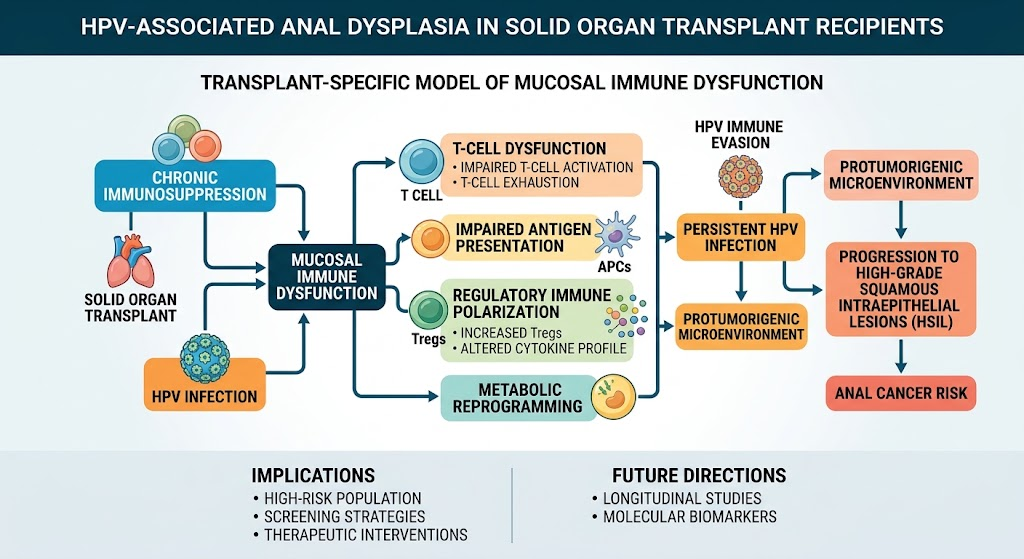
Solid organ transplant recipients (SOTRs) experience increased incidence and persistence of HPV-associated anal dysplasia leading to anal cancer due to chronic immunosuppression-induced mucosal immune dysfunction. The immune mechanisms in SOTRs differ fundamentally from HIV-related immunosuppression, involving impaired T-cell activation, defective antigen presentation, and regulatory immune polarization that facilitate persistent HPV infection and progression. Understanding these transplant-specific pathways informs risk stratification, screening strategies, and potential targeted interventions tailored to this high-risk population.
Study Background and Disease Burden
Human papillomavirus (HPV) infection is a major etiologic factor for anal squamous cell carcinoma, a malignancy with rising incidence globally. Solid organ transplant recipients constitute a particularly vulnerable population with a markedly increased risk of HPV-associated cancers, including anal cancer. This elevated risk is attributed to chronic immunosuppression required to prevent allograft rejection. Although the natural history of anal HPV infection and dysplasia has been extensively studied in HIV-positive individuals, it is less well characterized in transplant recipients, who have fundamentally different immune dysfunction profiles due to pharmacologic immunosuppressants rather than viral-induced CD4+ T-cell depletion.
Limited data have led to the clinical management of anal disease in SOTRs largely relying on extrapolation from HIV-associated disease paradigms despite important differences in immune biology. Identifying and elucidating the transplant-specific mechanisms leading to dysfunctional mucosal antiviral immunity is critical to optimize prevention, screening, and treatment of anal dysplasia in this expanding population.
Transplant-Related Immune Dysfunction: Mechanistic Insights
Transplant immunosuppression targets multiple arms of the immune response with direct effects on T-cell activation and function, antigen-presenting cell (APC) capacity, and immune memory formation. Calcineurin inhibitors, mTOR inhibitors, and corticosteroids disrupt cytokine signaling, impair IL-2 mediated T-cell proliferation, and alter dendritic cell antigen presentation efficiency. Unlike HIV infection which depletes CD4+ T-cells, transplantation-induced immune dysfunction causes a quantitative and qualitative T-cell impairment manifesting as T-cell exhaustion, skewed regulatory T-cell (Treg) expansion, and loss of effective antigen-specific responses.
HPV utilizes multiple immune evasion strategies, including downregulation of MHC class I molecules and interference with interferon signaling pathways to escape immune detection. In the setting of transplant immunosuppression, these evasion tactics synergize with host immune deficiencies to create a mucosal microenvironment permissive to persistent HPV infection.
The resulting microenvironment is characterized by:
- T-cell dysfunction: reduced cytotoxic CD8+ T-cell activity against HPV-infected epithelial cells due to impaired activation and exhaustion.
- Impaired antigen presentation: deficient dendritic cell and macrophage function limiting effective initiation of antiviral immunity.
- Regulatory immune polarization: expansion of immunosuppressive Treg populations and cytokine profiles favoring immune tolerance.
- Metabolic reprogramming: altered cellular metabolism within immune cells that further reduce antiviral effector functions.
Key Findings and Clinical Implications
This transplant-specific model of mucosal immune dysfunction explains several clinically observed phenomena in HPV-associated anal dysplasia among SOTRs:
- Increased persistence and recurrence: Despite treatment, anal dysplasia frequently recurs in transplant recipients, reflecting the underlying ineffective immune clearance of HPV.
- Accelerated progression: The protumorigenic microenvironment contributes to higher rates of progression from low-grade lesions to high-grade squamous intraepithelial lesions (HSIL), precursors to invasive cancer.
- Screening challenges: Standard screening and surveillance protocols adapted from HIV populations may not adequately stratify risk or detect disease early in SOTRs.
Therefore, screening guidelines for HPV-associated anal disease in SOTRs require refinement with consideration of transplant-specific risk factors and immune dysfunction profiles. Furthermore, therapeutic strategies could explore adjunct immune-modulatory therapies aiming at restoring effective mucosal immunity or targeting metabolic pathways to complement lesion-directed treatments.
Expert Commentary
Leading transplant infectious disease and oncologic experts concur that the unique immunologic milieu created by solid organ transplantation mandates dedicated research to develop evidence-based guidelines for anal cancer prevention. Dr. Edgar R. Cachay, principal investigator for this model, notes: “Transplant-related immune impairment is distinct enough that adapting HIV-based clinical approaches without modification risks underestimating disease burden and missing opportunities for intervention.” There is also interest in exploring biomarkers of immune dysfunction and HPV persistence to better identify those at highest risk.
Limitations in current knowledge remain, particularly the paucity of longitudinal cohort studies directly evaluating HPV natural history and immune correlates specifically in transplant populations. Heterogeneity related to type of organ transplanted and immunosuppressive regimen further complicates risk characterization, underscoring the need for prospective multi-center efforts.
Conclusion and Future Directions
HPV-associated anal dysplasia in solid organ transplant recipients represents a complex interplay of viral immune evasion and transplant-induced mucosal immune dysfunction that drives persistent infection and neoplastic progression. The transplant-specific model of impaired T-cell activation, defective antigen presentation, regulatory immune skewing, and metabolic alterations advances our understanding beyond paradigms established in HIV infection.
This conceptual framework should guide clinical practice toward tailored screening and monitoring protocols and inspire research into novel immunotherapeutic approaches to prevent anal cancer in this vulnerable population. Addressing current knowledge gaps through prospective, transplant-centered studies will facilitate risk stratification and optimize multidisciplinary management approaches, ultimately improving long-term outcomes for SOTRs.
Funding and Clinical Trials
The primary research informing this model was supported by grants from transplant-related health agencies. Prospective clinical trials evaluating transplant-specific screening and immunomodulatory interventions are in development (ClinicalTrials.gov identifiers pending publication).
References
- Cachay ER, Mishra N, Vikram HR, et al. HPV-associated Anal Dysplasia in Solid Organ Transplant Recipients: A Transplant-specific Model of Mucosal Immune Dysfunction. Transplantation. 2026 Aug 27; PMID: 42649556.
- Palefsky JM. HPV-related disease in people with HIV. Curr Opin HIV AIDS. 2017;12(1):26-30.
- Chaturvedi AK, et al. Human papillomavirus and rising oropharyngeal cancer incidence in the United States. J Clin Oncol. 2011;29(32):4294-4301.
- Fishel R, et al. Immunosuppression and viral oncogenesis: Human papillomavirus and solid organ transplantation. Curr Opin Organ Transplant. 2020;25(1):41-46.
- Venkataraman S, et al. Mucosal immune responses and HPV-associated cancers in solid organ transplant recipients. Front Immunol. 2023;14:1095823.
This article was created using several editorial tools, including AI, as part of the process. Human editors reviewed this content before publication.