Enhancing Diagnostic Accuracy in Stable Coronary Artery Disease: Impact of Adding CT-derived Fractional Flow Reserve (FFRct) – Insights from the FUSION Trial
Computed tomographyinvasive coronary angiographyDiagnostic PathwayStable Coronary Artery DiseaseFractional Flow Reserve
Highlight
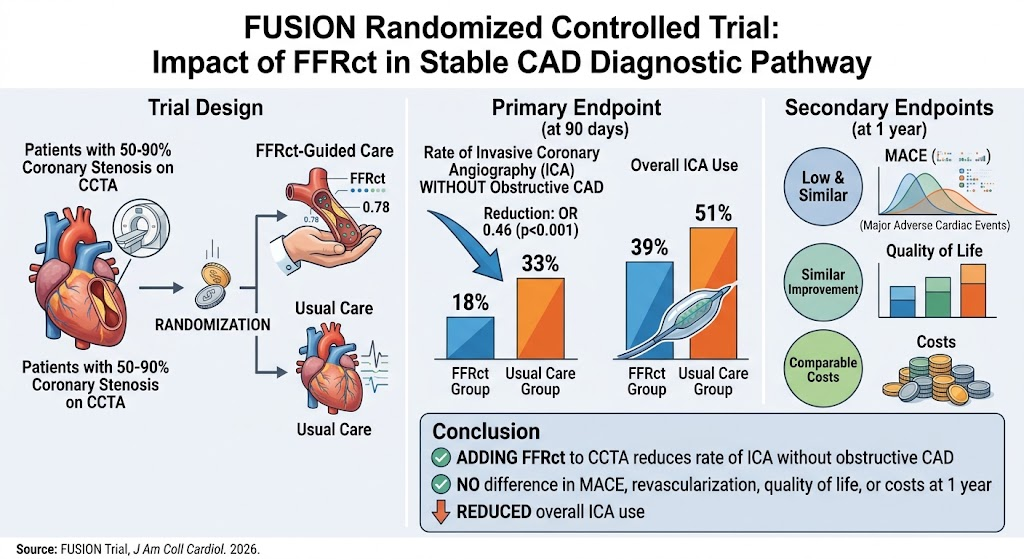
- Adding CT-derived fractional flow reserve (FFRct) to the diagnostic pathway significantly reduces the rate of invasive coronary angiography (ICA) without obstructive coronary artery disease (CAD) in patients with intermediate (50-90%) stenosis on CCTA.
- The overall number of ICAs performed was lower with FFRct guidance at both 90 days and 1 year, reflecting better patient selection for invasive procedures.
- Revascularization rates, major adverse cardiac events (MACE), quality of life, and healthcare costs were comparable between FFRct-guided and usual care groups, with low event rates in both arms.
Study Background
MedXY registered readers
Sign in free to continue reading
Create or use your MedXY account to unlock the complete article.
This article was created using several editorial tools, including AI, as part of the process. Human editors reviewed this content before publication.