MMedXYNews
HomeVideos
MedXY AI/MedXY News/Section: Cardiology

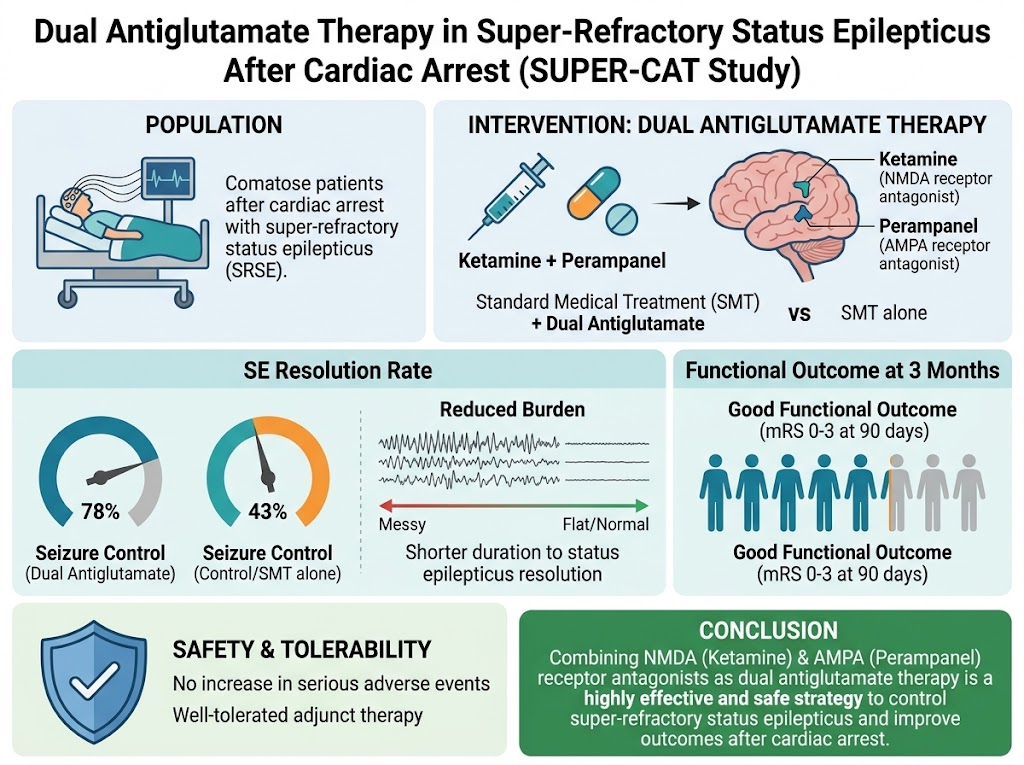
Dual Antiglutamate Therapy in Super-Refractory Status Epilepticus After Cardiac Arrest: Insights from the SUPER-CAT Study and Current Evidence
MedXY Editorial Team•Oct 10, 2026•Cardiology
cardiac arrestdual antiglutamate therapyKetamineperampanelsuper-refractory status epilepticus

Highlights

  • Dual antiglutamate therapy targeting both AMPA and NMDA receptors offers a novel, mechanistically rational approach for managing postanoxic super-refractory status epilepticus (SRSE).
  • The multicenter SUPER-CAT study demonstrated significantly higher rates of SE resolution and reduced 6-month mortality with combined ketamine and perampanel versus other antiseizure treatments in selected post-cardiac arrest patients.
  • Improved awakening rates and trends toward better neurological outcomes underscore the potential for enhanced recovery when unfavorable prognostic indicators are absent.
  • Reversible cholestatic liver injury was more frequent with dual antiglutamate therapy, emphasizing the need for vigilant monitoring during treatment.

Background

MedXY registered readers

Sign in free to continue reading

Create or use your MedXY account to unlock the complete article.

This article was created using several editorial tools, including AI, as part of the process. Human editors reviewed this content before publication.

Related articles

Open language-specific specialty feeds and department pages.

12,13-diHOME Levels as a Marker of Brown Adipose Tissue Activation and Outcome in Targeted Temperature Management Post-Cardiac ArrestThis study reveals that elevated 12,13-diHOME levels, reflecting brown adipose tissue activation during targeted temperature management after cardiac arrest, correlate with improved survival and distinct immunometabolic profiles.Oct 21, 2026Reevaluating Ventilation Rates During Pediatric CPR: New Insights into Age-Stratified OutcomesThis article explores findings from a multicenter study evaluating the impact of cardiopulmonary resuscitation ventilation rates on survival in pediatric intensive care, identifying age-specific ventilation targets linked to improved outcomOct 18, 2026Quantitative Pupillometry in Post-Cardiac Arrest Neuroprognostication: Insights from a Bicentric StudyThis bicentric study evaluates quantitative pupillary light reflex (qPLR) alongside EEG, SSEPs, and NSE for neuroprognostication in comatose post-cardiac arrest patients, revealing strong correlations but limitations in sensitivity and predSep 30, 2026
Loading comments...
MedXY briefing

Get the free newsletter

Evidence-led clinical news, trends, and analysis—delivered to your inbox.

Ask MedXY AI

Most popular

Intimate Health
Five Benefits for Women Continuing Sexual Activity After Menopause
Intimate Health
Why Some Women Have a Strong Sex Drive—And Why Men Shouldn't Worry About It
Nursing & care
How often should a couple have sex?
Cardiology
Precision Medicine for Long QT Syndrome Type 2: Lumacaftor Corrects Trafficking Defects and Shortens QT Interval
General Surgery
Optimizing Postoperative Opioid Prescriptions After Intra-Abdominal Cancer Surgery: Comparing the 5x-Multiplier and 3-Tier Models
© 2026 MedXY
Contact usAbout usPrivacy PolicyMedXY story
Serial Ketamine Infusions Show Promise in Treatment-Resistant Bipolar Depression: A Groundbreaking Randomized Trial
A recent randomized clinical trial reveals that adjunctive intravenous ketamine significantly reduces depressive symptoms in treatment-resistant bipolar depression, with good safety and tolerability compared to midazolam.
Sep 27, 2026
Intranasal vs. Subcutaneous Ketamine for Acute Traumatic Pain in the ED: Comparable Efficacy and SafetyThis randomized clinical trial demonstrates no clinically meaningful difference in pain relief between 20 mg intranasal and subcutaneous ketamine for acute musculoskeletal trauma in the emergency department, with minor adverse events beingSep 24, 2026
Low-Dose Ketamine Reduces Opioid Requirements in Mechanically Ventilated ICU Patients: Insights from a Double-Blind Randomized TrialA randomized controlled trial demonstrates that adjunct low-dose ketamine infusion safely decreases opioid use in mechanically ventilated adults without increasing delirium or adverse events, suggesting potential benefits in ICU analgosedatSep 20, 2026