We use cookies

Our website uses essential cookies and, with your consent, additional cookies to measure performance and improve our services. Cookie Policy.

You can change your choice at any time.

MMedXYNews
HomeVideos
MedXY AI/MedXY News/Section: Diabetes & Endocrinology

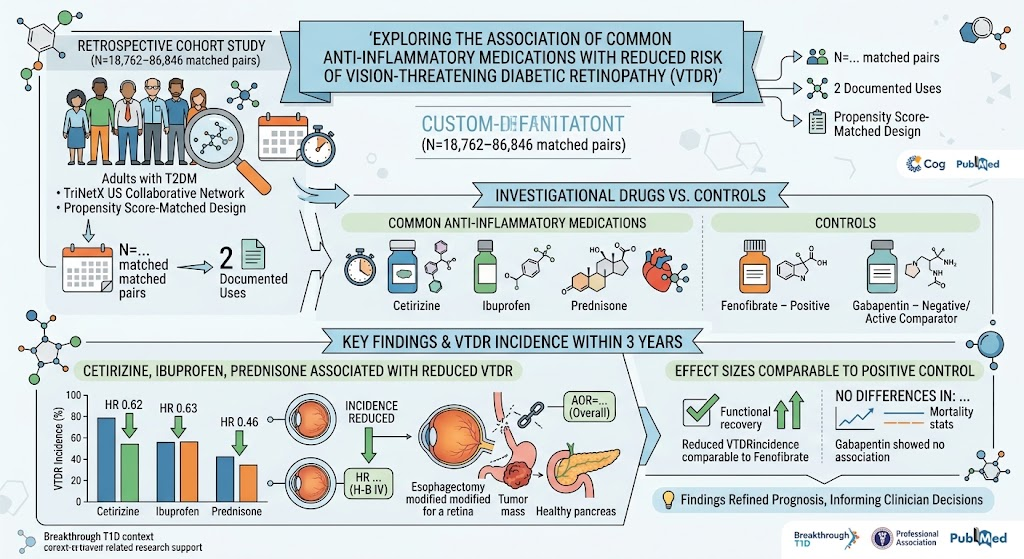
Common Anti-Inflammatory Drugs Linked to Lower Risk of Vision-Threatening Diabetic Retinopathy in Type 2 Diabetes
MedXY Editorial Team•Sep 15, 2026•Diabetes & Endocrinology
Anti-inflammatory Drugsretinopathy đái tháo đườngVision Preservationtype 2 diabetes

Highlight

  • Common anti-inflammatory medications cetirizine, ibuprofen, and prednisone are associated with significantly reduced risk of diabetic macular edema (DME) and proliferative diabetic retinopathy (PDR) in adults with type 2 diabetes.
  • The effect sizes of these drugs are comparable to fenofibrate, a known protective agent against diabetic retinopathy progression.
  • Robust propensity score matching and sensitivity analyses minimize confounding, supporting the validity of findings.
  • This study suggests a role for systemic anti-inflammatory therapy as a promising strategy in preventing vision-threatening diabetic retinopathy, warranting prospective clinical trials.

Study Background

MedXY registered readers

Sign in free to continue reading

Create or use your MedXY account to unlock the complete article.

This article was created using several editorial tools, including AI, as part of the process. Human editors reviewed this content before publication.

Related articles

Open language-specific specialty feeds and department pages.

Fenofibrate Use and Reduced Risk of Sight-Threatening Diabetic Retinopathy in Type 2 Diabetes: Insights from UK Real-World DataFenofibrate use in type 2 diabetes patients is associated with a significant reduction in the risk of sight-threatening diabetic retinopathy compared to statins, based on UK primary care data over 12 years.Sep 18, 2026Differential Gastrointestinal Risks of Opioids in Type 2 Diabetes Patients on GLP-1RA Therapy: A Comparative AnalysisAmong type 2 diabetes patients using GLP-1 receptor agonists, oxycodone is linked to higher short-term risks of severe gastrointestinal complications compared to hydrocodone and tramadol, warranting cautious opioid selection in this populatSep 15, 2026Linking Female Infertility History to Type 2 Diabetes Risk: Insights from the Nurses’ Health Study IIThis study explores the increased risk of type 2 diabetes among women with a history of infertility, highlighting specific infertility causes and implications independent of BMI.Sep 6, 2026
Loading comments...
MedXY briefing

Get the free newsletter

Evidence-led clinical news, trends, and analysis—delivered to your inbox.

Ask MedXY AI

Most popular

Intimate Health
Five Benefits for Women Continuing Sexual Activity After Menopause
Intimate Health
Why Some Women Have a Strong Sex Drive—And Why Men Shouldn't Worry About It
Nursing & care
How often should a couple have sex?
Intimate Health
Classic Intimacy Recommendations: How to Help Women Reach Orgasm and Enjoy Mutual Pleasure
Intimate Health
What Makes a Woman "Physiologically Addicted" Is Never Money, But These Two Relationship Qualities
© 2026 MedXY
Contact usAbout usPrivacy PolicyMedXY story
Sarcopenic Obesity and Type 2 Diabetes Risk: Insights from the UK Biobank Study
This study reveals sarcopenic obesity significantly increases the risk of incident type 2 diabetes, exceeding risks from obesity or sarcopenia alone, highlighting the importance of combined muscle and adiposity assessment in diabetes preven
Sep 6, 2026
Decoding Pancreatic Islet Single-Cell Transcriptomic Diversity Across Type 2 Diabetes SubtypesSingle-cell RNA sequencing of pancreatic islets reveals distinct molecular signatures linked to specific clinical subtypes of type 2 diabetes, highlighting the heterogeneous pathophysiology and providing potential subtype-specific therapeutSep 5, 2026
Ketoacidosis Risk with SGLT2 Inhibitors in Type 2 Diabetes: Insights from a Scandinavian Cohort StudyA large Scandinavian study reveals that ketoacidosis risk during SGLT2 inhibitor therapy in type 2 diabetes varies by patient factors and persists beyond early treatment, highlighting the need for ongoing risk assessment and management straSep 5, 2026