We use cookies

Our website uses essential cookies and, with your consent, additional cookies to measure performance and improve our services. Cookie Policy.

You can change your choice at any time.

MMedXYNews
HomeVideos
MedXY AI/MedXY News/Section: Hematology-Oncology

Bridging Perspectives: Patient and Clinician Views on Postpartum Venous Thromboembolism Risk and Thromboprophylaxis Use
MedXY Editorial Team•Aug 21, 2026•Hematology-Oncology
postpartum venous thromboembolismthromboprophylaxispatient educationObstetric Care

Highlight

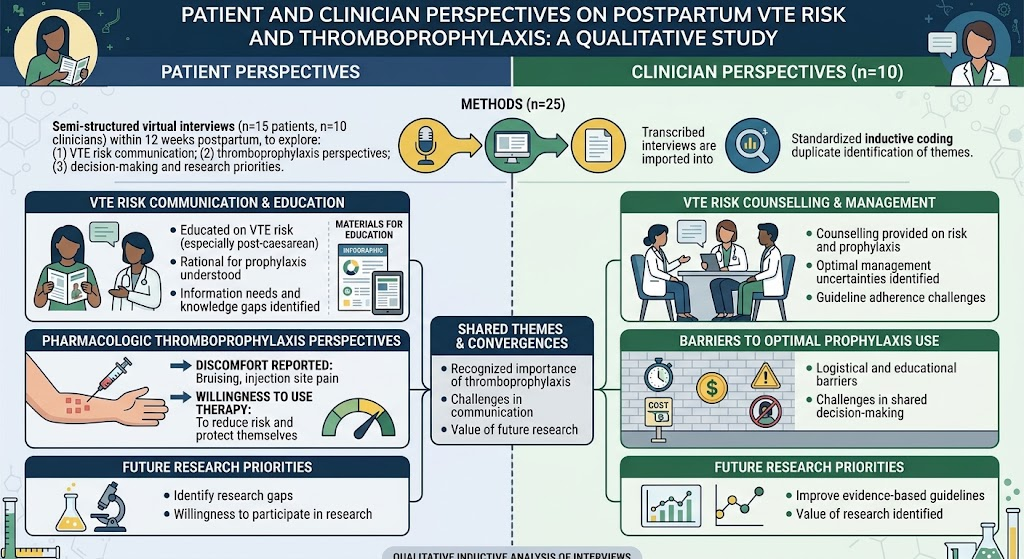
This qualitative study reveals that while patients undergoing caesarean delivery are generally informed about the risk of postpartum venous thromboembolism (VTE) and the rationale for pharmacologic thromboprophylaxis, some knowledge gaps and discomfort with prophylaxis exist. Obstetric clinicians regularly counsel patients but face barriers including uncertainties about optimal management. Both groups emphasize the critical need for enhanced communication tools and focused research to refine individualized risk assessments and evidence-based prophylaxis protocols.

Background: Postpartum Venous Thromboembolism and Clinical Challenges

MedXY registered readers

Sign in free to continue reading

Create or use your MedXY account to unlock the complete article.

This article was created using several editorial tools, including AI, as part of the process. Human editors reviewed this content before publication.

Related articles

Open language-specific specialty feeds and department pages.

Enhancing Informed Consents in Tubal Sterilization: Impact of a Patient-Centered Educational WebsiteA randomized trial demonstrates that a patient-facing educational website improves contraceptive knowledge and perceived access more effectively than standard federal consent materials among individuals considering tubal sterilization.Oct 16, 2026Family History as a Dose-Dependent Risk Factor for Postpartum Venous Thromboembolism: Insights from a Nationwide Swedish Cohort StudyThis study reveals that family history significantly elevates postpartum venous thromboembolism risk in primiparous women, with risk proportional to genetic relatedness and number of affected relatives.Oct 13, 2026Enhancing Patient Experience and Understanding in Pulmonary Function Testing: A Qualitative Study on Patient-Centered EducationThis qualitative study reveals that patients undergoing pulmonary function tests face emotional and informational challenges. A co-developed educational pamphlet improves understanding and may reduce anxiety, highlighting the need for patieAug 23, 2026
Loading comments...
MedXY briefing

Get the free newsletter

Evidence-led clinical news, trends, and analysis—delivered to your inbox.

Ask MedXY AI

Most popular

Intimate Health
Five Benefits for Women Continuing Sexual Activity After Menopause
Intimate Health
Why Some Women Have a Strong Sex Drive—And Why Men Shouldn't Worry About It
Nursing & care
How often should a couple have sex?
Cardiology
Precision Medicine for Long QT Syndrome Type 2: Lumacaftor Corrects Trafficking Defects and Shortens QT Interval
General Surgery
Optimizing Postoperative Opioid Prescriptions After Intra-Abdominal Cancer Surgery: Comparing the 5x-Multiplier and 3-Tier Models
© 2026 MedXY
Contact usAbout usPrivacy PolicyMedXY story
Advancements in Heart Failure Management: Insights from the JROADHF and JROADHF-NEXT Registries
This article reviews improvements in heart failure management and outcomes in Japan between 2013 and 2019-21, highlighting increased guideline-based therapy use and enhanced post-discharge care leading to reduced mortality and readmission r
Aug 22, 2026
Preventing Maternal Deaths from Venous Thromboembolism: Insights from a 12-Year Nationwide French AnalysisA nationwide French study reveals that nearly half of maternal deaths due to venous thromboembolism are preventable, emphasizing the importance of ongoing risk assessment and appropriate thromboprophylaxis during pregnancy and postpartum.Aug 19, 2026
Assessing Readability of Gynecologic Cancer Patient Education Materials: Bridging the Communication GapThis study evaluates the reading levels of gynecologic cancer educational materials from major cancer centers and nonprofits, revealing most exceed recommended standards, potentially limiting patient comprehension and informed decision-makiJul 13, 2026