Association of Clonal Hematopoiesis With Silent Brain Lesions and Cognitive Decline in Patients With Atrial Fibrillation: An Integrative Review
Highlights
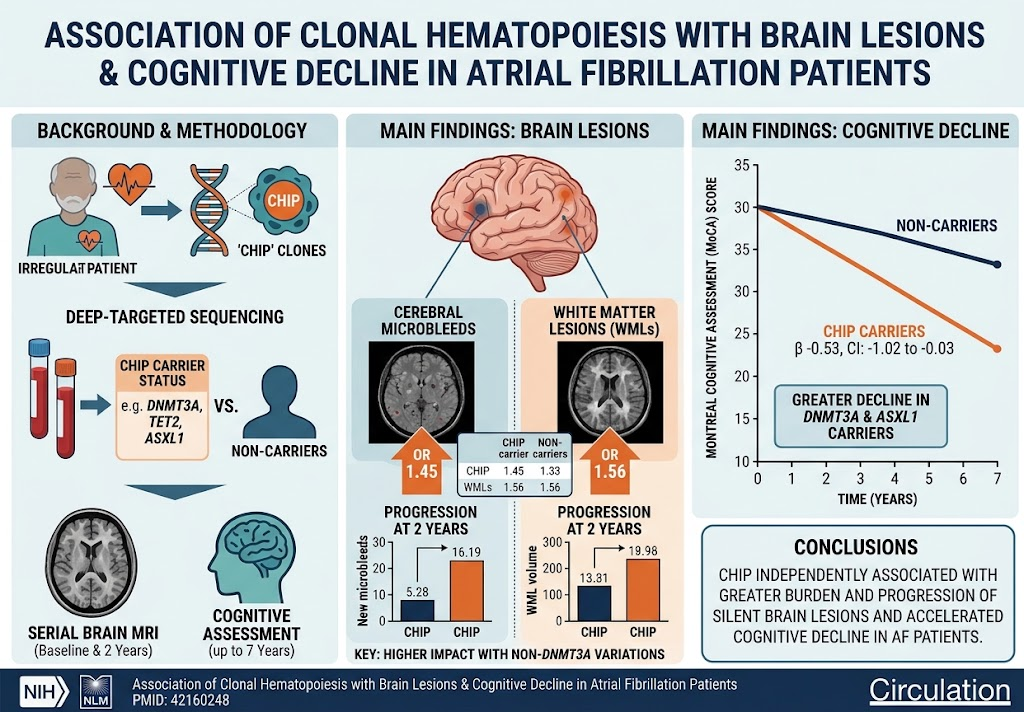
- Clonal hematopoiesis of indeterminate potential (CHIP) is prevalent in atrial fibrillation (AF) patients and strongly linked to silent brain lesions such as cerebral microbleeds and white matter lesions.
- Non-DNMT3A CHIP mutations, including TET2 and ASXL1, exhibit greater association with cerebrovascular silent lesions and cognitive decline, indicating mutation-specific pathogenic roles.
- Longitudinal data reveal that CHIP carriers experience accelerated progression of silent brain lesions and cognitive deterioration over 7 years, emphasizing CHIP as an independent neurovascular risk factor in AF.
- The findings corroborate and extend prior cardiovascular CHIP studies, suggesting potentially novel mechanisms linking hematopoietic clonal mutations, vascular pathology, and neurodegeneration in AF.
Background
MedXY registered readers
Sign in free to continue reading
Create or use your MedXY account to unlock the complete article.
This article was created using several editorial tools, including AI, as part of the process. Human editors reviewed this content before publication.