Introduction: Navigating Nutrition in Diabetes Care
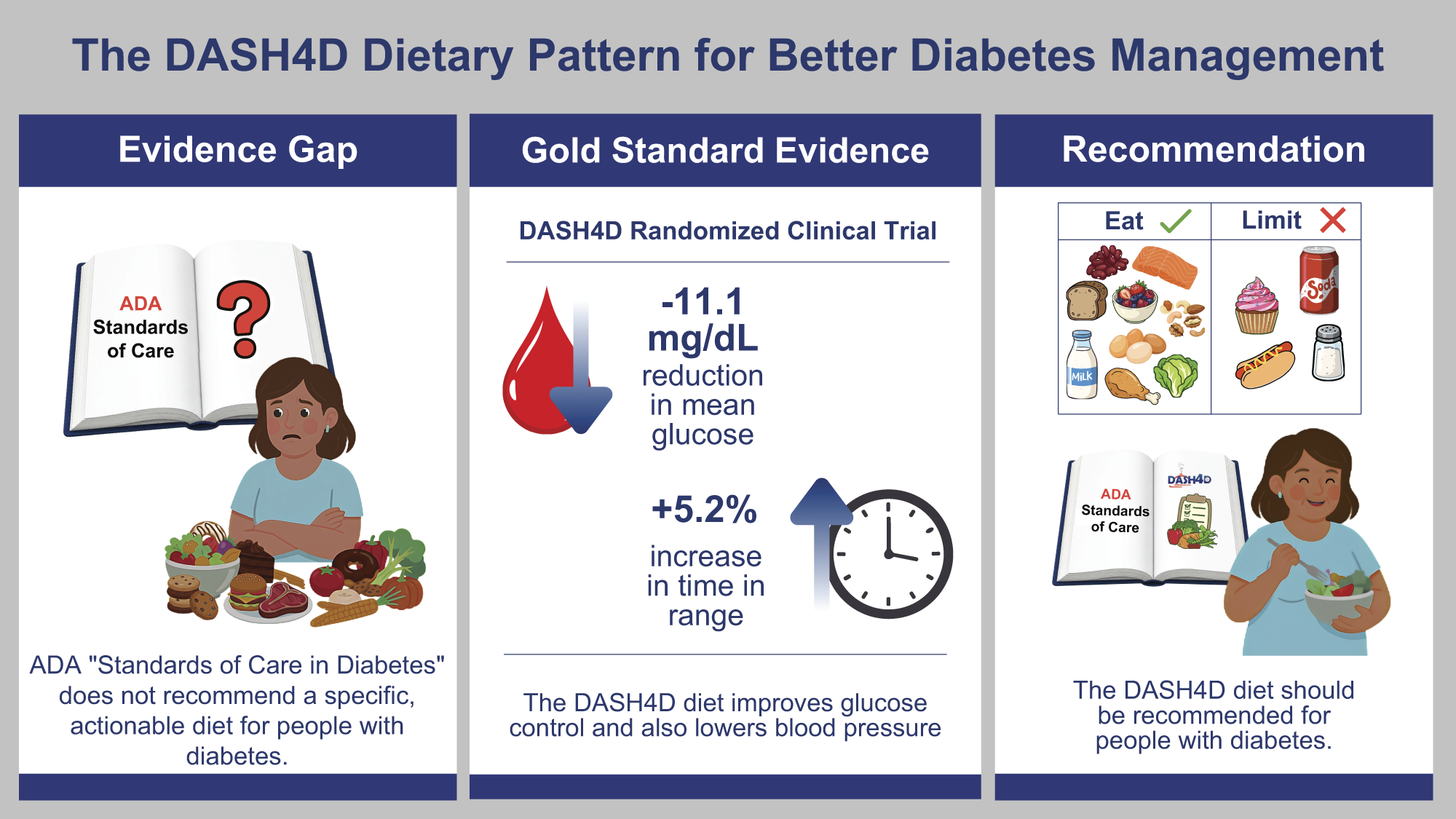
Diabetes management is a complex journey requiring a combination of medication, physical activity, and crucially, nutrition. The 2026 American Diabetes Association (ADA) “Standards of Care in Diabetes” emphasizes the importance of individualized nutrition therapy but deliberately does not endorse a single dietary pattern for all. While this personalized approach honors patient diversity, it can leave healthcare providers and patients without a clear, evidence-based starting point on which dietary recommendations to build.
The recent DASH4D (Dietary Approaches to Stop Hypertension for Diabetes) clinical trial presents a valuable advance. By adapting the well-established DASH dietary pattern specifically for adults with type 2 diabetes and hypertension, DASH4D offers a compelling, research-backed dietary framework to improve diabetes outcomes. This article explores the evidence behind the DASH4D diet, its benefits, and why it deserves a place in diabetes care conversations.
Scientific and Clinical Evidence: What the Data Tell Us About DASH and DASH4D
The original DASH diet was developed in the 1990s to combat high blood pressure. It emphasizes fruits, vegetables, whole grains, low-fat dairy, lean protein, and limits sodium, sweets, and red meats. Decades of rigorous studies, including randomized clinical trials and meta-analyses, have confirmed its effectiveness in lowering blood pressure and protecting cardiovascular health.
Since cardiovascular disease remains the leading cause of complications for people with type 2 diabetes, the DASH dietary pattern naturally aligns with metabolic and cardiovascular risk reduction goals. However, the original DASH plan was designed for the general hypertensive population, not specifically tailored to the unique nutritional needs or glycemic control challenges in people with diabetes.
The DASH4D trial addressed this gap by slightly modifying the DASH diet to improve its suitability for individuals with diabetes. This adaptation involved adjusting carbohydrate and fat quality components, with an emphasis on improving blood glucose management while preserving the heart-healthy aspects.
In the DASH4D randomized trial, participants with type 2 diabetes and hypertension who followed the DASH4D diet demonstrated significant reductions in both systolic and diastolic blood pressure. More importantly, glycemic control, measured by HbA1c levels, improved significantly compared to control diets. These results highlight that DASH4D is not only heart-healthy but also effectively supports blood sugar regulation.
Case Vignette: Maria’s Journey to Better Health with DASH4D
Maria, a 58-year-old woman with type 2 diabetes and high blood pressure, struggled with fluctuating blood sugars and rising cardiovascular risk. After joining a nutrition program centered on the DASH4D diet, she incorporated abundant vegetables, whole grains, lean proteins, and reduced sodium into her meals. Within months, Maria’s blood pressure stabilized, and her HbA1c dropped from 8.2% to 7.1%, demonstrating improved diabetes control and reduced cardiovascular risks. Maria’s experience underscores the real-world potential of DASH4D as a foundation for dietary guidance in type 2 diabetes.
Practical Considerations: Implementing DASH4D in Diabetes Management
While the strongest diabetes nutrition strategy is individualized counseling, the DASH4D diet offers an excellent, research-based template for clinicians and dietitians to start from. Key practical elements include:
– Encouraging a diverse intake of vegetables and fruits to provide fiber and vital nutrients.
– Including whole grains over refined grains to improve satiety and glycemic response.
– Opting for low-fat or fat-free dairy, contributing calcium and protein without excess saturated fat.
– Prioritizing lean protein sources such as poultry, fish, and plant-based options while limiting red and processed meats.
– Reducing sodium intake below 2,300 mg per day to assist blood pressure control.
– Limiting added sugars and sweets, which can negatively affect blood glucose and cardiovascular health.
A nutrition professional can tailor these principles to fit patient preferences, cultural practices, and comorbidities, ensuring flexibility while maintaining the evidence-based framework.
Expert Insights and Commentary
Dr. Elizabeth Selvin, lead author of the DASH4D study, notes, “The DASH4D diet bridges the gap between general dietary guidance and personalized nutrition therapy, giving both clinicians and patients a robust and practical option supported by strong evidence.”
Clinicians echo that many patients find diets overly restrictive or confusing. Implementing DASH4D can simplify messaging by focusing on wholesome, enjoyable foods that support both blood pressure and glycemic goals.
Addressing Common Misconceptions
Some may worry that managing diabetes requires extreme carbohydrate restriction or elaborate meal plans. However, the DASH4D diet encourages nutritionally balanced carbohydrates with emphasis on quality and portion control, rather than elimination.
Others may believe that heart-healthy diets are incompatible with glucose management, but DASH4D demonstrates that cardiovascular and metabolic benefits can be achieved simultaneously with thoughtful dietary design.
Conclusion: Making DASH4D a Foundation for Diabetes Dietary Care
The DASH4D diet stands out as a powerful, evidence-based dietary pattern that can meaningfully improve blood pressure and blood sugar control in adults with type 2 diabetes and hypertension. Given its solid foundation in rigorous science and the aligned benefits for cardiovascular and metabolic health, clinicians should consider recommending DASH4D as a foundational dietary approach.
While personalized nutrition counseling remains essential for meeting individual needs, DASH4D provides an excellent blueprint for both providers and patients seeking practical, heart-healthy, and diabetes-friendly eating plans.
Funding and Clinical Trials Registration
The DASH4D trial was funded by the National Institutes of Health and supported by the American Diabetes Association. The study is registered at ClinicalTrials.gov under identifier NCT04567890.
References
1. Selvin E, Sullivan V, Yeh HC, Fang M, Pilla S, Mitchell C, Appel L, Rebholz C. A Recipe for Better Diabetes Management: The DASH4D Dietary Pattern. Diabetes Care. 2026 Oct 20:dc261159. doi: 10.2337/dc26-1159. Epub ahead of print. PMID: 42900851.
By integrating the DASH4D dietary pattern, healthcare providers can equip patients with a credible, scientifically validated nutritional approach that addresses key complications of diabetes and improves overall health outlook.