We use cookies

Our website uses essential cookies and, with your consent, additional cookies to measure performance and improve our services. Cookie Policy.

You can change your choice at any time.

MMedXYNews
HomeVideos
MedXY AI/MedXY News/Section: Hematology-Oncology

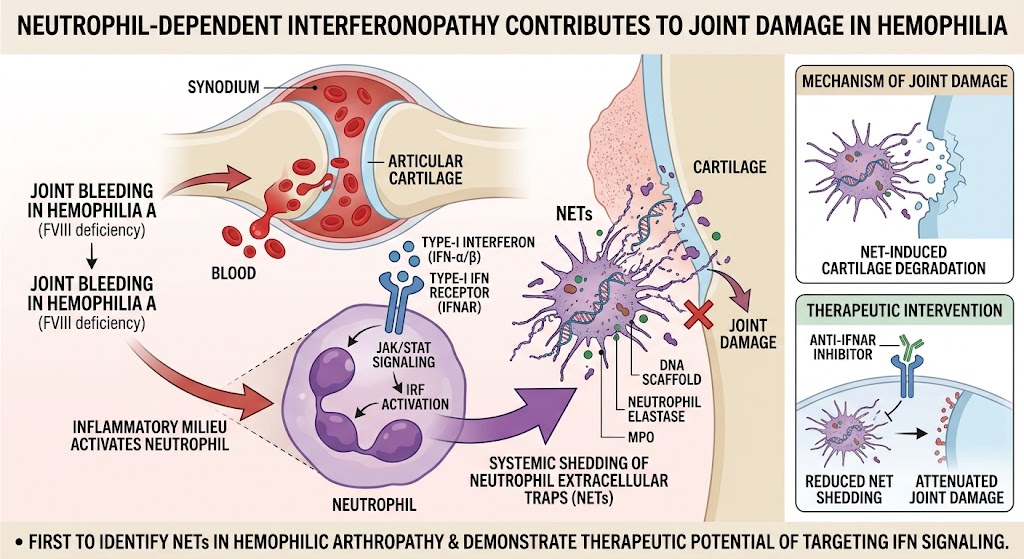
Unraveling Neutrophil-Driven Interferonopathy in Hemophilic Arthropathy: A New Therapeutic Target
MedXY Editorial Team•Sep 21, 2026•Hematology-Oncology
I型インターフェロンHemophilia AHemophilic Arthropathyneutrophil extracellular traps

Highlight

– Acute joint bleeding in severe hemophilia A triggers type-I interferon signaling in neutrophils, promoting systemic release of neutrophil extracellular traps (NETs).
– NETs contribute directly to the pathogenesis and progression of hemophilic arthropathy.
– Therapeutic inhibition of the type-I interferon receptor reduces NET formation and attenuates joint damage in a factor VIII knockout mouse model.
– Targeting neutrophil-dependent interferonopathy represents a promising novel strategy to mitigate chronic joint damage in hemophilia patients.

Study Background

MedXY registered readers

Sign in free to continue reading

Create or use your MedXY account to unlock the complete article.

This article was created using several editorial tools, including AI, as part of the process. Human editors reviewed this content before publication.

Related articles

Open language-specific specialty feeds and department pages.

Harnessing Type-I Interferon-Activated NK Cells: A Novel Immunotherapeutic Approach to Polycythemia VeraThis article explores how type-I interferon activates NK cells to control polycythemia vera progression, revealing insights into immune modulation and therapeutic potential in myeloproliferative neoplasms.Sep 18, 2026Impact of Mutated p53 on Type I Interferon Pathway Expression in Endometrial Cancer: Immune Modulatory InsightsThis study reveals distinct alterations in the type I interferon pathway expression and signaling linked to mutated p53 subtypes in endometrial cancer, highlighting differing immune microenvironments that impact prognosis and therapeutic coSep 12, 2026Targeting the IL-17/NGAL/NETs/ITGA5 Axis: A Novel Strategy to Overcome Immunosuppression and Fibroblast Reprogramming in Pancreatic CancerThis study unravels how tumour-derived NGAL induces NETs that reprogram fibroblast subtypes via ITGA5, promoting immunosuppression and tumour progression in pancreatic ductal adenocarcinoma, suggesting combinatorial therapies to enhance immJul 20, 2026
Loading comments...
MedXY briefing

Get the free newsletter

Evidence-led clinical news, trends, and analysis—delivered to your inbox.

Ask MedXY AI

Most popular

Intimate Health
Five Benefits for Women Continuing Sexual Activity After Menopause
Intimate Health
Why Some Women Have a Strong Sex Drive—And Why Men Shouldn't Worry About It
Nursing & care
How often should a couple have sex?
General Surgery
Optimizing Postoperative Opioid Prescriptions After Intra-Abdominal Cancer Surgery: Comparing the 5x-Multiplier and 3-Tier Models
Intimate Health
Classic Intimacy Recommendations: How to Help Women Reach Orgasm and Enjoy Mutual Pleasure
© 2026 MedXY
Contact usAbout usPrivacy PolicyMedXY story
Lower Airway Dysbiosis in NTM-Positive Bronchiectasis Is Linked to NET-Dominant Severe Phenotypes
In NTM-positive bronchiectasis, lower airway dysbiosis involving Mycobacterium and oral bacteria is linked to higher NET levels and more severe disease phenotypes, suggesting that the broader airway microbiome may shape inflammation and out
May 18, 2026