Ten Years of Ocrelizumab in Relapsing Multiple Sclerosis: Insights from the OPERA I and II Randomized Clinical Trials and Related Evidence
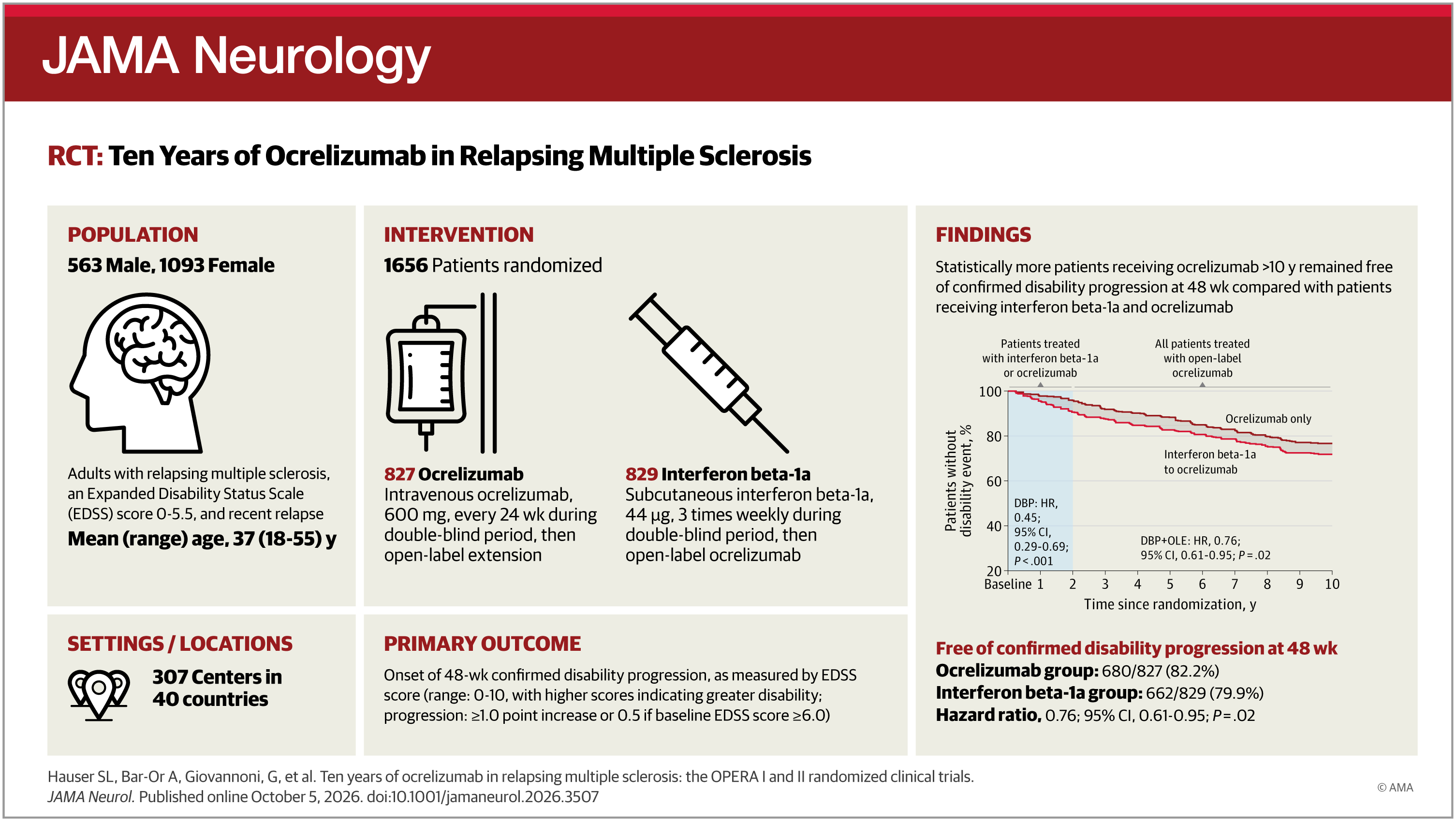
Highlights
- Ten years of continuous ocrelizumab (OCR) therapy in relapsing multiple sclerosis (RMS) provides durable suppression of disability progression and relapse activity, outperforming delayed initiation after interferon beta-1a (IFN) treatment.
- Early OCR treatment preserves functional independence with significant delay in reaching critical Expanded Disability Status Scale (EDSS) milestones (scores 4.0 and 6.0), evidenced through OPERA I and II trials and their long-term extensions.
- Ocrelizumab demonstrates a stable long-term safety profile without increasing adverse events (AEs) or serious infections, supporting sustained use as first-line high-efficacy therapy.
- Emerging personalized dosing strategies and biomarker-guided treatment intervals may optimize ocrelizumab therapy and maximize its benefit-risk ratio in RMS management.
Background
MedXY registered readers
Sign in free to continue reading
Create or use your MedXY account to unlock the complete article.
This article was created using several editorial tools, including AI, as part of the process. Human editors reviewed this content before publication.