We use cookies

Our website uses essential cookies and, with your consent, additional cookies to measure performance and improve our services. Cookie Policy.

You can change your choice at any time.

MMedXYNews
HomeVideos
MedXY AI/MedXY News/Tag: stroke prevention
MedXY News
EnglishTag

stroke prevention

Ask MedXY AI
type 2 diabetesclinical trialheart failureimmunotherapyobesitycardiovascular riskatrial fibrillationbiomarkerscritical careclinical trialsHypertensionartificial intelligenceCardiologyoncologypublic healthtype 1 diabetesdiabetesMortalityAlzheimer's diseasecardiovascular diseasebreast cancerepidemiology

Latest news

Tag

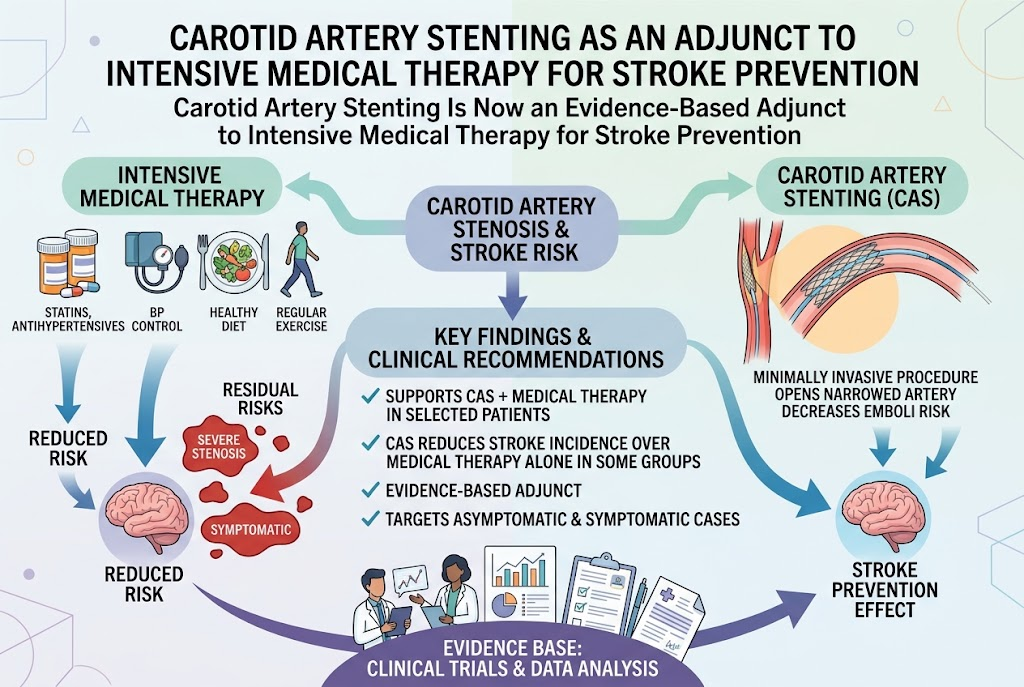
Carotid Artery Stenting Emerges as a Proven Adjunct to Intensive Medical Therapy in Stroke Prevention: Insights from CREST-2
CardiologyCarotid Artery StentingIntensive Medical Therapy

Carotid Artery Stenting Emerges as a Proven Adjunct to Intensive Medical Therapy in Stroke Prevention: Insights from CREST-2

By MedXY|Sep 17, 2026

The CREST-2 trial substantiates carotid artery stenting plus intensive medical management significantly reduces stroke risk in high-grade asymptomatic carotid stenosis compared to medical therapy alone, emphasizing patient selection and pro
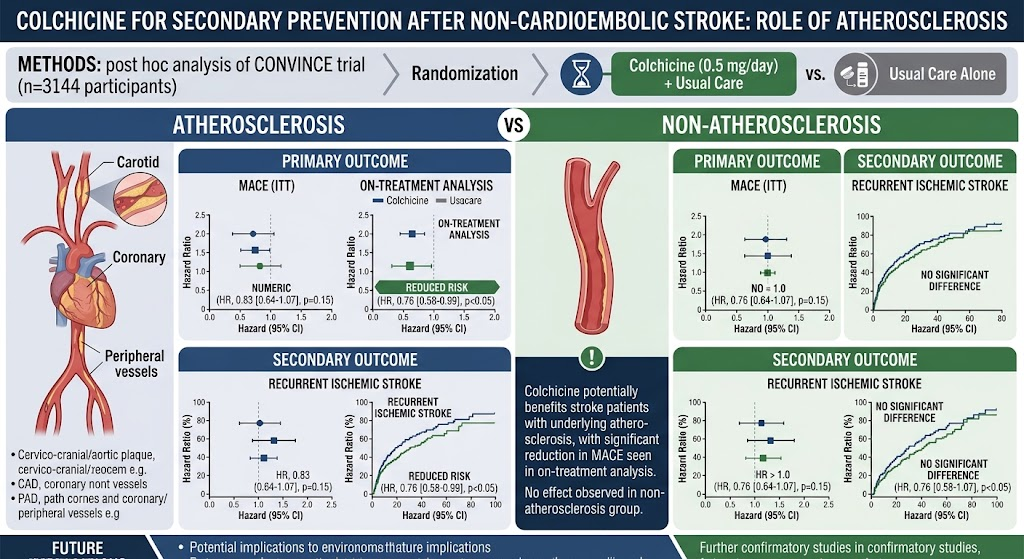
Colchicine for Secondary Prevention After Stroke According to the Presence of Atherosclerosis: Clinical Evidence and Implications
Cardiologycardiovascular eventsstroke prevention

Colchicine for Secondary Prevention After Stroke According to the Presence of Atherosclerosis: Clinical Evidence and Implications

By MedXY|Aug 21, 2026

This review synthesizes evidence on colchicine’s efficacy in secondary stroke prevention, emphasizing the impact of concomitant atherosclerosis on outcomes from the CONVINCE trial and meta-analyses.

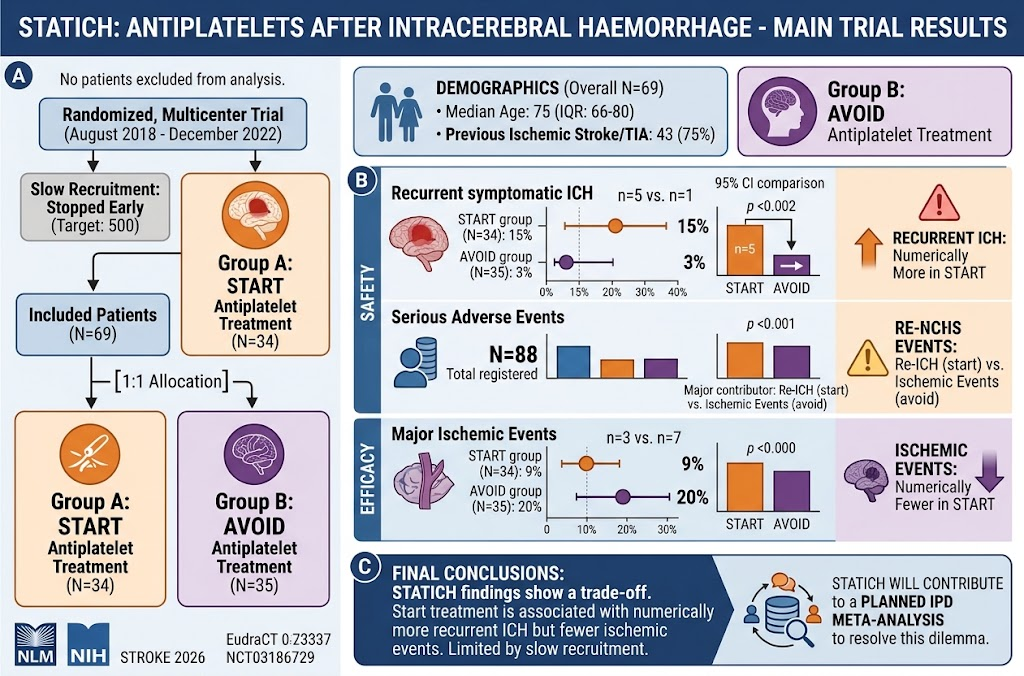
Balancing Risks: Antiplatelet Therapy After Intracerebral Haemorrhage in the STATICH Trial
Internal Medicinestroke preventionAntiplatelet Therapy

Balancing Risks: Antiplatelet Therapy After Intracerebral Haemorrhage in the STATICH Trial

By MedXY|Aug 18, 2026

The STATICH trial assessed safety and efficacy of antiplatelet therapy after intracerebral hemorrhage, revealing increased hemorrhagic risk but fewer ischemic events among treated patients, highlighting ongoing clinical dilemmas.

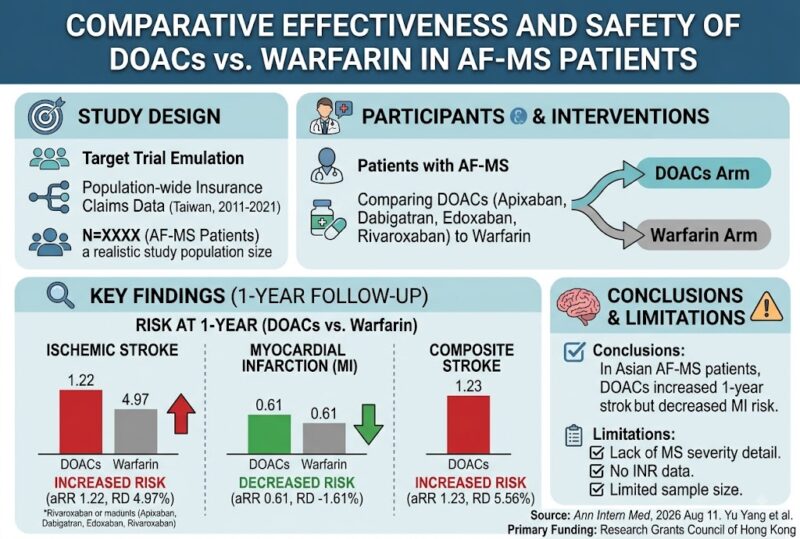
Balancing Stroke and Cardiac Risks: DOACs versus Warfarin in Atrial Fibrillation with Mitral Stenosis
Cardiologyanticoagulation safetymitral stenosis

Balancing Stroke and Cardiac Risks: DOACs versus Warfarin in Atrial Fibrillation with Mitral Stenosis

By MedXY|Aug 11, 2026

This study evaluates the real-world effectiveness and safety of direct oral anticoagulants versus warfarin in Asian patients with atrial fibrillation and mitral stenosis, revealing higher stroke yet lower myocardial infarction risk with DOA

Risk-Guided Screening for Atrial Fibrillation Using Electronic Health Records
Cardiologyatrial fibrillationElectronic Health Records

Risk-Guided Screening for Atrial Fibrillation Using Electronic Health Records

By MedXY|Jul 30, 2026

A machine learning model using electronic health records effectively identifies patients at high risk of atrial fibrillation, enabling targeted screening and early diagnosis to prevent stroke.

Temporal Trends in Oral Anticoagulant Use and Clinical Outcomes Among Older Adults with Atrial Fibrillation: Insights from a Danish Nationwide Study and Contemporary Evidence
Cardiologyatrial fibrillationelderly patients

Temporal Trends in Oral Anticoagulant Use and Clinical Outcomes Among Older Adults with Atrial Fibrillation: Insights from a Danish Nationwide Study and Contemporary Evidence

By MedXY|Jul 16, 2026

Recent decades saw increased anticoagulant use and reduced stroke risk in elderly AF patients, especially with DOACs, but bleeding risks rise notably in very elderly patients, highlighting tailored management needs.

Routine Surgical Left Atrial Appendage Occlusion Did Not Improve 1-Year Outcomes in Valvular Surgery Patients Without Atrial Fibrillation: Insights From the OPINION Trial
Cardiologyatrial fibrillationLeft Atrial Appendage Occlusion

Routine Surgical Left Atrial Appendage Occlusion Did Not Improve 1-Year Outcomes in Valvular Surgery Patients Without Atrial Fibrillation: Insights From the OPINION Trial

By MedXY|May 28, 2026

In OPINION, prophylactic left atrial appendage occlusion during valve surgery did not significantly lower stroke, TIA, or cardiovascular death at 1 year in patients without pre-operative atrial fibrillation.

Integrated Strategies for Stroke Prevention and Management: From Evidence-Based Dietary Patterns to Systemic Adherence
Clinical Updatescardiovascular outcomesMediterranean diet

Integrated Strategies for Stroke Prevention and Management: From Evidence-Based Dietary Patterns to Systemic Adherence

By MedXY|Apr 9, 2026

This review synthesizes recent evidence on the neuroprotective effects of healthy dietary patterns (Mediterranean, MIND), the synergistic impact of lifestyle and pharmacotherapy (GLP-1), and systemic advances in acute stroke care and second

Long-Term Efficacy and Safety of Transcatheter Patent Foramen Ovale Closure: A 20-Year Follow-Up Study
CardiologyLiệu pháp chống huyết khốiparadoxical embolism

Long-Term Efficacy and Safety of Transcatheter Patent Foramen Ovale Closure: A 20-Year Follow-Up Study

By MedXY|Mar 9, 2026

A 20-year follow-up study of 130 patients demonstrates that transcatheter PFO closure is highly effective in preventing recurrent strokes, though long-term antithrombotic therapy increases bleeding risks, particularly in women.

Long-Term Clinical Outcomes After Patent Foramen Ovale (PFO) Closure: A 20-Year Follow-Up Study
CardiologyCardiologyclinical outcomes

Long-Term Clinical Outcomes After Patent Foramen Ovale (PFO) Closure: A 20-Year Follow-Up Study

By MedXY|Mar 2, 2026

This article examines the 20-year safety and efficacy of transcatheter PFO closure in patients with paradoxical embolism, highlighting low recurrence rates but significant long-term bleeding risks associated with antithrombotic therapy.

Apixaban Shows No Increased Risk of MRI-Detected Intracranial Hemorrhage Compared to Aspirin in Atrial Cardiopathy
NeurologyAtrial CardiopathyMRI

Apixaban Shows No Increased Risk of MRI-Detected Intracranial Hemorrhage Compared to Aspirin in Atrial Cardiopathy

By MedXY|Feb 5, 2026

An exploratory analysis from the ARCADIA-MRI substudy reveals that apixaban carries a similar risk of incident intracranial hemorrhages, microbleeds, and superficial siderosis compared to aspirin in patients with atrial cardiopathy and cryp

High Insulin Resistance Blunts the Superiority of Ticagrelor Over Clopidogrel in Minor Stroke Patients with CYP2C19 Mutations
Diabetes & EndocrinologyAntiplatelet TherapyCYP2C19

High Insulin Resistance Blunts the Superiority of Ticagrelor Over Clopidogrel in Minor Stroke Patients with CYP2C19 Mutations

By MedXY|Jan 22, 2026

A post hoc analysis of the CHANCE-2 trial suggests that the clinical benefit of ticagrelor over clopidogrel for secondary stroke prevention in CYP2C19 loss-of-function carriers is significantly attenuated in patients with high insulin resis

Genetic Risk Profile Predicts Stroke Prevention Benefit From Continuous Atrial Fibrillation Screening: A Secondary Analysis of the LOOP Study
Cardiologyatrial fibrillationpolygenic risk score

Genetic Risk Profile Predicts Stroke Prevention Benefit From Continuous Atrial Fibrillation Screening: A Secondary Analysis of the LOOP Study

By MedXY|Jan 22, 2026

A secondary analysis of the LOOP study demonstrates that continuous ECG screening with implantable loop recorders significantly reduces stroke and systemic embolism in individuals with high genetic risk for atrial fibrillation, while potent

Drug-Coated Balloons Superior to Bare-Metal Stents in Preventing Restenosis for High-Grade Intracranial Atherosclerosis
NeurologyIntracranial StenosisRestenosis

Drug-Coated Balloons Superior to Bare-Metal Stents in Preventing Restenosis for High-Grade Intracranial Atherosclerosis

By MedXY|Jan 21, 2026

A multicenter randomized controlled trial demonstrates that drug-coated balloons significantly reduce 6-month restenosis and 1-year recurrent ischemic events compared to bare-metal stents in patients with symptomatic high-grade intracranial

Drug-Coated Balloons Outperform Bare-Metal Stents in Reducing Restenosis for Symptomatic Intracranial Stenosis
NeurologyIntracranial Atherosclerotic DiseaseRestenosis

Drug-Coated Balloons Outperform Bare-Metal Stents in Reducing Restenosis for Symptomatic Intracranial Stenosis

By MedXY|Jan 21, 2026

A multicenter RCT demonstrates that drug-coated balloon (DCB) angioplasty significantly reduces 6-month restenosis and 1-year recurrent ischemic events compared to bare-metal stenting in patients with high-grade symptomatic intracranial ath

Precision Medicine in Atrial Fibrillation: Biomarker-Based ABC-AF Risk Scores Fail to Outperform Standard Care
Cardiologyatrial fibrillationbiomarkers

Precision Medicine in Atrial Fibrillation: Biomarker-Based ABC-AF Risk Scores Fail to Outperform Standard Care

By MedXY|Jan 18, 2026

A large-scale registry-based RCT reveals that tailoring atrial fibrillation treatment using the biomarker-driven ABC-AF risk score does not significantly reduce stroke or death compared to current standard guideline-based care, highlighting

Pushing the Limits: Very Low LDL-C Levels Below 40 mg/dL Proven Safe and Effective for Secondary Stroke Prevention
NeurologyLDL-Cstroke

Pushing the Limits: Very Low LDL-C Levels Below 40 mg/dL Proven Safe and Effective for Secondary Stroke Prevention

By MedXY|Jan 17, 2026

A long-term analysis of the FOURIER trials reveals that achieving ultra-low LDL-C levels (<40 mg/dL) significantly reduces recurrent stroke and major cardiovascular events in stroke survivors, without increasing hemorrhagic stroke risk,

Novel MicroNet-Covered Stent Sets New Safety Standard for High-Risk Carotid Artery Stenting: Insights from the C-GUARDIANS Trial
CardiologyCarotid Artery Stentingstroke prevention

Novel MicroNet-Covered Stent Sets New Safety Standard for High-Risk Carotid Artery Stenting: Insights from the C-GUARDIANS Trial

By MedXY|Jan 17, 2026

The C-GUARDIANS trial reveals that the CGuard MicroNet-covered stent significantly reduces embolic risks in high-risk carotid artery stenting, achieving a remarkably low 30-day DSMI rate of 0.95% and sustained neuroprotection through one ye

Distinct Neuroimaging Signatures: Atrial Fibrillation and Atherosclerosis Drive Divergent Vascular Brain Lesion Patterns
Cardiologyatherosclerosisatrial fibrillation

Distinct Neuroimaging Signatures: Atrial Fibrillation and Atherosclerosis Drive Divergent Vascular Brain Lesion Patterns

By MedXY|Jan 5, 2026

A large-scale comparative study of 3,508 patients reveals that atrial fibrillation and atherosclerosis produce significantly different vascular brain lesions on MRI, with AF favoring non-lacunar infarcts and periventricular white matter cha

Beyond Stenosis: Wall Shear Stress and Oscillatory Index Emerge as Key Biomarkers for High-Risk Carotid Plaques
CardiologyCarotid Stenosisstroke prevention

Beyond Stenosis: Wall Shear Stress and Oscillatory Index Emerge as Key Biomarkers for High-Risk Carotid Plaques

By MedXY|Jan 2, 2026

A study in Eur Heart J Cardiovasc Imaging identifies elevated systolic wall shear stress and low oscillatory shear index as independent predictors of complicated carotid artery plaques, offering a more precise framework for stroke risk stra

1 / 2
12
Next
Ask MedXY AI

Most popular

Intimate Health
Five Benefits for Women Continuing Sexual Activity After Menopause
Intimate Health
Why Some Women Have a Strong Sex Drive—And Why Men Shouldn't Worry About It
Nursing & care
How often should a couple have sex?
Intimate Health
Classic Intimacy Recommendations: How to Help Women Reach Orgasm and Enjoy Mutual Pleasure
Intimate Health
What Makes a Woman "Physiologically Addicted" Is Never Money, But These Two Relationship Qualities
© 2026 MedXY
Contact usAbout usPrivacy PolicyMedXY story