We use cookies

Our website uses essential cookies and, with your consent, additional cookies to measure performance and improve our services. Cookie Policy.

You can change your choice at any time.

MMedXYNews
HomeVideos
MedXY AI/MedXY News/Section: Cardiology

Strategies to Minimize Coronary Malperfusion in Bioprosthetic Aortic Root Replacement
MedXY Editorial Team•Sep 21, 2026•Cardiology
cardiac surgeryAortic root replacementBioprosthetic valveCoronary malperfusion

Highlight

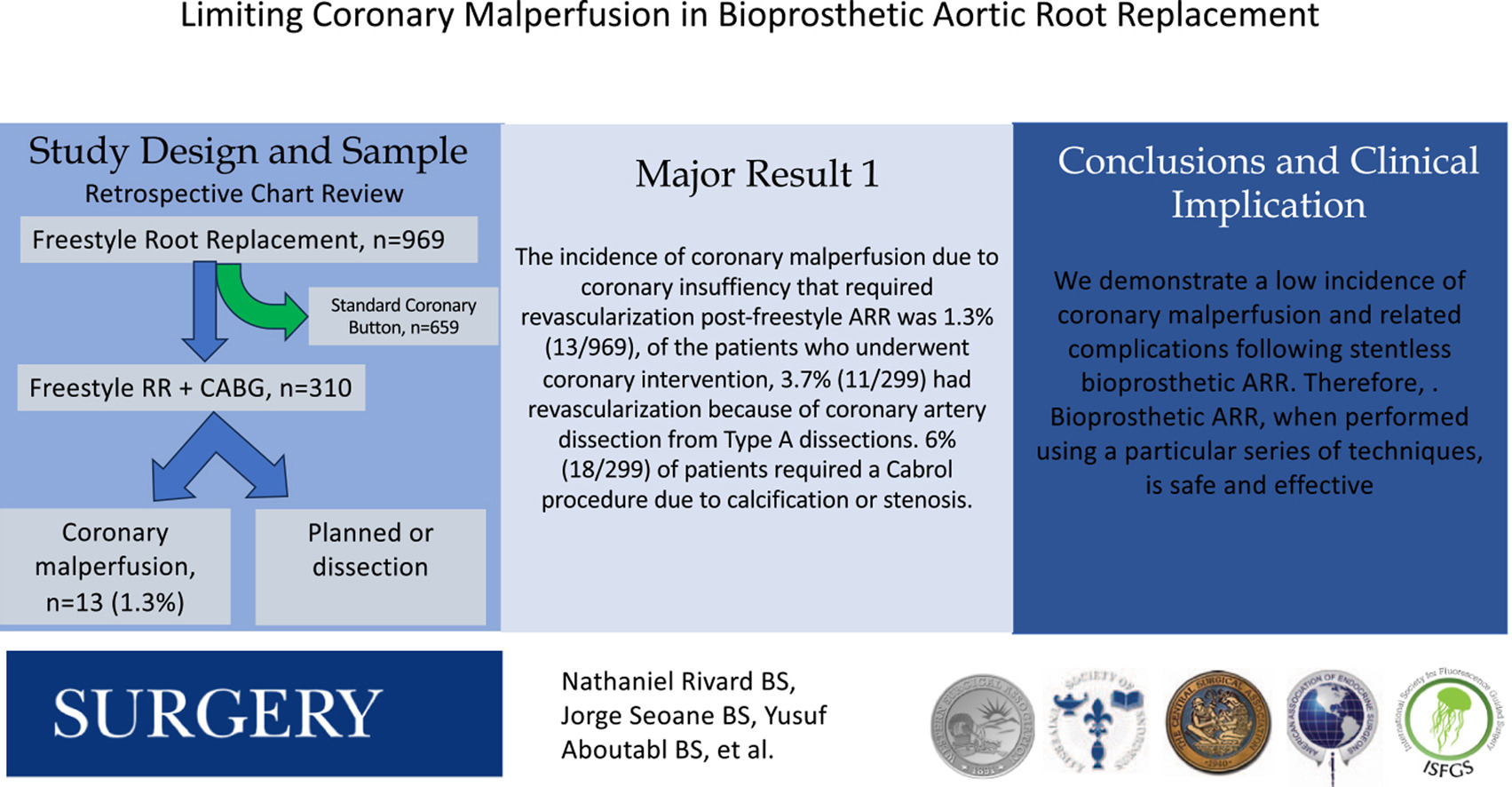
  • Coronary malperfusion requiring coronary revascularization post-aortic root replacement occurred in only 1.3% of patients undergoing Freestyle stentless bioprosthetic root replacement.
  • Technical improvements such as avoiding oversizing the root and extensive coronary button mobilization significantly reduced adverse coronary outcomes compared to earlier series.
  • Coronary artery dissection related to type A aortic dissection and concomitant coronary interventions remain important considerations in this population.
  • The Cabrol procedure was selectively used in 6% of patients with coronary calcification or stenosis to optimize coronary flow.

Study Background

MedXY registered readers

Sign in free to continue reading

Create or use your MedXY account to unlock the complete article.

This article was created using several editorial tools, including AI, as part of the process. Human editors reviewed this content before publication.

Related articles

Open language-specific specialty feeds and department pages.

Ilofotase Alfa in Preventing Acute Kidney Injury Post-Cardiac Surgery: Insights from a Phase 2 Randomized TrialA phase 2 randomized trial found that ilofotase alfa did not significantly reduce kidney injury or improve outcomes in high-risk patients undergoing on-pump cardiac surgery, though it was safe and well tolerated.Sep 24, 2026Impact of Decompensated Cirrhosis on Cardiac Surgery Outcomes: Clinical and Economic ImplicationsDecompensated cirrhosis markedly elevates mortality, complications, and costs following cardiac surgery. Optimized risk models and tailored management are essential for improved patient outcomes.Sep 9, 2026Outcomes following major cardiac procedures in socially vulnerable patients are not improved at high-volume centersSocial vulnerability significantly elevates mortality and complications after major cardiac surgery, and treatment at high-volume centers does not mitigate these disparities, highlighting the need for systemic interventions beyond hospitalAug 18, 2026
Loading comments...
MedXY briefing

Get the free newsletter

Evidence-led clinical news, trends, and analysis—delivered to your inbox.

Ask MedXY AI

Most popular

Intimate Health
Five Benefits for Women Continuing Sexual Activity After Menopause
Intimate Health
Why Some Women Have a Strong Sex Drive—And Why Men Shouldn't Worry About It
Nursing & care
How often should a couple have sex?
General Surgery
Optimizing Postoperative Opioid Prescriptions After Intra-Abdominal Cancer Surgery: Comparing the 5x-Multiplier and 3-Tier Models
Intimate Health
Classic Intimacy Recommendations: How to Help Women Reach Orgasm and Enjoy Mutual Pleasure
© 2026 MedXY
Contact usAbout usPrivacy PolicyMedXY story
Postoperative Atrial Fibrillation After Cardiac Surgery: Common, Variably Treated, and Linked to Worse 1-Year Outcomes
The VISION Cardiac Surgery cohort found POAF in about one-third of patients, with wide variation in discharge treatment. POAF strongly predicted later atrial fibrillation and was associated with higher 1-year mortality.
Jun 19, 2026
Rethinking Magnesium Prophylaxis for Postoperative Atrial Fibrillation in Cardiac Surgery: A Synthesis of Clinical EvidenceRecent high-quality randomized clinical trials and meta-analyses suggest that routine magnesium sulfate infusion does not effectively prevent postoperative atrial fibrillation in cardiac surgery, especially when used alongside standard betaJun 3, 2026
Perioperative Dexmedetomidine Fails to Reduce Major Complications After Cardiac Surgery: Results from the DOCS TrialThe DOCS trial, a multi-center randomized controlled study, found that perioperative dexmedetomidine infusion did not significantly reduce in-hospital mortality or major complications in adults undergoing cardiac surgery with cardiopulmonarJan 7, 2026