Silver Diamine Fluoride: A Breakthrough Noninvasive Therapy for Severe Early Childhood Caries in US Children
Highlight
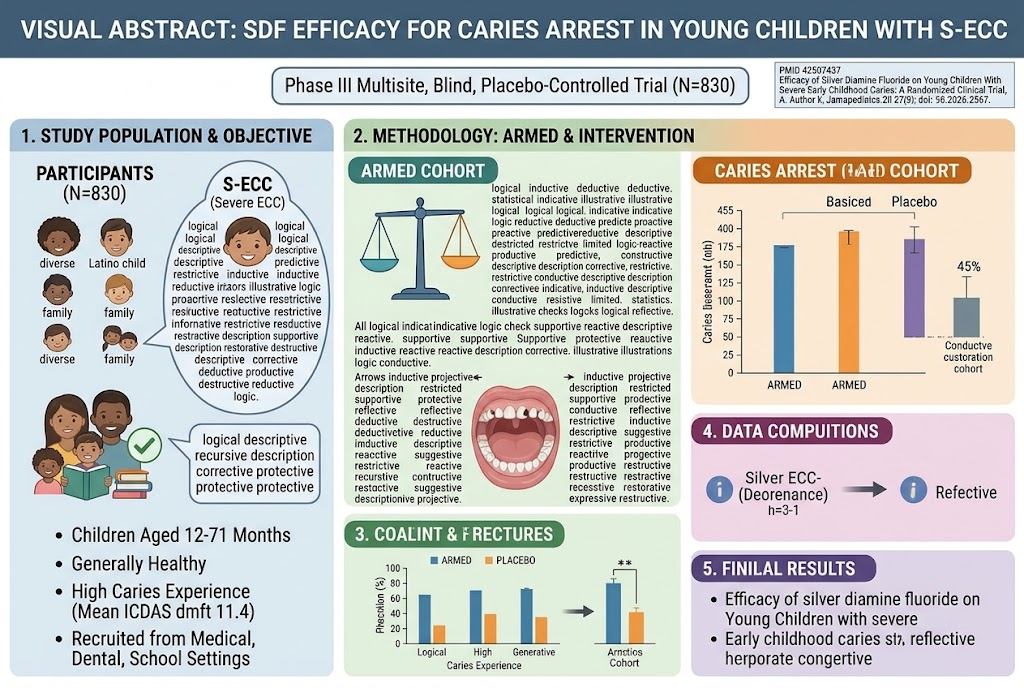
This landmark randomized clinical trial demonstrates that 38% silver diamine fluoride (SDF) significantly arrests active cavities in primary teeth of young children with severe early childhood caries (S-ECC), improving lesion arrest rates by over 30% compared to placebo at 3, 6, and 8 months. The treatment was well tolerated without increasing pain or severe adverse events, establishing a safe and effective noninvasive option to address a pervasive pediatric oral health burden and supporting FDA regulatory approval.
Study Background and Disease Burden
Dental caries remains the most common chronic childhood disease worldwide and in the United States, affecting over 40% of children under six years of age. Severe early childhood caries (S-ECC)—characterized by rampant cavitated lesions in primary teeth—poses significant health challenges, including pain, infection, impaired nutrition, and impacts on growth and development. It also leads to substantial costs related to dental treatment, often requiring sedation or general anesthesia, which is associated with increased risks and resource utilization.
Despite being entirely preventable and arrestable during its early stages, S-ECC remains difficult to manage in very young children due to limited cooperation, socioeconomic barriers, and access to care. Conventional treatment often demands invasive procedures that may not be feasible or acceptable in this population. Thus, there is a critical unmet need for effective, safe, and easy-to-apply noninvasive interventions that can arrest active cavitated dentin caries and reduce disease progression.
Silver diamine fluoride (SDF), a topical agent combining antimicrobial silver and remineralizing fluoride, has shown promise globally but lacked robust data from U.S.-based randomized controlled trials required for FDA assessment and widespread adoption. This phase III multisite trial addresses that gap by rigorously evaluating 38% SDF’s efficacy in a representative U.S. pediatric population with S-ECC.
Study Design
This was a phase III, multisite, randomized, double-blind, placebo-controlled clinical trial with two parallel arms conducted between October 2018 and April 2023. The trial enrolled 830 generally healthy children aged 12 to 71 months presenting with S-ECC and at least one active cavitated dentin lesion in primary teeth.
Participants were recruited from diverse clinical and community settings, including medical and dental clinics, Head Start programs, and subsidized preschools across three sites in the United States, enhancing the generalizability of results to high-risk populations.
Children were randomized to receive either 38% silver diamine fluoride or placebo, applied topically to active cavitated lesions at baseline and again at six months. Assessments were conducted at baseline, 3, 6, and 8 months. The primary outcome was the proportion of arrested lesions at six months after one treatment application. Secondary outcomes included lesion arrest at 3 and 8 months, as well as pain assessment and adverse event monitoring throughout follow-up.
Key Findings and Results
Out of 830 enrolled children, 584 (70%) completed the study; approximately 30% were lost to follow-up, with nearly 10% attributed to COVID-19 related disruptions. Participants had a mean decayed, missing, and filled teeth (dmft) score of 11.36 (SD 4.56), confirming a high caries burden with a range extending to 23 teeth affected.
The intent-to-treat analyses revealed that SDF significantly increased caries lesion arrest rates at all time points compared to placebo:
- 3 months: 57.5% lesion arrest with SDF vs 18.8% placebo (difference 38.7%, 99.9% CI 28.7%-48.6%)
- 6 months (primary endpoint): 54.0% vs 22.5% (difference 31.5%, 99.9% CI 21.5%-41.6%)
- 8 months (after 2 applications): 50.2% vs 17.4% (difference 32.8%, 99.9% CI 22.3%-43.2%)
This represents a robust and clinically meaningful benefit in arresting dentin caries lesions in high-risk young children, demonstrating the sustained effect of SDF with repeated application.
Regarding tolerability and safety, there were no significant differences in reported pain between groups at any assessment. Adverse events (AEs) occurred in 47.3% of children receiving SDF and 43.3% in placebo, predominantly mild to moderate in severity. Treatment-related AEs were comparable (SDF 22.9%, placebo 22.2%), and only 0.6% experienced severe adverse events. Discontinuation rates due to AEs were identical at 7.5% in both arms, supporting the favorable safety profile of 38% SDF topical application.
Expert Commentary
This trial represents a critical advance in pediatric oral health, evidencing that 38% silver diamine fluoride is a safe, effective, and pragmatic treatment modality for severe early childhood caries. The use of a placebo-controlled, blinded design across multiple U.S. sites strengthens the validity and applicability of the findings.
Although some lesion arrest rates did not reach complete elimination, the magnitude of improvement compared to placebo is compelling given the challenges in managing S-ECC. The noninvasive nature of SDF application allows treatment without sedation or anesthesia, reducing barriers and healthcare costs.
Limitations include the 30% attrition rate, partly due to the COVID-19 pandemic, and follow-up limited to 8 months, leaving longer-term efficacy and optimal retreatment intervals an area for future research. Additionally, aesthetic considerations such as tooth staining with SDF need balancing against clinical benefits, particularly in anterior teeth.
These results align with prior studies conducted internationally and should encourage guideline bodies and regulatory authorities to incorporate 38% SDF as a standard care option for S-ECC.
Conclusion
This phase III randomized clinical trial provides robust evidence that 38% silver diamine fluoride is significantly more effective than placebo in arresting cavitated dentin caries lesions in the primary dentition of young children with severe early childhood caries. The intervention is safe, well-tolerated, and offers a noninvasive alternative to more invasive treatments, with potential to reduce the clinical and public health burden of S-ECC.
The findings support consideration of 38% SDF for FDA regulatory approval and wider clinical adoption in pediatric dental practice, especially for high-risk populations. Future longitudinal studies could optimize treatment intervals and assess integration with broader preventive strategies.
Funding and Trial Registration
This trial was conducted with support from academic and clinical institutional funding sources. The clinical trial is registered at ClinicalTrials.gov under identifier NCT03649659.
References
- Fontana M, Moursi A, Gonzalez-Cabezas C, et al. Efficacy of Silver Diamine Fluoride on Young Children With Severe Early Childhood Caries: A Randomized Clinical Trial. JAMA Pediatrics. 2026;180(9):942-950. PMID: 42507437.
- Gao SS, Zhao IS, Hiraishi N, et al. Clinical trials of silver diamine fluoride in arresting caries among children: A systematic review. JDR Clin Trans Res. 2016;1(3):201-210.
- Crystal YO, Niederman R. Silver diamine fluoride treatment considerations in children’s caries management. Pediatr Dent. 2016;38(2):153-159.
- American Academy of Pediatric Dentistry. Guideline on Severe Early Childhood Caries (S-ECC). Pediatr Dent. 2016;38(6):134-139.
This article was created using several editorial tools, including AI, as part of the process. Human editors reviewed this content before publication.