We use cookies

Our website uses essential cookies and, with your consent, additional cookies to measure performance and improve our services. Cookie Policy.

You can change your choice at any time.

MMedXYNews
HomeVideos
MedXY AI/MedXY News/Section: Cardiology

Revealing the Role of Gut Microbiome Rhythms in Cardiovascular Health

MedXY Editorial Team•Sep 30, 2025•Cardiology
cardiovascular diseasecircadian rhythmgut microbiome

Cardiovascular diseases (CVDs) remain a leading cause of mortality globally. Among these, acute events such as myocardial infarction and ischemic stroke are frequently linked to destabilization of atherosclerotic plaques. Recent research has unveiled a fascinating link between the gut microbiome’s circadian rhythms and plaque stability, shedding light on innovative prevention and treatment strategies.

The Role of Circadian Rhythms in Cardiovascular Health

Circadian rhythms, the natural cycles governing physiological processes over a 24-hour period, influence cardiovascular events. Clinical studies have long observed that acute cardiovascular incidents peak in the early morning. While traditionally attributed to endogenous factors like blood pressure fluctuations, new evidence implicates the gut microbiome as a “second biological clock.” Short-chain fatty acids (SCFAs) and trimethylamine N-oxide (TMAO) are among microbial metabolites showing rhythmic variations that impact endothelial function and immune responses. For instance, TMAO promotes plaque instability through endothelial apoptosis and platelet activation, whereas SCFAs enhance vascular integrity and immune regulation.
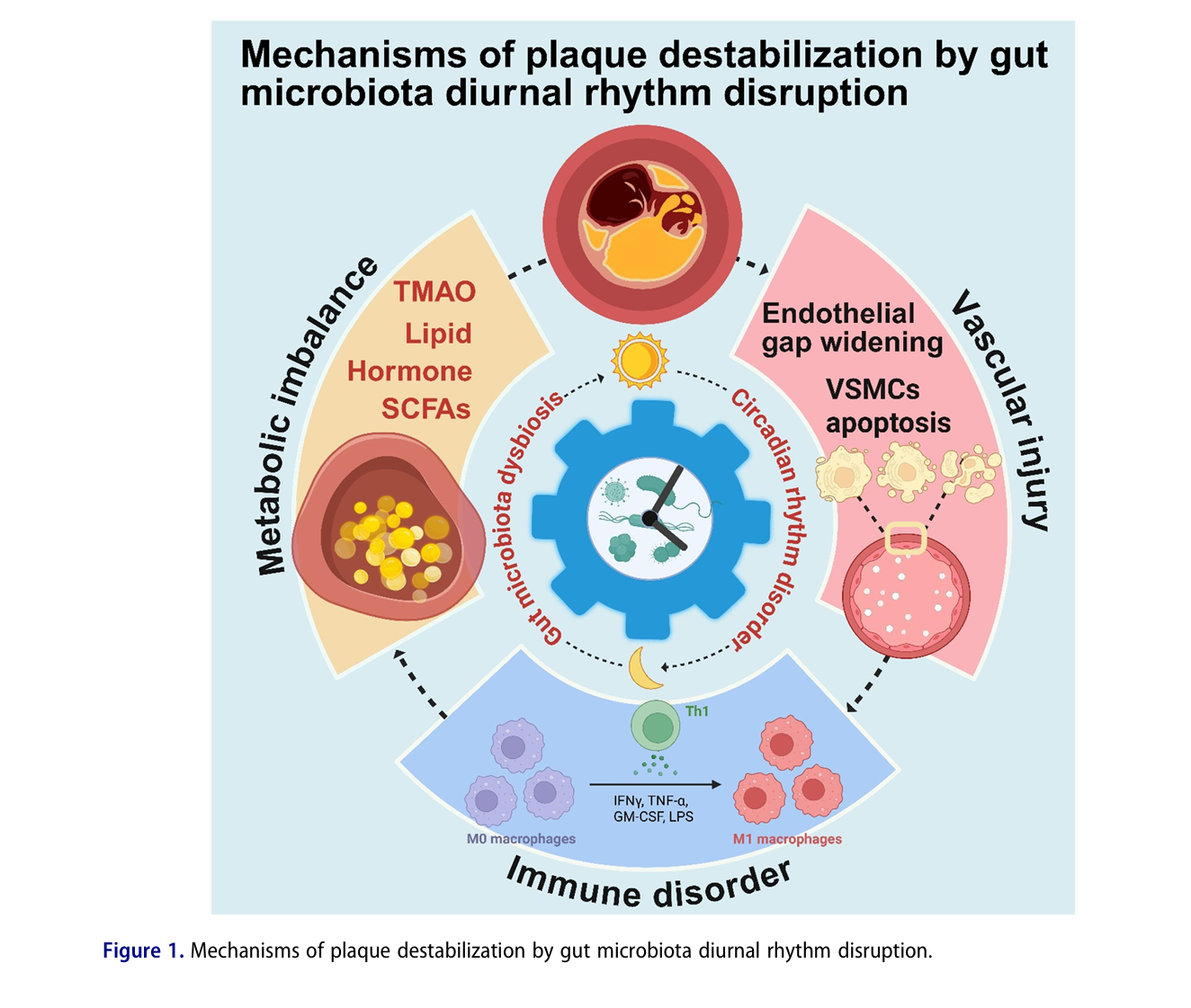
Disrupting the Gut-Host Symbiosis

Modern lifestyle factors such as irregular eating patterns and sleep disturbances disrupt the synchronized relationship between the host’s circadian clock and microbial rhythms. This dysregulation can lead to an imbalance in microbial metabolite production, which may accelerate endothelial dysfunction, immune dysregulation, and ultimately, plaque destabilization.

Proposed “Clock-Microbiome-Modulation” (CMM) Strategy

Researchers propose a novel “Clock-Microbiome-Modulation” (CMM) strategy as a preventative approach. This includes timed feeding protocols, probiotic supplementation during specific times for enhanced colonization, and circadian-targeted pharmacological agents. For example, prebiotics like inulin could promote beneficial bacterial growth, while agents like REV-ERBα agonists could synchronize host-microbial rhythms.

Looking Ahead

While the CMM strategy holds promise, its implementation faces challenges such as individual variability in circadian cycles and microbial composition. Future advancements in AI-driven personalized medicine and multi-omics integration could refine these approaches.

Conclusion

The interplay between gut microbiota and human circadian rhythms represents a frontier in cardiovascular disease management. By leveraging this connection, medical science moves closer to dynamic and personalized therapeutic paradigms that address the root causes of chronic conditions.

Reference

Zhai T, Zou X, Zhang Z, et al. Circadian rhythms of gut microbiota and plaque vulnerability: mechanisms and chrono-microbiota modulation interventions. Gut Microbes. 2025;17(1):2532703.

This article was created using several editorial tools, including AI, as part of the process. Human editors reviewed this content before publication.

Related articles

Open language-specific specialty feeds and department pages.

Distinct Gut Microbiome Signatures Predict Short-term Hospitalisation Risk in Cirrhosis: Insights from a Global Metagenomic StudyThis multinational study reveals that specific gut microbiome profiles significantly correlate with 90-day hospitalisation risk in cirrhosis, enhancing prognostic accuracy beyond clinical features alone.Sep 27, 2026Divergent Microbial Mechanisms and Predictive Signatures in Necrotising Enterocolitis: The Role of Gut Phages and Bacterial ResistomesThis review synthesizes evidence on the predictive and pathogenic roles of gut phages and bacterial resistomes in necrotising enterocolitis, highlighting divergent mechanisms for early- versus late-onset disease and translational opportunitSep 23, 2026Impact of Age at Type 1 Diabetes Onset on Mortality and Organ Complications: Insights from a Nationwide Swedish CohortYounger age at type 1 diabetes diagnosis significantly increases risks of mortality, cardiovascular, and kidney complications; each additional year delay in onset reduces these risks. This review synthesizes nationwide cohort findings and cSep 23, 2026
Loading comments...
MedXY briefing

Get the free newsletter

Evidence-led clinical news, trends, and analysis—delivered to your inbox.

Ask MedXY AI

Most popular

Intimate Health
Five Benefits for Women Continuing Sexual Activity After Menopause
Intimate Health
Why Some Women Have a Strong Sex Drive—And Why Men Shouldn't Worry About It
Nursing & care
How often should a couple have sex?
General Surgery
Optimizing Postoperative Opioid Prescriptions After Intra-Abdominal Cancer Surgery: Comparing the 5x-Multiplier and 3-Tier Models
Intimate Health
Classic Intimacy Recommendations: How to Help Women Reach Orgasm and Enjoy Mutual Pleasure
© 2026 MedXY
Contact usAbout usPrivacy PolicyMedXY story
Dynamic Gut Microbiome Changes Enhance Immunotherapy Outcomes in Advanced Liver Cancer
This longitudinal study reveals that gut microbiome remodeling during immune checkpoint inhibitor therapy in advanced liver cancer patients predicts clinical benefit, improving biomarker accuracy and survival stratification.
Sep 21, 2026
Efficacy and Safety of Semaglutide According to Frailty Status: Insights from the SELECT Randomized Clinical Trial Post Hoc AnalysisSemaglutide demonstrates consistent cardiovascular benefits and safety across frailty levels in overweight adults with cardiovascular disease, enhancing quality of life and frailty status without increased adverse events.Sep 21, 2026
Subclinical Liver Disease as a Silent Driver of Cardiovascular Risk: Insights from a Large-Scale Prospective StudySubclinical liver disease, marked by steatosis, fibrosis, and functional impairment, independently and synergistically increases cardiovascular disease risk. Incorporating non-invasive liver biomarkers could enhance CVD risk prediction andSep 15, 2026