Highlights
Lifelong estrogen exposure correlates with reduced cerebrovascular pathology and preserved brain structure in older women, especially among APOE-ε4 carriers.
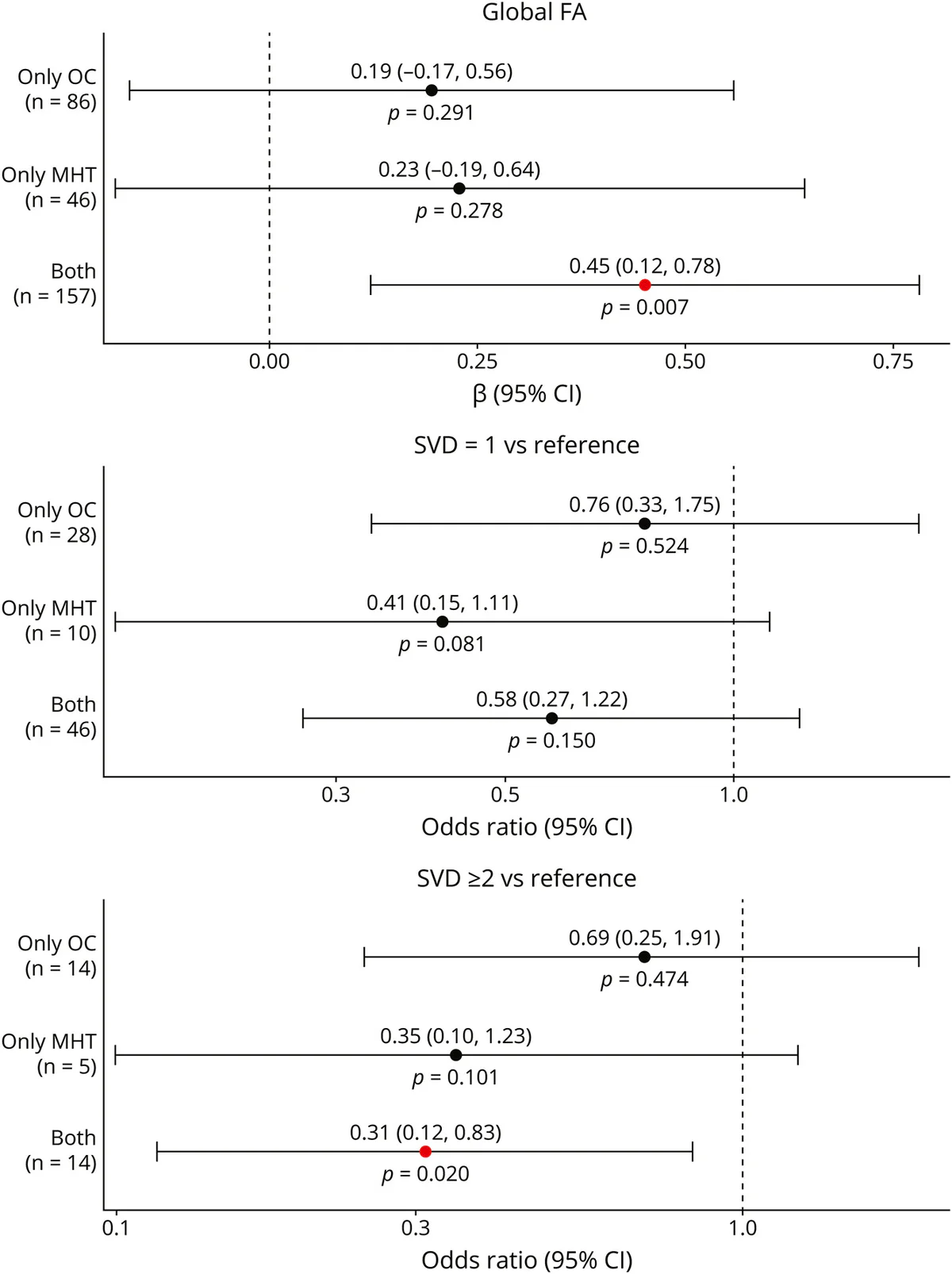
Menopausal hormone therapy (MHT) use associates with lower burden of cerebral small vessel disease and higher white matter integrity.
Endogenous reproductive factors such as longer reproductive span and older age at menopause demonstrate protective associations against Alzheimer’s disease (AD) markers.
Both endogenous and exogenous estrogen exposures influence brain aging through neurovascular and neuroprotective mechanisms, warranting further longitudinal research.
Background
Women experience a disproportionately high prevalence of Alzheimer disease (AD) and vascular brain aging relative to men, a disparity potentially rooted in sex-specific hormonal influences. Fluctuations and decline of estrogen through a woman’s lifespan—including endogenous reproductive factors and exogenous hormone use—may profoundly impact neurovascular health and AD-related neurodegeneration. Estrogens exhibit neuroprotective and vasoprotective actions, modulating cerebral perfusion, inflammation, and neural plasticity. However, the relationship between lifetime estrogen exposure, neurovascular pathology, and AD risk in later life remains incompletely understood.
Key Content
Endogenous Estrogen Exposure and Neurovascular Outcomes
Epidemiologic cohorts delineate reproductive lifespan (age at menopause minus menarche) as a proxy of cumulative endogenous estrogen exposure. Lorenzon et al. (Neurology, 2026) investigated 352 cognitively unimpaired women (age 70 to 75) and demonstrated that a longer reproductive span is significantly associated with lower cerebral small vessel disease (SVD) burden, measured as a composite of white matter hyperintensities (WMH), lacunes, cerebral microbleeds (CMBs), and perivascular spaces (PVSs). This inversely correlated with cerebrovascular pathology odds ratio (OR 0.92 per year of reproductive span). Additionally, a longer reproductive span corresponded to stable trajectories of cortical thickness and WMH over five years, implying sustained neurovascular integrity.
Complementary findings from a large Eastern Chinese cohort (PMID 41735428) revealed that women with prolonged reproductive lifespan (>34 years) had reduced AD risk, emphasizing endogenous hormonal influences on dementia pathophysiology. Similar protective associations were observed for older age at natural menopause and first childbirth.
Exogenous Estrogen Exposure: Hormonal Therapy and Oral Contraceptives
Menopausal hormone therapy (MHT) interacts complexly with neurovascular health and AD risk. The Gothenburg H70 cohort analyses revealed MHT use associated with fewer PVSs and CMBs, indicating mitigated microvascular injury. Moreover, combined exposure to oral contraceptives (OCs) and MHT correlated with greater white matter integrity measured by fractional anisotropy (β=0.45), suggesting additive benefits.
Neuropathologic and biomarker data from large cohorts (NACC, ADNI — PMID 42585606) support MHT’s association with decreased AD pathology: lower odds of amyloid burden and clinical dementia diagnoses. However, findings vary by hormone regimen, timing, and APOE-ε4 genotype status.
Neuroimaging studies (IGNITE cohort, PMID 42082089) demonstrated that hormonal exposures—both BC and MHT—relate to greater gray matter volume and cortical thickness in temporal and parietal regions vulnerable to AD. These neurostructural correlates emphasize the broad impact of estrogenic therapies on brain aging.
Genotype-Estrogen Interactions
APOE-ε4 carriers derived specific cortical thickness benefits from MHT, identified in the H70 cohort (β=0.38). Genetic modifiers may influence estrogen neuroprotection efficacy, delineating a precision medicine framework. Non-significant interactions between MHT and OC use suggest independent but cumulative effects on neurovascular health.
Other Neurovascular and Cognitive Associations
Reproductive history, including parity and pregnancy number, influence cognition and white matter microstructure in minority populations, such as Latina women (PMID 41310442), with hormone therapy linked to better cognitive performance. Similarly, central adiposity modulates cognitive outcomes in recently postmenopausal women independently of MHT (KEEPS-Cog, PMID 41186575).
Broader MHT Utilization Patterns and Safety
Population-based data from Sweden and South Korea describe evolving MHT dispensing trends, underscoring an increasing shift toward local estrogen formulations and interval declines in systemic therapy use (PMID 42153426, 40704422). These patterns correlate with safety concerns and guidelines recommending individualized hormone therapy decisions. Notably, MHT is associated with reduced risk of hepatocellular carcinoma (HR=0.46) without raising cholangiocarcinoma risk.
Non-hormonal interventions, such as hyaluronic acid-based vaginal gels, demonstrate efficacy in managing genitourinary syndrome of menopause, complementing systemic MHT (PMID 41837853, 41448032).
Limitations of Current Evidence
Most studies rely on observational data with self-reported hormone use and reproductive history, limiting causality inference. Variability in hormone formulations, timing, duration, and genetic backgrounds confound results. Imaging biomarkers provide surrogate endpoints but require validation against long-term clinical outcomes. The need for randomized controlled trials with diverse populations remains pressing.
Expert Commentary
The accumulated evidence converges on the beneficial role of lifetime estrogen exposure—both endogenous reproductive factors and exogenous hormone therapies—in preserving neurovascular health and mitigating AD risk in women. Mechanistically, estrogen modulates vascular endothelial function, cerebral blood flow, oxidative stress, synaptic health, and neuroinflammation.
The differential effects observed in APOE-ε4 carriers suggest genotype-informed hormone therapy could optimize neuroprotection. However, randomized trials like KEEPS reported no long-term amyloid or structural MRI biomarker changes 10 years following short-term MHT, highlighting gaps between biomarker and clinical efficacy evidence.
Clinical guidelines advocate tailored MHT use based on symptom burden, cardiovascular and cancer risks, and timing relative to menopause onset. This evidence synthesis encourages consideration of neurovascular outcomes in these assessments.
Research into non-hormonal therapies and combined regimens is expanding, addressing contraindications and enhancing quality of life domains such as mood and genitourinary health. Emerging approaches integrating neuroimaging, genomics, and longitudinal cognitive assessments will advance personalized interventions.
Conclusion
Greater lifetime estrogen exposure, incorporating reproductive lifespan and use of oral contraceptives and menopausal hormone therapy, is associated with favorable neurovascular phenotypes and reduced AD-related brain atrophy in older women. These effects appear particularly salient in APOE-ε4 carriers.
While observational findings are compelling, high-quality controlled studies are needed to define the optimal timing, formulation, and duration of hormonal interventions for neuroprotection. Incorporation of cerebrovascular mechanisms into dementia prevention paradigms holds promise for mitigating women’s disproportionate AD burden.
Clinicians should consider reproductive history and hormone therapy exposures when assessing neurovascular and cognitive aging in women. Patient-centered counseling will balance established benefits and risks while supporting future research efforts.
References
Lorenzon G et al. Reproductive Lifespan and Hormonal Therapy in Relation to Later-Life Neurovascular Health in Community-Dwelling Older Women. Neurology. 2026 Nov 4;107(11):e218706. PMID: 42981558.
Wang J et al. Menstrual and reproductive factors and risk of Alzheimer’s disease in elderly women: a cohort study in Eastern China. Sci Rep. 2026 Feb 24;16(1):10415. PMID: 41735428.
Gleason CE et al. Association Between Menopausal Hormone Therapy and Alzheimer Disease Neuropathology. Neurology. 2026 Sep 8;107(5):e218413. PMID: 42585606.
Blumfield ML et al. Lifespan exposure to hormone therapies and structural brain morphometry in older women. Neuroimage. 2026 Jul 1;334:121974. PMID: 42082089.
Espinosa-Navarro O et al. Association between reproductive history, white matter integrity, and cognition in post-menopausal Latina women. J Clin Exp Neuropsychol. 2026 Sep;48(7):732-746. PMID: 41310442.
Henderson VW et al. Long-term amyloid PET and MRI outcomes in a menopausal hormone therapy trial. Alzheimers Dement. 2026 Feb;22(2):e71067. PMID: 41618732.
Ning L et al. Patterns of menopausal hormone therapy dispensing over 15 years-A Swedish register-based cohort study. Acta Obstet Gynecol Scand. 2026 Aug;105(8):1454-1467. PMID: 42153426.
Choi H et al. Menopausal hormone therapy and risk of liver cancer in a Swedish population-based cohort study. J Natl Cancer Inst. 2026 Aug 1;118(8):1478-1484. PMID: 41866298.