We use cookies

Our website uses essential cookies and, with your consent, additional cookies to measure performance and improve our services. Cookie Policy.

You can change your choice at any time.

MMedXYNews
HomeVideos
MedXY AI/MedXY News/Section: Diabetes & Endocrinology

Preserved Endogenous Insulin Production Significantly Reduces Diabetic Ketoacidosis Risk in Type 1 Diabetes
MedXY Editorial Team•Sep 8, 2026•Diabetes & Endocrinology
type 1 diabetesEndogenous InsulinNhiễm toan ceton do đái tháo đườngC-peptide

Highlight

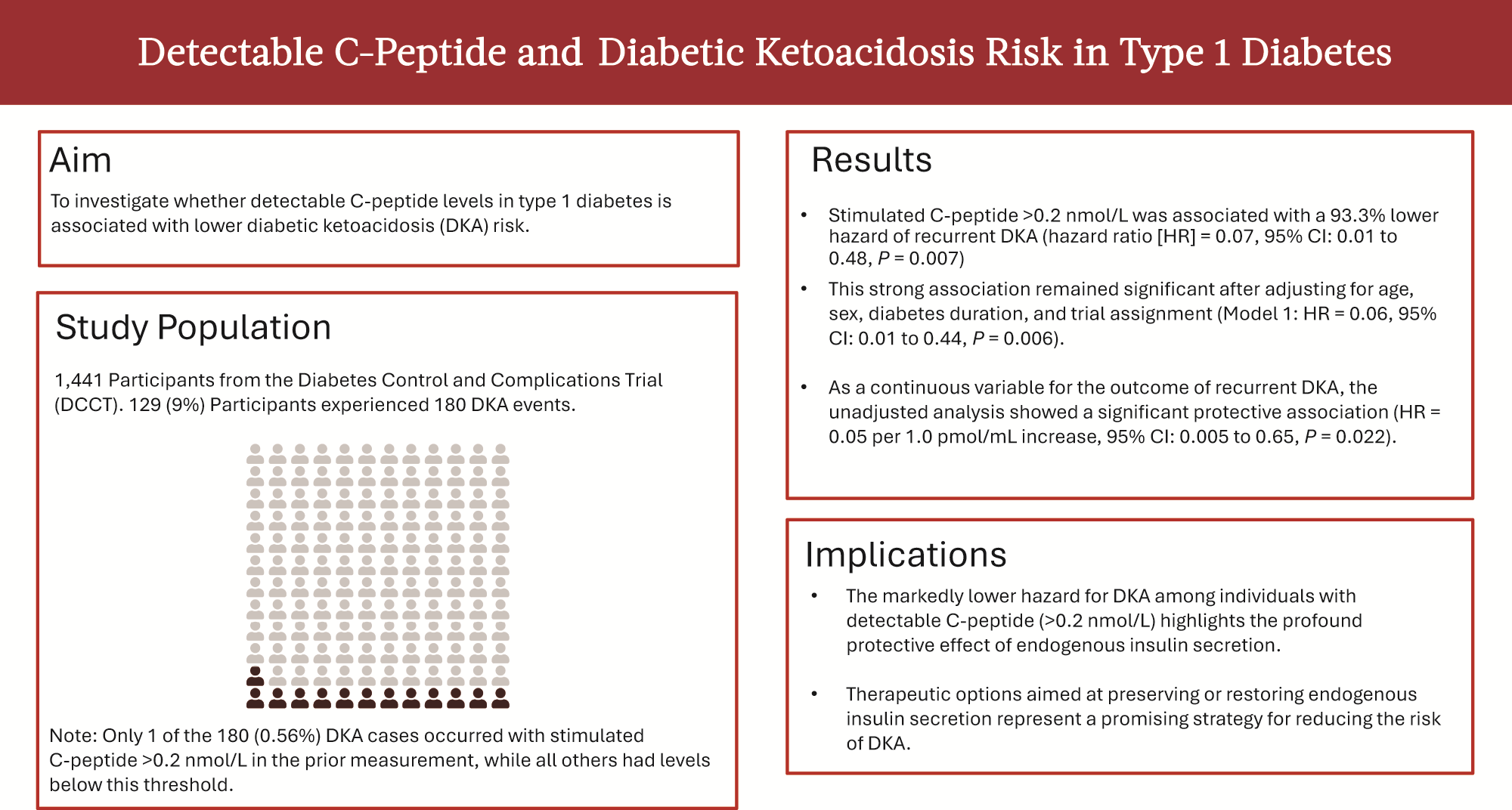
  • Detectable stimulated C-peptide (>0.2 nmol/mL) reflects endogenous insulin production in type 1 diabetes.
  • Residual C-peptide is strongly associated with a markedly reduced risk of diabetic ketoacidosis (DKA).
  • Over 99% of DKA episodes occurred when C-peptide levels were low or undetectable.
  • Preserving beta-cell function may offer a critical therapeutic target to mitigate DKA risk long term.

Study Background

MedXY registered readers

Sign in free to continue reading

Create or use your MedXY account to unlock the complete article.

This article was created using several editorial tools, including AI, as part of the process. Human editors reviewed this content before publication.

Related articles

Open language-specific specialty feeds and department pages.

Advancing SGLT Inhibitor Use for Heart and Kidney Protection in Type 1 Diabetes: Opportunities and ChallengesThis article reviews expert perspectives on the efficacy and safety of SGLT inhibitors for cardiovascular and renal disease in type 1 diabetes, outlines translational insights from type 2 diabetes data, and proposes a roadmap for regulatorySep 15, 2026β-Cell Dysfunction Enhances Prediction of Type 1 Diabetes Progression in Individuals with Single Autoantibody PositivityAssessment of β-cell dysfunction using stimulated glucose and C-peptide measures improves risk stratification for type 1 diabetes progression among single autoantibody-positive relatives, enabling personalized monitoring and targeted intervSep 15, 2026New International Consensus: Screening the General Population for Islet Autoantibodies to Detect Early-Stage Type 1 DiabetesAn international expert consensus recommends practical principles and minimum requirements for general‑population screening for islet autoantibodies to detect early-stage type 1 diabetes, reduce DKA, enable early care and access to disease‑Sep 13, 2026
Loading comments...
MedXY briefing

Get the free newsletter

Evidence-led clinical news, trends, and analysis—delivered to your inbox.

Ask MedXY AI

Most popular

Intimate Health
Five Benefits for Women Continuing Sexual Activity After Menopause
Intimate Health
Why Some Women Have a Strong Sex Drive—And Why Men Shouldn't Worry About It
Nursing & care
How often should a couple have sex?
Intimate Health
Classic Intimacy Recommendations: How to Help Women Reach Orgasm and Enjoy Mutual Pleasure
Intimate Health
What Makes a Woman "Physiologically Addicted" Is Never Money, But These Two Relationship Qualities
© 2026 MedXY
Contact usAbout usPrivacy PolicyMedXY story
Teplizumab Preserves Beta Cell Function in Youth with Newly Diagnosed Type 1 Diabetes: Insights from the PROTECT Trial Per-Protocol Analysis
The PROTECT trial’s per-protocol analysis confirms teplizumab’s efficacy in preserving beta cell function, reducing insulin needs, and improving glycemic control in children and adolescents newly diagnosed with stage 3 type 1 di
Sep 13, 2026
Continuous Glucose Monitoring Using the FreeStyle Libre Pro iQ in Presymptomatic Type 1 Diabetes: Advancements in Early Detection and Risk StratificationThis review examines the role of FreeStyle Libre Pro iQ CGM in differentiating presymptomatic stages of type 1 diabetes and predicting progression to clinical disease, comparing its performance with Dexcom G6 and discussing implications forSep 12, 2026
Rising Incidence of Islet Autoimmunity Among Colorado Children With Moderate-Risk HLA Genotypes: Insights From Longitudinal CohortsA study reveals a significant secular increase in islet autoimmunity incidence among Colorado children from 1993 to 2010, particularly in those with moderate-risk HLA genotypes, highlighting evolving risk profiles beyond known environmentalSep 11, 2026