Highlight
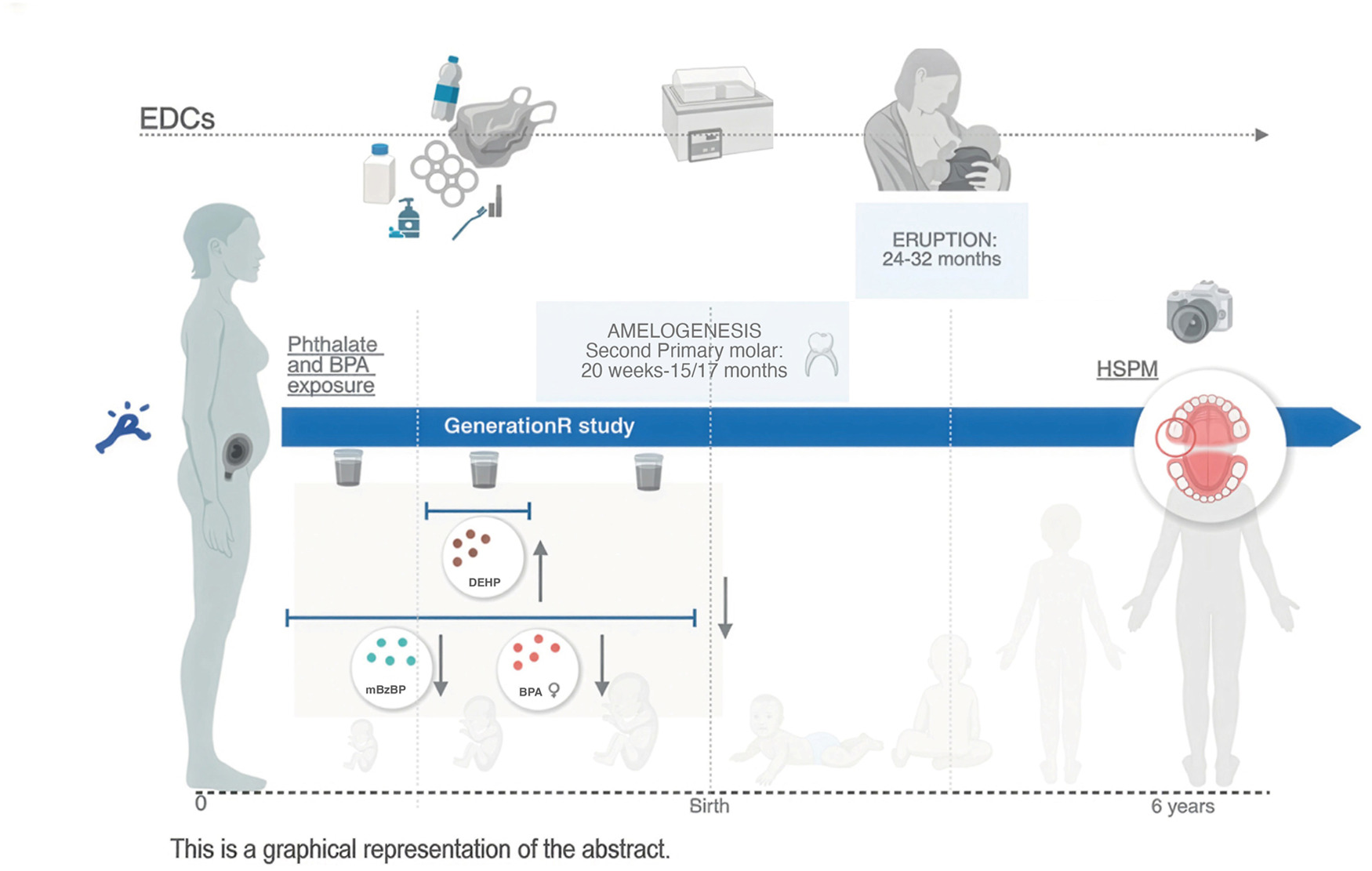
– Prenatal exposure to phthalates and bisphenol A (BPA), ubiquitous endocrine-disrupting chemicals, may influence the development of hypomineralized second primary molars (HSPM) in children.
– The study found sex-specific associations: higher BPA and phthalate levels during pregnancy were linked to lower risk of HSPM in girls but a trend toward higher risk in boys.
– Mixture analyses indicated that monobenzyl phthalate (mBzBP) contributed notably to lowered HSPM odds.
– These findings underscore the importance of considering combined chemical exposures during early development for dental enamel integrity.
Study Background
Hypomineralized second primary molars (HSPM) represent a developmental dental defect characterized by enamel with reduced mineral content and altered structure. This condition affects approximately 6.8% of children worldwide, posing challenges such as increased susceptibility to dental caries, sensitivity, and impaired aesthetics. The second primary molars mineralize between roughly 20 weeks of gestation and 15 to 17 months of age, representing a critical window during which environmental factors may impact enamel formation.
Emerging research implicates environmental endocrine-disrupting chemicals (EDCs), including phthalates and bisphenol A (BPA), which are pervasive in plastics, personal care products, and food packaging. Experimental animal studies have shown these chemicals can interfere with amelogenesis (tooth enamel formation), potentially by disrupting hormonal signaling pathways essential for mineralization processes. However, human epidemiological evidence linking prenatal exposures to HSPM remains scarce.
Study Design
This investigation formed part of the Generation R study, a large, population-based prospective birth cohort in the Netherlands. The cohort enrolled pregnant women and followed their offspring longitudinally to assess developmental outcomes.
Maternal urinary concentrations of BPA and 11 different phthalate metabolites were quantified during each trimester of pregnancy, providing a detailed exposure profile throughout fetal enamel development. The primary endpoint was the presence of HSPM in children at age 6 years, diagnosed according to the European Academy of Paediatric Dentistry (EAPD) criteria through clinical dental examination.
Analytical approaches incorporated multivariate logistic regression models to examine the association of individual chemical exposures with odds of HSPM. Additionally, Bayesian weighted quantile sum (WQS) regression was employed to evaluate the potential combined effects of chemical mixtures, accounting for complex exposure interrelations.
Key Findings
Among 1,160 mother-child pairs analyzed, 10.2% of children were diagnosed with HSPM, somewhat higher than the global estimate but consistent with population variability.
Individual Chemical Associations:
Monobenzyl phthalate (mBzBP), a metabolite of benzylbutyl phthalate, was associated with a statistically significant reduction in the odds of HSPM (OR = 0.76; 95% CI: 0.59–0.97) in single-exposure models, suggesting a potentially protective effect or correlated unmeasured factor.
DEHP metabolites measured in the second trimester showed a nonsignificant trend toward increased HSPM odds, for example, mEOHP had an OR of 1.15 (95% CI: 0.91–1.45), indicating possible developmental interference that did not reach statistical significance.
Sex-Specific Effects:
A notable interaction with sex was observed. In girls, higher prenatal exposures to BPA and phthalates were associated with a significantly lower likelihood of HSPM (e.g., BPA OR = 0.70; 95% CI: 0.50–0.98), whereas in boys the trend was in the opposite direction, showing increased odds of HSPM (p-interaction < 0.10).
This sexual dimorphism in susceptibility may reflect differential hormonal milieus or metabolic pathways affecting enamel mineralization.
Mixture Analyses:
Bayesian WQS regression analyzing overall prenatal exposure to phthalates and BPA showed a nonsignificant inverse association with HSPM (OR = 0.84; 95% CI: 0.63–1.15).
Within the mixture, mBzBP contributed most to the association.
No overall association was observed for the DEHP mixture; however, sex-specific trends remained consistent with those found in single-exposure analyses.
These findings indicate that the relationship between prenatal chemical exposure and HSPM is complex and may depend on sex and specific chemical compounds.
Expert Commentary
The study provides an important contribution to understanding how ubiquitous environmental EDCs might contribute to enamel hypomineralization during critical developmental windows. The findings of sex-specific associations highlight the need to consider biological differences when exploring EDC impacts on pediatric health.
Strengths of the study include its prospective design, robust exposure assessment across pregnancy trimesters, standardized dental evaluation using validated criteria, and application of advanced mixture modeling techniques. Nonetheless, some limitations merit consideration:
Despite the sizable cohort, some associations did not reach conventional statistical significance, possibly due to exposure misclassification or insufficient power to detect small effects.
Urinary biomarkers reflect short-term exposure; therefore, variability in individual chemical levels across pregnancy may have influenced results.
Residual confounding from unmeasured environmental or genetic factors cannot be excluded.
The biological mechanisms underlying the protective versus risk-inducing effects of specific phthalate metabolites remain speculative and warrant further mechanistic research.
Clinically, these findings underscore the need to reduce prenatal exposure to EDC mixtures and consider sex differences in dental developmental toxicity. If confirmed, maternal counseling and public health policies targeting environmental exposures during pregnancy may help mitigate HSPM risk.
Conclusion
In summary, this study presents evidence that prenatal exposure to phthalates and bisphenol A may influence the development of hypomineralized second primary molars in children, with notable sex-specific effects. Given the prevalence of these chemicals in the environment and their potential to disrupt enamel mineralization during a critical developmental window, further research is imperative to clarify causality and underlying mechanisms.
Practitioners and researchers should consider early-life chemical mixture exposures as a factor in HSPM etiology and design preventive strategies accordingly. This work advances our understanding of environmental determinants of dental health and highlights the broader implications of endocrine disruptors on childhood development.
Funding and ClinicalTrials.gov
The Generation R Study is funded by grants from multiple governmental and European sources. Specific funding details for this study were provided in the original publication. This observational cohort study is registered with ClinicalTrials.gov, identifier NCT00682348.
References
1. Cots E, Güil-Oumrait N, Marquez S, et al. Prenatal Exposure to Phthalates and Bisphenols in Association with Hypomineralization of Second Primary Molar. Journal of Dental Research. 2026;220345261490933. doi:10.1177/00220345221490933.
2. Lygidakis NA. Developmental enamel defects. In: Oulis CJ, ed. Paediatric Dentistry. Quintessence Publishing; 2006: 153-172.
3. Silva MJ, Barr DB, Reidy JA, et al. Urinary levels of seven phthalate metabolites in the U.S. population from the National Health and Nutrition Examination Survey (NHANES) 1999-2000. Environ Health Perspect. 2004;112(3):331-338.
4. Peretz J, Flaws JA. Bisphenol A, reproductive health, and cancer. In: Shioda T, ed. Environmental Toxicants and Epigenetics. Academic Press; 2017: 53-73.