Introduction
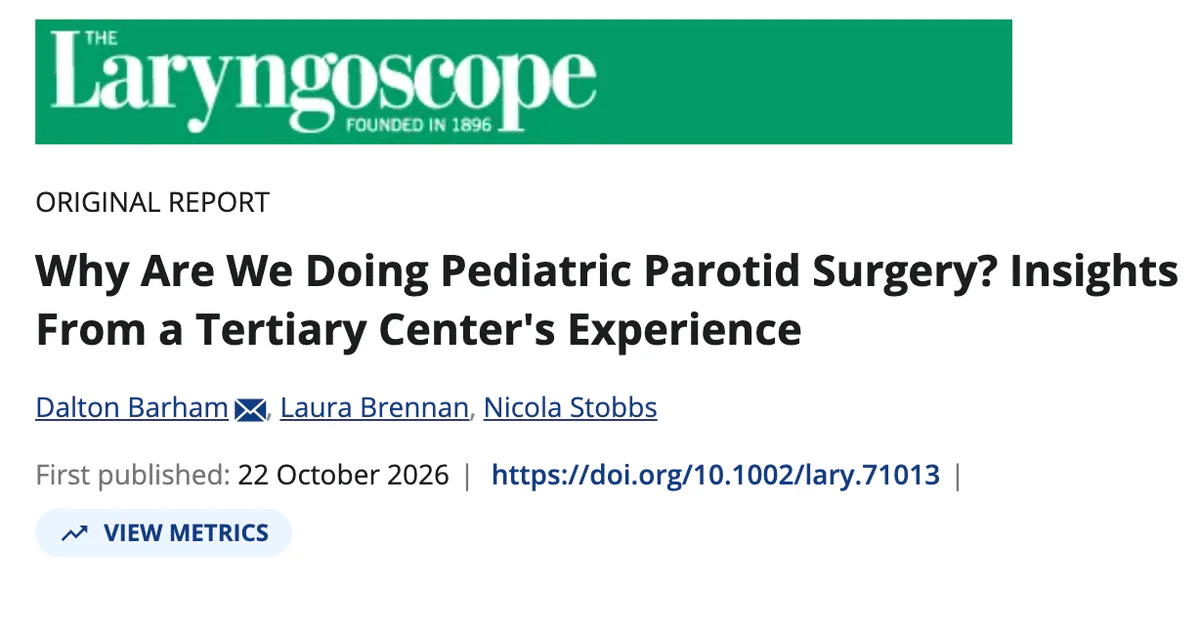
Pediatric parotid surgery is an infrequently performed but clinically significant procedure that addresses a variety of pathologies ranging from benign congenital anomalies to malignant neoplasms. Understanding the spectrum of indications, pathological findings, and surgical outcomes is crucial for optimizing patient care and counseling families. This article critically analyzes a recent retrospective cohort study published by Barham et al., which sheds light on the motivations and outcomes of pediatric parotidectomy over a decade at a tertiary pediatric hospital.
Study Background
The parotid gland, as the largest of the salivary glands, can harbor various lesions in children that may require surgical intervention. Pediatric parotid tumors are rare but can be malignant, necessitating timely diagnosis and treatment. Additionally, congenital abnormalities affecting the parotid region may also require surgical correction. Given the anatomical proximity of the facial nerve, surgical management balances disease control with preservation of nerve function. Despite this, comprehensive data on pediatric parotidectomy indications, pathology profiles, and complications remain limited.
Study Design and Methods
Barham and colleagues conducted a retrospective cohort review of all pediatric patients (aged 1 to 16 years) undergoing parotidectomy at a tertiary pediatric center over a 10-year period. The study encompassed 31 patients, capturing detailed demographic data, surgical indications, histopathological diagnoses, and perioperative complications. No specific comparators were mentioned, with the study aiming primarily to establish common clinicopathological themes and to compare findings with existing literature.
Key Findings
Of the 31 pediatric patients identified, 15 were male and 16 female, encompassing ages from infancy to adolescence (1-16 years). The principal surgical indication was primary parotid tumor (n=15), followed by congenital abnormalities (n=12). Other reasons for surgery were less common and not explicitly detailed.
Histopathology revealed acinic cell carcinoma (ACC) as the most frequent diagnosis (n=6), surpassing mucoepidermoid carcinoma, which is often reported as the more common pediatric malignancy in prior series. This highlights possible regional or population-specific variations or advances in diagnostic classification.
Regarding safety and complications, temporary facial nerve weakness was noted in 29% of patients, a significant but expected transient consequence likely reflecting the anatomical challenge of preserving facial nerve integrity during parotid dissection. Importantly, permanent facial nerve injury was rare, underscoring the overall safety of pediatric parotidectomy when performed in experienced tertiary settings.
Discussion and Expert Commentary
This study contributes valuable pediatric-specific evidence demonstrating that primary parotid tumors are the dominant indication for parotidectomy in children, with a notable prevalence of acinic cell carcinoma. The findings challenge the traditional paradigm where mucoepidermoid carcinoma is considered predominant, suggesting that pathology patterns may vary and emphasizing the importance of histological confirmation.
The relatively high rate of temporary facial nerve weakness underscores the necessity for thorough preoperative counseling. Surgeons and caregivers must be aware of this risk to set appropriate expectations. The low incidence of permanent nerve injury reflects meticulous surgical technique and the benefits of expertise available at dedicated pediatric tertiary centers.
Limitations of this study include its retrospective design and limited sample size, typical of rare pediatric conditions. Furthermore, detailed long-term oncological outcomes and quality-of-life assessments were not reported, representing areas for future research.
Current pediatric otolaryngology guidelines advocate for careful diagnostic workup with imaging and fine-needle aspiration whenever feasible to aid surgical planning. This study reinforces the safety and appropriateness of surgical management for indicated lesions while emphasizing vigilant facial nerve monitoring.
Conclusion
In summary, pediatric parotidectomy predominantly addresses primary parotid tumors, which are frequently malignant with acinic cell carcinoma leading the pathological spectrum in this series. Pediatric parotid surgery at a tertiary center is generally safe, with a low rate of permanent complications, though temporary facial nerve weakness remains a common sequela. These findings support aggressive but careful surgical management of pediatric parotid lesions and highlight the need for comprehensive patient and family counseling regarding potential risks. Future prospective studies with larger cohorts will be valuable to refine management algorithms and improve long-term functional and oncological outcomes.
References
1. Barham D, Brennan L, Stobbs N. Why Are We Doing Pediatric Parotid Surgery? Insights From a Tertiary Center’s Experience. Laryngoscope. 2026 Oct 22. PMID: 42919110.
2. Gaddikeri S, et al. Pediatric Parotid Gland Tumors: Imaging and Pathology Correlation. Radiographics. 2020;40(3):782-801.
3. Almeida RT, et al. Clinical and Pathological Characteristics of Pediatric Salivary Gland Tumors. Int J Pediatr Otorhinolaryngol. 2019;121:32-37.
4. Eisele DW. Pediatric Salivary Gland Tumors. Curr Opin Otolaryngol Head Neck Surg. 2021;29(2):94-98.