Introduction
Cardiac transplantation remains a cornerstone therapy for end-stage heart failure; however, the persistent shortage of donor organs limits its widespread applicability. Xenotransplantation, the transplantation of organs from nonhuman species, has emerged as a promising solution to this unmet clinical need. The recent pioneering efforts at the University of Maryland School of Medicine and Medical Center, culminating in the first two human cardiac xenotransplants, represent transformative milestones in the field. Yet, beyond the surgical and biomedical advancements, operationalizing this complex endeavor requires robust administrative, regulatory, and ethical infrastructures.
Highlight
Effective coordination of multidisciplinary teams across regulatory, ethical, financial, and clinical domains is critical for successful cardiac xenotransplant implementation.
Securing Food and Drug Administration (FDA) authorization necessitates comprehensive institutional planning and continuous dialogue with regulatory bodies.
Ethical patient selection and consent processes prioritize transparency, patient autonomy, and public health safeguards.
Institutional experiences provide a replicable administrative framework supporting future xenotransplantation initiatives.
Background and Clinical Need
Heart failure affects millions globally and remains a leading cause of morbidity and mortality. Despite advancements in medical and device therapies, many patients progress to end-stage disease requiring transplantation. However, the scarcity of suitable human donor hearts leads to long waiting lists and high mortality rates. Xenotransplantation offers a potential paradigm shift by providing a near-unlimited organ source. Preclinical models have demonstrated improved survival and function using genetically modified porcine hearts, addressing immunologic and physiologic compatibility challenges. The transition to human application demands not only scientific innovation but also an intricate administrative strategy to ensure safety, ethical stewardship, and regulatory compliance.
Study Design and Institutional Approach
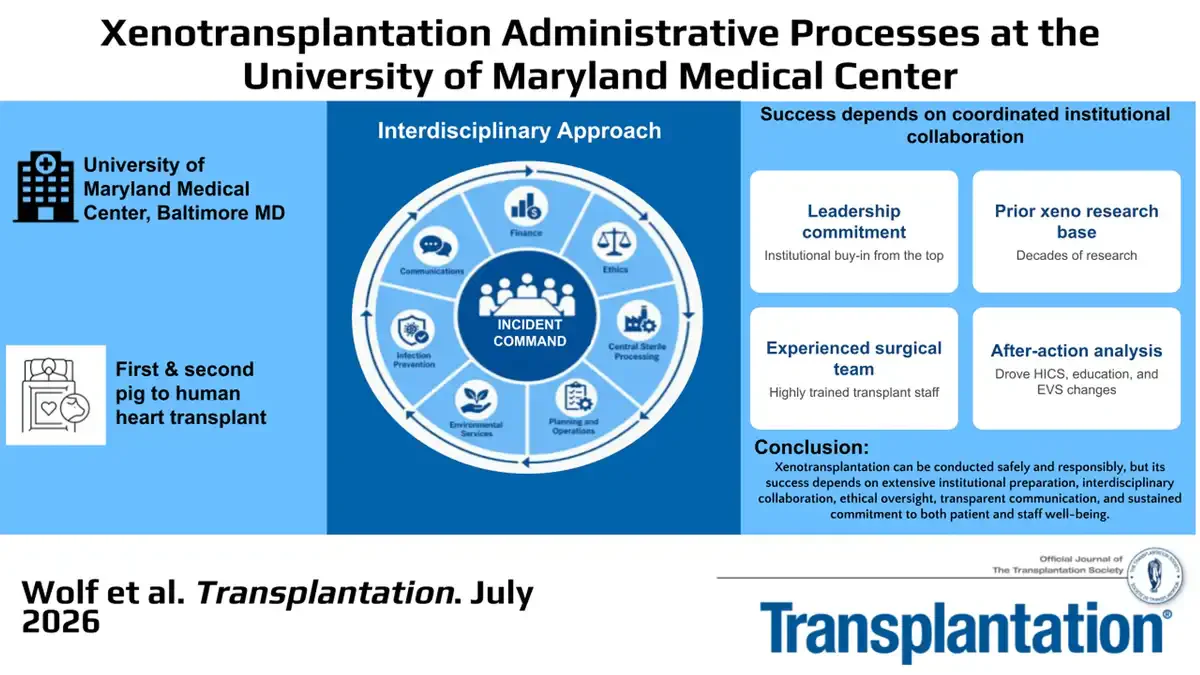
The University of Maryland’s initiative was characterized by comprehensive planning involving interdisciplinary collaboration among transplant surgeons, immunologists, infectious disease specialists, regulatory experts, ethicists, financial analysts, and operational managers. Key steps included:
Developing protocols aligned with FDA investigational new drug (IND) application requirements.
Establishing patient eligibility criteria emphasizing clinical urgency, ethical suitability, and informed consent capacity.
Implementing staff education programs covering xenotransplant biology, infection control, and procedural nuances.
Creating financial pathways to support the high costs associated with xenotransplant technology and patient care.
Planning for transparent internal and external communications to address public curiosity and concerns.
Key Findings and Operational Insights
The first two human cardiac xenotransplants validated the feasibility of translating experimental science into clinical practice. Institutional efforts revealed several critical operational domains:
1. Regulatory Navigation
Engaging proactively with the FDA was essential to obtain IND authorization, necessitating detailed preclinical data, risk mitigation strategies, and ongoing safety monitoring plans. The institution developed rigorous protocols for biological product handling, patient monitoring, and reporting adverse events, ensuring compliance and fostering regulatory trust.
2. Ethical Considerations in Patient Selection and Consent
Candidates were selected using stringent criteria prioritizing those lacking alternative durable options. Consent processes were augmented to encompass the novelty, potential risks, and unknowns inherent to xenotransplantation. Transparency about experimental status, possible infectious risks—including zoonoses—and long-term follow-up obligations was foundational.
3. Infection Control and Biosafety
Given xenotransplantation’s theoretical zoonotic risks, stringent infection prevention protocols were instituted. These included dedicated operating rooms, specialized sterilization methods, and post-transplant surveillance for emergent infections, in collaboration with infectious disease specialists.
4. Financial and Legal Frameworks
The program required alignment of funding sources encompassing institutional, federal, and philanthropic channels. Legal considerations involved intellectual property, liability coverage, and patient rights, necessitating close collaboration with legal advisors to craft agreements and consent documents that addressed these complex issues.
5. Operational and Staff Training
Educating multidisciplinary teams was critical to minimize errors and ensure consistency in patient management. Simulation-based training, multidisciplinary debriefings, and continuous education fostered a shared understanding of clinical and administrative nuances.
6. Communications and Public Engagement
Transparent and proactive communication strategies were essential to inform the public, address misinformation, and maintain trust. Institution-led briefings and media engagement underscored the commitment to ethical and scientific rigor.
Expert Commentary
These initial clinical experiences underscore that cardiac xenotransplantation is as much an administrative and ethical challenge as it is a scientific conquest. Expert consensus suggests ongoing refinement of institutional frameworks and enhanced integration of translational research findings will be vital. Challenges include scaling operations, long-term monitoring of recipients, and ensuring equitable access. Institutions must be vigilant to evolving regulatory landscapes and ethical debates, particularly regarding zoonotic risks and resource allocation.
Conclusion and Future Directions
The University of Maryland’s pioneering cardiac xenotransplants illustrate the necessity of robust, multidimensional institutional infrastructures to support such transformative therapies. This administrative playbook offers a replicable template addressing regulatory authorization, patient selection, infection control, financial stewardship, and communication—all essential pillars for safe and ethical clinical xenotransplantation. Continued interdisciplinary collaboration and iterative learning will be critical to optimize outcomes and expand this novel therapy’s reach, ultimately addressing the persistent organ shortage crisis.
Funding and Clinical Trials
Details on funding sources and clinical trial registrations were handled institutionally and in compliance with FDA requirements. No specific grant identifiers were provided in the source article.
References
Wolf JS, Marcozzi D, Gladwin M, Gatewood N, Siegel I, Miller C, Dove C, Conney N, Kotz D, Saharia K, Peartree LA, Williams MH, Silverman H, Sprinkel G, Wein EH, Griffith BP, Mohiuddin MM, Kinter SD, Jurczak MO, O'Malley BW Jr. Operationalizing Cardiac Xenotransplantation: An Administrative Playbook. Transplantation. 2026 Nov 10. doi: 10.1097/TP.0000000000005936. Epub ahead of print. PMID: 43008123.