Introduction and Context
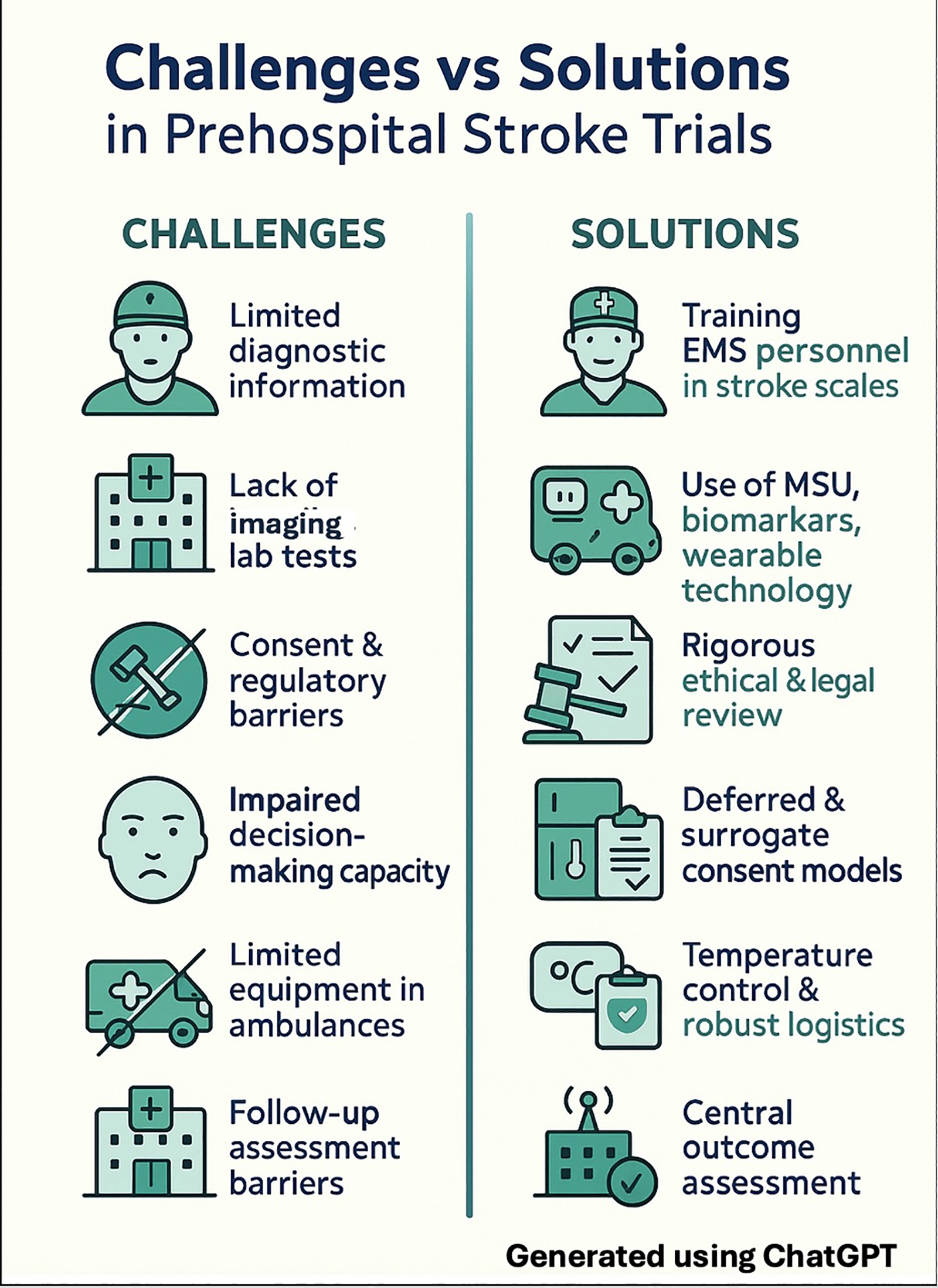
Acute ischemic stroke is one of the quintessential time-sensitive medical emergencies—every minute of ischemia costs neurons and functional outcome. Prehospital stroke research aims to push the time boundary further: delivering interventions or treatment strategies while patients are still in the ambulance, enabling ultraearly therapy and new approaches to triage. However, conducting robust randomized trials in conventional emergency medical services (EMS) brings operational, ethical, statistical, and technological challenges that differ from in-hospital research and from trials run on dedicated Mobile Stroke Units (MSUs).
In September 2026, an international panel led by Singh et al. published an expert consensus statement in Stroke: “Prehospital Stroke Treatment Trials in Conventional EMS Settings: An Expert Consensus Statement on Operational, Ethical, and Technological Priorities.” That statement synthesizes prior trial experience (including large prehospital RCTs), regulatory frameworks, and practical EMS realities to provide recommendations for investigators, funders, EMS systems, and institutional review boards (IRBs). This article summarizes the core recommendations and the implications for clinicians and researchers.