Net Ultrafiltration Rate and Mortality in Critically Ill CRRT Patients: The Crucial Role of Fluid Balance
Study Background
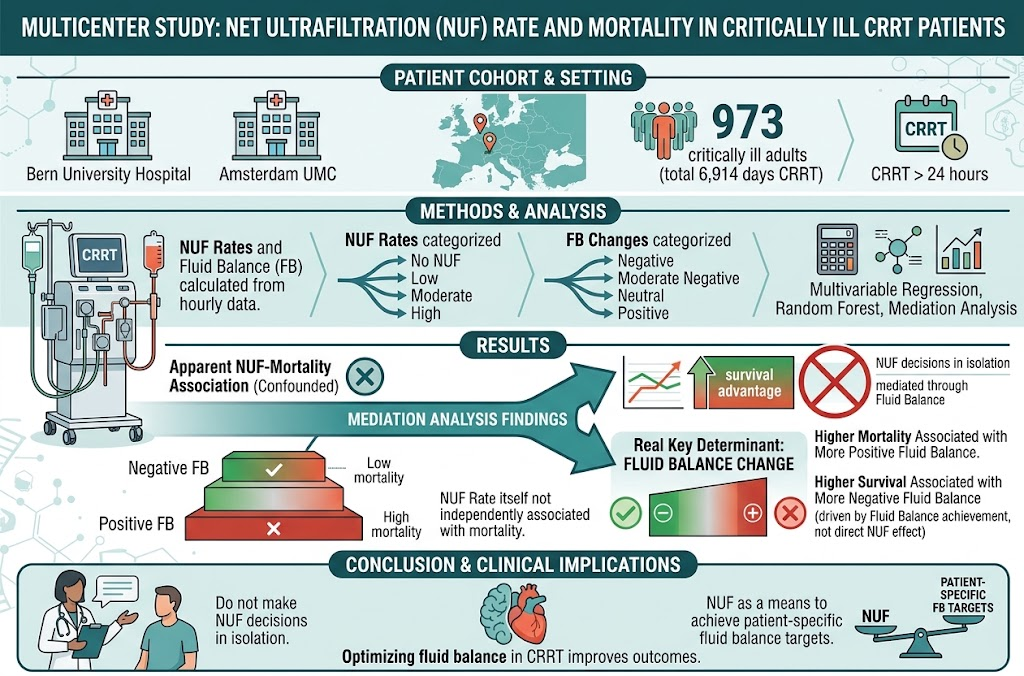
Continuous renal replacement therapy (CRRT) is a cornerstone supportive treatment for critically ill patients suffering from acute kidney injury, particularly in intensive care units (ICU). Ultrafiltration during CRRT serves as an important tool to remove excess fluid that commonly accumulates due to renal dysfunction, capillary leak, and aggressive fluid resuscitation in severe illness. Managing fluid overload is critical because it has been consistently correlated with worsened outcomes including increased mortality, impaired organ function, and prolonged ICU stays. Despite the frequent clinical use of net ultrafiltration (NUF) rates to guide fluid removal, the precise association between NUF rate, fluid balance changes, and patient-centered outcomes remains uncertain. Clinicians face the challenge of balancing adequate fluid removal without precipitating hemodynamic instability or hypovolemia. This study addresses the unmet need for clarity on how NUF rates relate independently to mortality, accounting for the dynamic changes in fluid balance during CRRT.
Study Design
Sign in free to continue reading
Create or use your MedXY account to unlock the complete article.
This article was created using several editorial tools, including AI, as part of the process. Human editors reviewed this content before publication.