We use cookies

Our website uses essential cookies and, with your consent, additional cookies to measure performance and improve our services. Cookie Policy.

You can change your choice at any time.

MMedXYNews
HomeVideos
MedXY AI/MedXY News/Section: Gastroenterology

Modulating MASLD Risk in PNPLA3I148M Carriers: The Role of Gut Microbiota and Ceramides
MedXY Editorial Team•Oct 10, 2026•Gastroenterology
ceramidesgut microbiotahepatic injuryMASLDPNPLA3I148M

Highlight

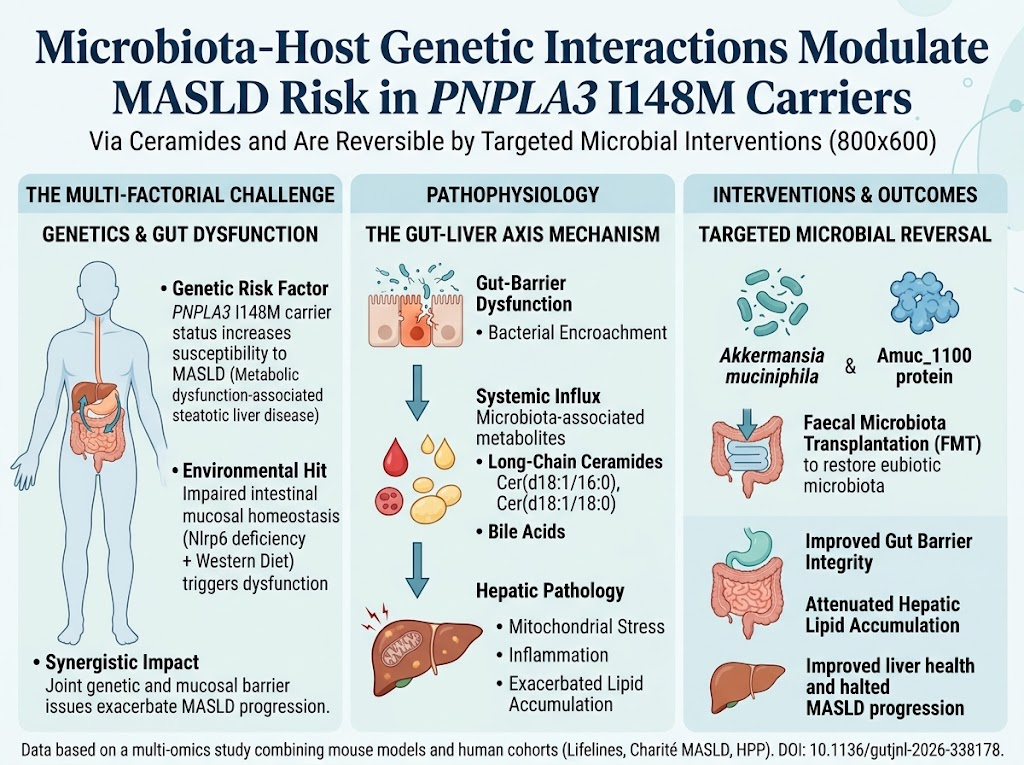
This study demonstrates that genetic susceptibility to MASLD, specifically in PNPLA3I148M carriers, is significantly influenced by the state of the gut microbiota and intestinal barrier function. Disruption of intestinal homeostasis amplifies liver injury via increased gut-derived metabolites such as ceramides. Importantly, restoring gut microbiota balance through fecal microbiota transplantation (FMT) and targeted use of the bacterium Akkermansia muciniphila or its membrane protein Amuc_1100 reversed hepatic damage, suggesting novel therapeutic avenues.

Study Background

MedXY registered readers

Sign in free to continue reading

Create or use your MedXY account to unlock the complete article.

This article was created using several editorial tools, including AI, as part of the process. Human editors reviewed this content before publication.

Related articles

Open language-specific specialty feeds and department pages.

Impact of Poor Food Access on Metabolic Dysfunction-associated Liver Disease and Frailty Among Liver Transplant Candidates: A Geospatial AnalysisPoor food access correlates with higher MASLD and frailty prevalence in liver transplant candidates, with geospatial clustering highlighting socioeconomic and environmental determinants impacting transplant candidacy and outcomes.Oct 15, 2026Gut Microbiota and Idiopathic Pulmonary Fibrosis: Associations with Disease Severity and Survival OutcomesEmerging evidence reveals gut microbiota profiles correlate with disease severity and survival in idiopathic pulmonary fibrosis, highlighting potential microbial biomarkers and treatment modifiers.Oct 11, 2026Head-to-Head Comparison of Empagliflozin and Dapagliflozin on Liver Outcomes in Type 2 Diabetes with MASLDA large Korean cohort study found similar hepatic benefits between empagliflozin and dapagliflozin in patients with type 2 diabetes and metabolic dysfunction-associated steatotic liver disease, with no difference in risk of severe liver comOct 5, 2026
Loading comments...
MedXY briefing

Get the free newsletter

Evidence-led clinical news, trends, and analysis—delivered to your inbox.

Ask MedXY AI

Most popular

Intimate Health
Five Benefits for Women Continuing Sexual Activity After Menopause
Intimate Health
Why Some Women Have a Strong Sex Drive—And Why Men Shouldn't Worry About It
Nursing & care
How often should a couple have sex?
Cardiology
Precision Medicine for Long QT Syndrome Type 2: Lumacaftor Corrects Trafficking Defects and Shortens QT Interval
General Surgery
Optimizing Postoperative Opioid Prescriptions After Intra-Abdominal Cancer Surgery: Comparing the 5x-Multiplier and 3-Tier Models
© 2026 MedXY
Contact usAbout usPrivacy PolicyMedXY story
Baseline Plasma Metabolites Predict Long-Term Glycemic Outcomes in Prediabetes: Insights from the PROP-ABC Study
This study identifies baseline plasma metabolites, specifically 2hr plasma glucose and ceramide C18:0/C18:1 ratio, as predictors of persistent prediabetes vs. normoglycemia following lifestyle intervention over 5 years.
Oct 5, 2026
Parental Obesity and the Adult Offspring’s Risk of Metabolic Dysfunction Associated Steatotic Liver Disease: Insights from a UK Birth Cohort StudyThis UK cohort study reveals that both maternal and paternal obesity before pregnancy significantly increase offspring’s risk of metabolic dysfunction associated steatotic liver disease (MASLD) by age 24, largely mediated by excess chSep 17, 2026
Intestinal Serotonergic Vagal Signaling: A Novel Link Between Gut Microbiota and Hypertension ManagementRecent research identifies intestinal serotonin 5-HT3a receptor signaling via vagal neurons as a key mediator of microbiota-induced hypertension, offering new insights into resistant hypertension and potential therapeutic targets.Sep 17, 2026