Incidence, Outcomes, and Risk Factors for Mortality in Patients With Sepsis in South Korea: Insights From a Nationwide Cohort Study and Related Evidence
Highlights
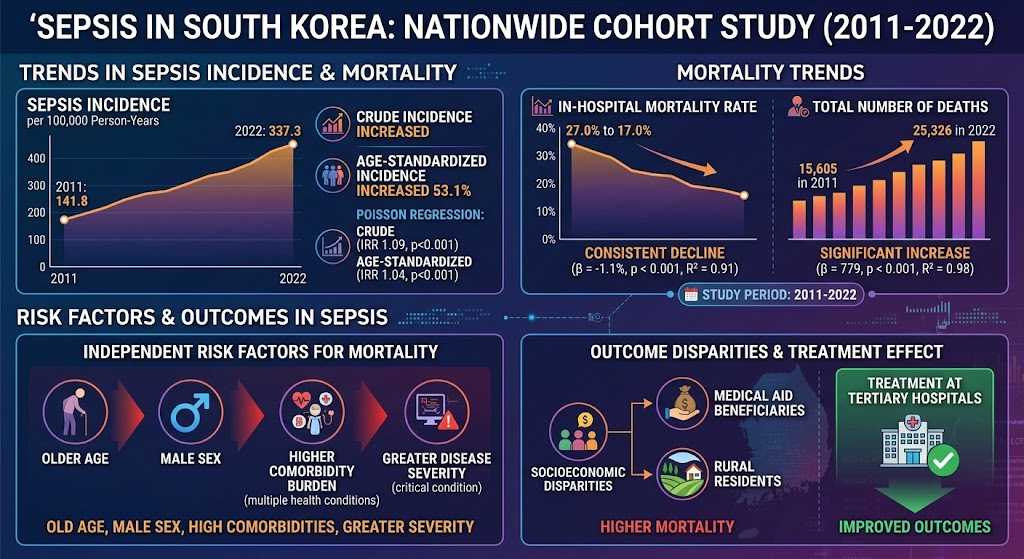
- Nationwide data reveal a significant increase in sepsis incidence in South Korea from 2011 to 2022, with crude incidence rate rising from 141.8 to 337.3 per 100,000 person-years.
- In-hospital mortality rates declined substantially over the same period, decreasing from 27.0% to 17.0%, despite an absolute increase in total deaths due to rising case volume.
- Older age, male sex, higher comorbidity burden, and greater disease severity are consistent independent risk factors for mortality; socioeconomic disparities persist, with higher mortality among medical aid beneficiaries and rural residents.
- Complementary studies highlight the impact of sepsis on long-term outcomes, importance of early antibiotic administration, and burden of resistant infections, informing comprehensive management strategies.
Background
MedXY registered readers
Sign in free to continue reading
Create or use your MedXY account to unlock the complete article.
This article was created using several editorial tools, including AI, as part of the process. Human editors reviewed this content before publication.