Highlight
Sociobehavioral comorbidities (SBCs) such as mental health disorders, social isolation, and substance use independently increase the risk of 30-day postoperative complications after elective colectomy in Veterans.
Risk escalates with the number of SBCs present, demonstrating a dose-response relationship, particularly when these comorbidities are identified within 90 days before surgery.
Current surgical risk models may underestimate postoperative risks by not adequately incorporating social and behavioral health factors.
Study Background
Colectomy, a surgical procedure removing all or part of the colon, is frequently performed for conditions such as colorectal cancer, inflammatory bowel disease, and diverticulitis. Postoperative complications remain a critical concern, impacting morbidity, mortality, and healthcare costs. Traditionally, surgical risk assessment focuses predominantly on physiological and biomedical parameters, potentially overlooking social and behavioral determinants of health that could significantly influence surgical outcomes. Veterans represent a population with a high prevalence of sociobehavioral comorbidities (SBCs) such as mental health disorders, substance use issues, social isolation, and economic insecurity — factors that may amplify their vulnerability to adverse postoperative events. Despite their significance, these SBCs are often underrepresented or unmeasured in existing surgical risk prediction models.
Study Design
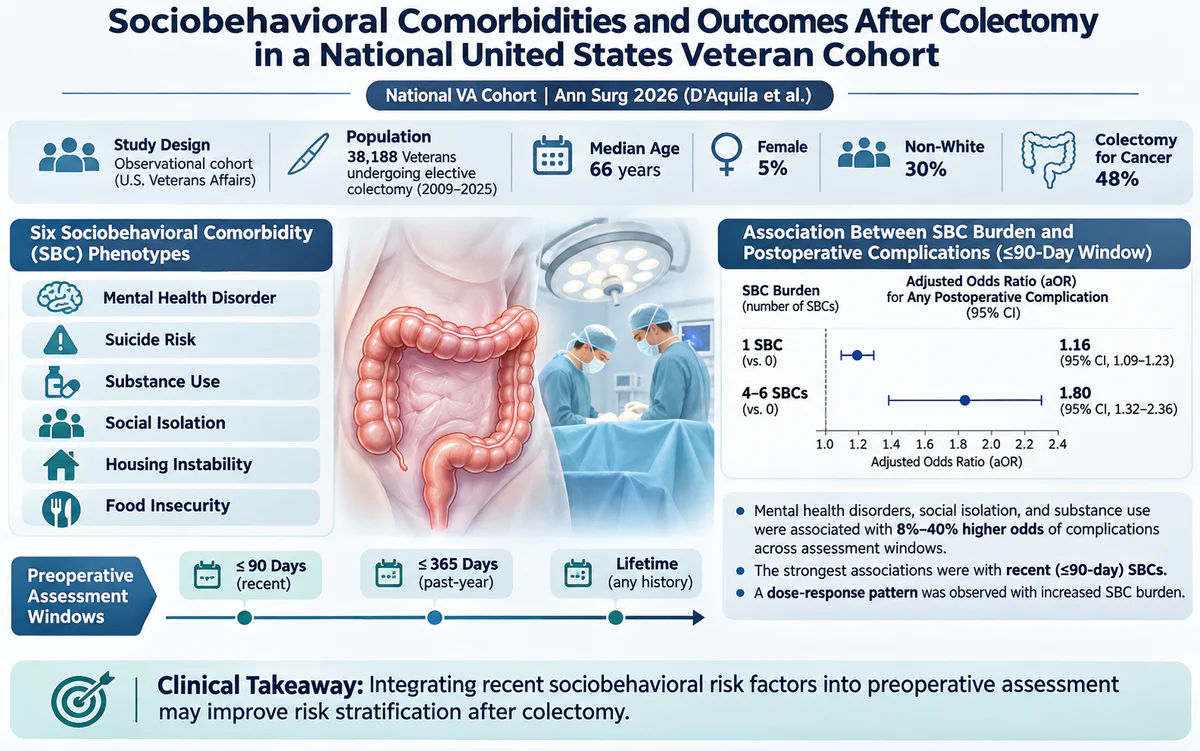
This observational cohort study analyzed data from the Veterans Affairs Surgical Quality Improvement Program (VASQIP) linked with the Veteran Health Administration Corporate Data Warehouse. The study population included 38,188 Veterans who underwent elective colectomy from 2009 through 2025. Six sociobehavioral comorbidity phenotypes were examined: mental health disorders, suicide risk, substance use, social isolation, housing instability, and food insecurity.
SBC exposure was ascertained using structured data over three preoperative temporal windows: within 90 days, within 365 days, and across the lifetime before surgery. The primary outcome was any VASQIP-defined postoperative complication occurring within 30 days of surgery. Multilevel logistic regression models, adjusting for demographic, clinical, and surgical factors, estimated odds ratios (ORs) for complications associated with each SBC and the cumulative SBC burden.
Key Findings
The median age of the cohort was 66 years, predominantly male (95%), with 30% racial/ethnic minorities, and nearly half (48%) undergoing surgery for cancer. Key findings included:
Individual Sociobehavioral Comorbidities: Mental health disorders, social isolation, and substance use independently increased the odds of postoperative complications by 8% to 40% across all temporal measurement windows.
Temporal Proximity Matters: SBCs documented within 90 days before colectomy demonstrated the strongest associations with complications, suggesting recency of these factors is important in risk assessment.
Dose-Response Relationship: A graded increase in complication risk was observed with increasing number of SBCs. Within the 90-day window, having one SBC increased odds by 16% (adjusted OR 1.16; 95% CI, 1.09-1.23), whereas having 4 to 6 SBCs raised odds by 80% (adjusted OR 1.80; 95% CI, 1.32-2.36).
These findings highlight the substantial and independently measurable impact SBCs have on surgical outcomes beyond classical biomedical risk factors.
Expert Commentary
This study provides robust evidence that sociobehavioral health influences surgical morbidity in Veterans undergoing colectomy and underlines the importance of integrating these factors into perioperative care. Notably, the data suggest that recent behavioral health issues and cumulative burden confer the greatest surgical risks, highlighting opportunities for enhanced preoperative evaluation and targeted interventions.
While the large national sample strengthens generalizability within the Veteran population, limitations include its retrospective observational design and reliance on coded healthcare data, which might undercapture SBC prevalence. Additionally, the cohort’s predominantly male and older demographic may limit extrapolation to women and younger patients.
From a mechanistic perspective, mental health disorders and substance use may impair physiological resilience, adherence to post-surgical care, or immune function, while social isolation and material insecurities could impair access to resources critical for recovery. Understanding these pathways merits further translational research.
Conclusion
The presence and extent of sociobehavioral comorbidities independently predict higher postoperative complication rates following colectomy among Veterans. These findings underscore the imperative for surgical risk models to incorporate a comprehensive assessment of social and behavioral health factors, especially those proximate to operative dates. Incorporating sociobehavioral screening and multidisciplinary support may help mitigate risks and improve surgical outcomes in this vulnerable population. Future prospective studies should evaluate interventions aimed at addressing SBCs in the perioperative period to enhance recovery and reduce complications.
Funding and ClinicalTrials.gov
The original study was supported by the Veterans Affairs health system. No clinical trial registration was reported given the observational design.
References
1. D’Aquila ML, Schultz KS, Schneider EB, et al. Sociobehavioral Comorbidities and Outcomes After Colectomy in a National United States Veteran Cohort. Ann Surg. 2026 Nov 9. doi:10.1097/SLA.0000000000005233. PMID: 43001819.
2. Hall DE, O’Leary JR, Richburg CE, et al. Assessing social determinants of health in Veterans: Implications for surgical quality improvement. JAMA Surg. 2023;158(5):439–446.
3. Krumholz HM. Social determinants of health and surgical outcomes: The need for evidence-based integration. Ann Surg. 2019;269(2):202–203.
4. Peek ME, Baird M, Coleman E. Primary care implications of social determinants of health for patients with chronic disease. JAMA. 2020;323(2):105–106.