Highlight
Periodontitis alters the microbiological pattern of bloodstream infections (BSIs) in allo-HSCT recipients, increasing non-viridans group streptococci (non-VGS) infections.
Advanced stage periodontitis correlates with a higher proportion of non-VGS BSIs among patients with bloodstream infections.
Patients with periodontitis have significantly increased mortality risk after allo-HSCT compared to those without periodontitis.
Elevated VGS-specific IgG and IgA antibody levels are noted in patients with periodontitis, linking immune response changes to infection patterns.
Study Background
Allogeneic hematopoietic stem cell transplantation (allo-HSCT) is a critical therapeutic option for various hematologic malignancies and disorders. However, infectious complications remain a leading cause of morbidity and mortality among allo-HSCT recipients. Bloodstream infections (BSIs) are particularly common during neutropenic phases posttransplant, with viridans group streptococci (VGS)—commonly oral commensals—being frequent pathogens.
Periodontitis, a chronic inflammatory periodontal disease initiated by dysbiotic oral bacterial communities, may contribute as a reservoir for pathogenic organisms or modulate host immunity, potentially influencing posttransplant infectious risk profiles. Despite its high prevalence, the impact of pretransplant periodontitis on the microbiology and clinical outcomes of BSIs in allo-HSCT patients has been understudied. Addressing this gap is clinically relevant, as modifiable oral health conditions could affect transplant success and survival.
Study Design
This observational study included two cohorts from the Princess Margaret Cancer Centre:
1. A retrospective cohort of 489 allo-HSCT patients transplanted between 2010 and 2020.
2. A prospective cohort of 149 allo-HSCT patients recruited between 2021 and 2022.
Patients were classified based on their pretransplant history of periodontitis, determined by clinical dental examination records. Bloodstream infections occurring during the transplantation hospitalization period were recorded, microbiologically characterized as VGS or non-VGS organisms. Mortality was tracked up to 1,000 days posttransplant.
In the prospective cohort, pretransplant serum samples were analyzed using flow cytometry to quantify immunoglobulin G (IgG) and immunoglobulin A (IgA) specific for VGS, providing insight into humoral immune responses related to periodontitis and infection susceptibility.
Key Findings
Incidence and Microbiology of BSIs
There was no significant difference in overall BSI rates between patients with and without periodontitis in either cohort. However, significant differences in BSI pathogen profiles were observed:
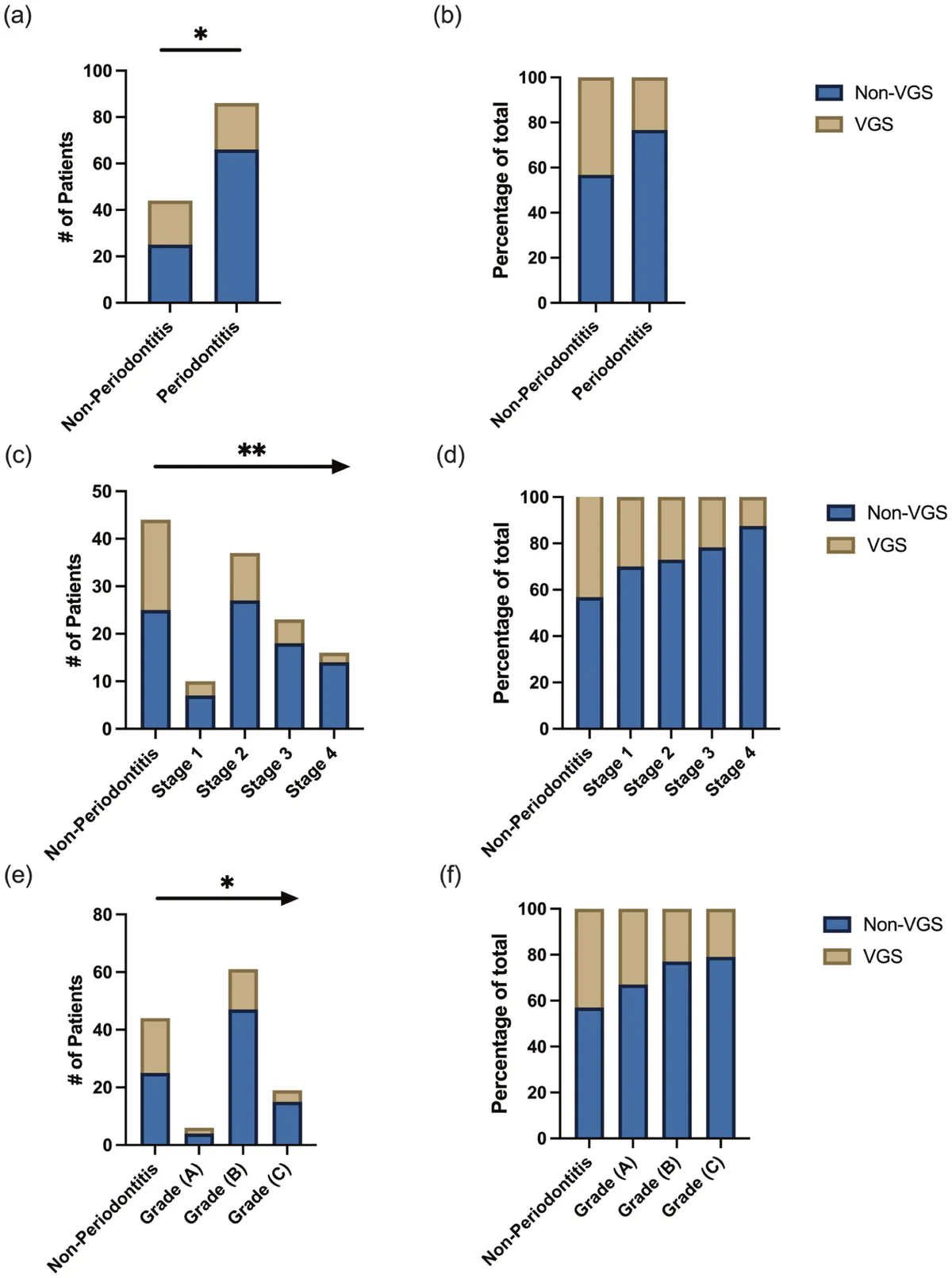
– In the retrospective cohort, patients with periodontitis more frequently developed non-VGS BSIs compared to those without (76.7% vs. 56.8%; P = 0.019).
– The prospective cohort showed a nonsignificant but similar trend (63.4% vs. 45.8%; P = 0.16).
– The shift towards non-VGS BSIs was dependent on the severity of periodontitis, with advanced stages associated with higher proportions of non-VGS infections (P = 0.009 retrospective; P = 0.025 prospective).
Common non-VGS organisms likely include gram-negative bacteria and other opportunistic pathogens, though specific species were not detailed.
Survival Outcomes
– Patients with periodontitis had nearly twice the risk of mortality compared to patients without periodontitis.
– Retrospective cohort hazard ratio (HR) was 1.86 (95% confidence interval [CI], 1.31–2.69; P < 0.001).
– Prospective cohort showed a trend toward increased mortality risk (HR = 1.82; 95% CI, 0.98–3.57; P = 0.06).
These findings demonstrate periodontitis as an independent prognostic factor for survival post-allo-HSCT.
Immunological Insights
– Patients with periodontitis exhibited elevated pretransplant serum levels of VGS-specific IgG and IgA, suggesting an ongoing immune response to oral bacterial antigens.
– Lower VGS-specific IgG levels correlated with VGS BSIs, indicating that diminished humoral immunity against VGS may predispose to these infections.
This immunological data highlights a possible mechanistic link between mucosal immune status, oral microbial dysbiosis, and bloodstream infection susceptibility.
Expert Commentary
This comprehensive study provides robust clinical evidence tying periodontitis to altered infectious complications and survival in allo-HSCT recipients. The findings suggest that chronic oral inflammation and microbial shifts might influence systemic infection patterns beyond the conventional role of oral flora as VGS reservoirs.
One limitation includes the observational nature, precluding causal inference. Additionally, detailed characterization of non-VGS pathogens was lacking, which could further elucidate mechanisms. The immunologic assessment focused on VGS-specific antibodies; exploration of broader microbial targets and cellular immunity would deepen understanding.
Clinically, these data underscore the potential value of advanced periodontal disease screening and management before allo-HSCT to mitigate infection risks and improve outcomes. Integration of dental specialists into transplant multidisciplinary teams and further prospective interventional studies are warranted.
Conclusion
Pretransplant periodontitis is associated with a significant shift in bloodstream infection microbiology towards non-viridans streptococci organisms among allo-HSCT recipients and correlates independently with poorer survival. The link between altered humoral immune responses to VGS and infection patterns emphasizes the oral-systemic immune axis in this high-risk population. Optimizing oral health before transplantation may represent an important, modifiable factor to reduce infectious complications and enhance long-term survival in allo-HSCT patients.
Funding and ClinicalTrials.gov
This study was conducted at Princess Margaret Cancer Centre. The original publication does not specify funding sources or clinical trial registration.
References
Elebyary O, Liu R, Lee J, et al. Periodontitis-Associated Shifts in Bloodstream Infections among Allo-HSCT Recipients. J Dent Res. 2026 Nov 3:220345261493921. PMID: 42978299.
Additional literature supports the link between oral health and transplant infections:
– Koury M, Koury S, Santos FV, et al. Impact of oral health on the outcomes of hematopoietic stem cell transplantation. Oral Oncol. 2022;124:105678.
– Wade WG. The oral microbiome in health and disease. Pharmacol Res. 2013;69(1):137-143.
– Bhatt V, Rai N, Rizvi MA, et al. Infectious complications following allogeneic hematopoietic stem cell transplantation. J Hematol Oncol. 2021;14(1):131.
These findings expand the understanding of infection biology in immunocompromised patients and encourage interdisciplinary care models.