MMedXYNews
HomeVideos
MedXY AI/MedXY News/Section: news

Impact of Ocular Proton Therapy on Corneal Subbasal Nerve Plexus in Uveal Melanoma: Longitudinal Confocal Microscopy Findings

MedXY Editorial Team•Oct 8, 2026•news
corneal confocal microscopycorneal nerve fiber densityocular proton therapysubbasal nerve plexusuveal melanoma
Highlight

  • Ocular proton therapy (OPT) for uveal melanoma markedly reduces corneal subbasal nerve plexus parameters including nerve fiber density and length.
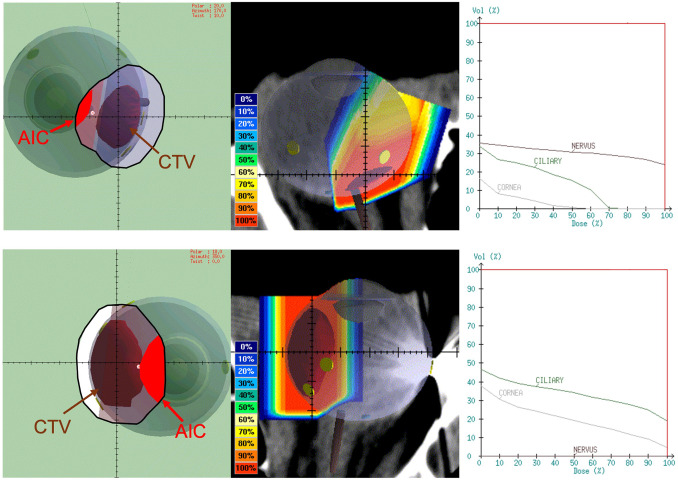
  • The extent of nerve loss correlates with clinical target volume, reflecting radiation exposure levels.
  • Despite structural nerve alterations, corneal sensitivity remains largely unchanged over 12-month follow-up.
  • Patient-reported symptoms show limited correlation with nerve fiber loss, highlighting a discrepancy between morphological and functional outcomes.

Study Background

MedXY registered readers

Sign in free to continue reading

Create or use your MedXY account to unlock the complete article.

This article was created using several editorial tools, including AI, as part of the process. Human editors reviewed this content before publication.

Related articles

Open language-specific specialty feeds and department pages.

Prognostic Value of 15-GEP/PRAME Assay With or Without Confirmatory Cytopathology in Uveal Melanoma: Insights From the Collaborative Ocular Oncology Group Study 2This study validates the prognostic accuracy of the 15-gene expression profiling (15-GEP) and PRAME assay in uveal melanoma patients irrespective of confirmatory cytopathology, supporting its use in clinical management when cytopathology isOct 20, 2026Longitudinal Effects of Ocular Proton Therapy on the Corneal Subbasal Nerve Plexus in Uveal Melanoma PatientsOcular proton therapy in uveal melanoma induces significant reductions in corneal nerve parameters with partial recovery by 12 months, while corneal sensitivity remains stable and patient-reported symptoms show limited correlation with struOct 9, 2026One-Year Tumor Volume Regression as a Predictor of Survival in I-125 Plaque Brachytherapy for Posterior Uveal MelanomaTumor volume regression at one year post-I-125 plaque brachytherapy significantly predicts overall survival in posterior uveal melanoma, with intermediate regression showing the best outcomes.Aug 4, 2026
Loading comments...
MedXY briefing

Get the free newsletter

Evidence-led clinical news, trends, and analysis—delivered to your inbox.

Ask MedXY AI

Most popular

Intimate Health
Five Benefits for Women Continuing Sexual Activity After Menopause
Intimate Health
Why Some Women Have a Strong Sex Drive—And Why Men Shouldn't Worry About It
Nursing & care
How often should a couple have sex?
Cardiology
Precision Medicine for Long QT Syndrome Type 2: Lumacaftor Corrects Trafficking Defects and Shortens QT Interval
General Surgery
Optimizing Postoperative Opioid Prescriptions After Intra-Abdominal Cancer Surgery: Comparing the 5x-Multiplier and 3-Tier Models
© 2026 MedXY
Contact usAbout usPrivacy PolicyMedXY story
MBD4 Germline Variants Mark a Strong Predisposition to Uveal Melanoma, Supporting Broad Genetic Screening
A large French case series found pathogenic or likely pathogenic germline MBD4 variants in 23 of 896 patients with uveal melanoma, corresponding to a 31-fold relative risk versus the general population.
May 4, 2026