How Respiratory Mechanics Shapes Ventilator Settings and Outcomes in Acute Brain Injury Patients
Highlight
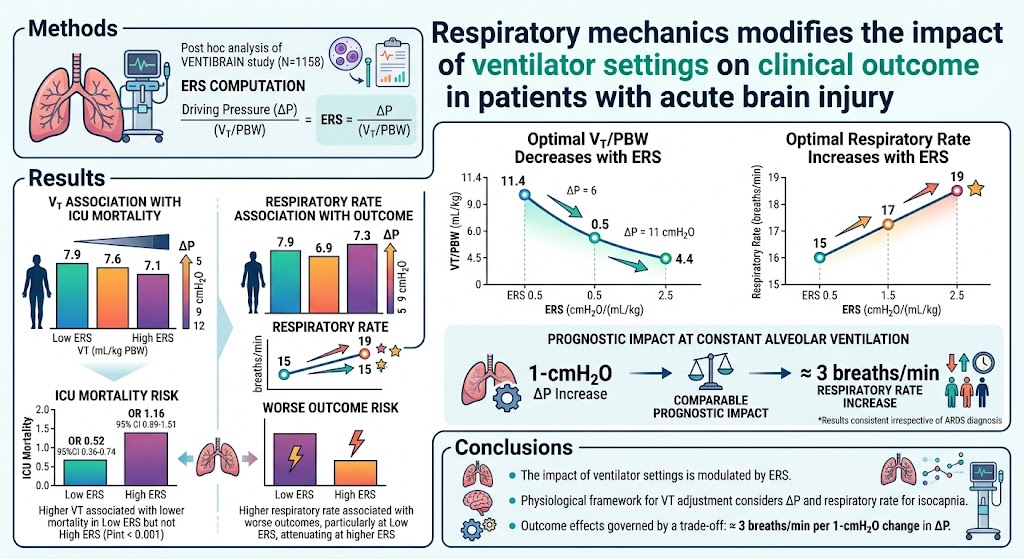
- Respiratory system elastance (ERS) significantly modifies how tidal volume (VT) and respiratory rate influence clinical outcomes in acute brain injury patients on mechanical ventilation.
- Higher VT is linked to lower ICU mortality in patients with low ERS, but this benefit dissipates in those with high ERS.
- An increased respiratory rate correlates with worse outcomes, particularly at low ERS; this association weakens as elastance increases.
- Optimal ventilator settings should balance driving pressure (ΔP) and respiratory rate to maintain adequate alveolar ventilation while minimizing harm.
Study Background
MedXY registered readers
Sign in free to continue reading
Create or use your MedXY account to unlock the complete article.
This article was created using several editorial tools, including AI, as part of the process. Human editors reviewed this content before publication.