From PCOS to PMOS: Transforming Understanding and Care in Women’s Reproductive Health
Introduction
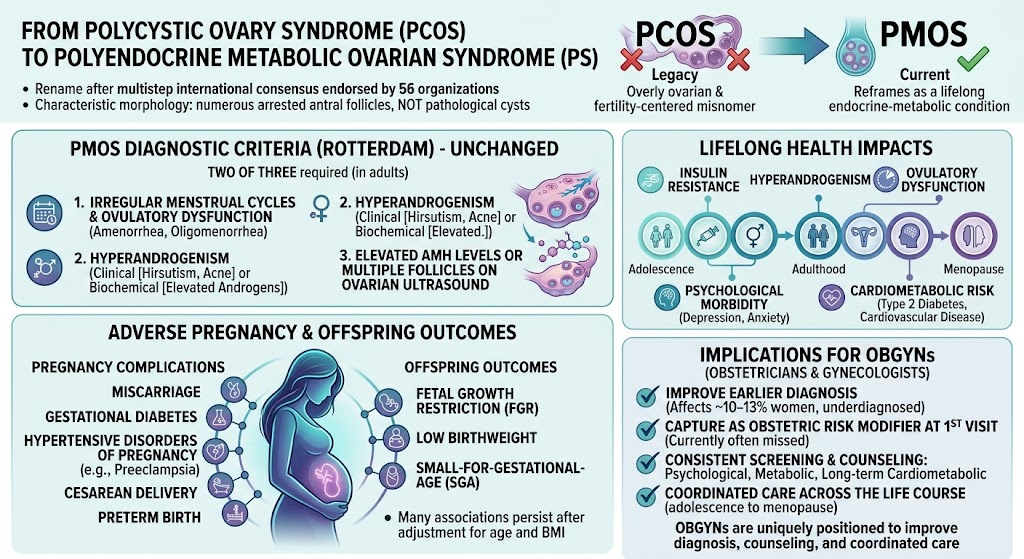
The terminology used to define medical conditions shapes both clinical understanding and patient care priorities. Polycystic ovary syndrome (PCOS) has long been recognized as a common endocrine disorder affecting women of reproductive age. However, the traditional nomenclature has contributed to misconceptions regarding its pathophysiology and clinical focus. Recently, an international consensus endorsed by 56 professional and patient organizations has introduced the term polyendocrine metabolic ovarian syndrome (PMOS) to replace PCOS. This redefinition emphasizes the systemic endocrine-metabolic nature of the condition beyond ovarian morphology alone, thereby expanding the clinical perspective and care strategies for affected individuals.
The Clinical and Epidemiologic Context
PMOS affects an estimated 10% to 13% of women in their reproductive years worldwide, making it one of the most prevalent endocrine disorders in this demographic. Despite its high prevalence, the condition remains underdiagnosed and inconsistently documented in routine clinical practice, particularly within obstetric and gynecologic care settings. The legacy term PCOS, anchored in the misinterpretation of “polycystic” ovarian morphology, has inadvertently narrowed the focus to gynecologic and fertility outcomes, overshadowing broader metabolic and cardiometabolic risks that manifest across the lifespan. The reframing as PMOS aims to dissolve these misconceptions and drive a more holistic, multidisciplinary approach to diagnosis, management, and counseling.
Rationale for Renaming: From ‘PCOS’ to ‘PMOS’
The term PCOS originally highlighted “polycystic” ovarian morphology, characterized by multiple round antral follicles visible on ultrasound. However, these follicles are arrested in development, not pathologic cysts, leading to misunderstandings about ovarian pathology. Moreover, PCOS nomenclature has emphasized fertility and reproductive symptoms while marginalizing the systemic endocrine disruptions and metabolic comorbidities integral to the syndrome.
The new acronym, PMOS, underscores the polyendocrine and metabolic disturbances accompanying the ovarian findings. These include insulin resistance, hyperandrogenism, and ovulatory dysfunction alongside psychological morbidity and increased long-term cardiometabolic risks. This terminological shift supports a more accurate characterization and encourages broader clinical awareness, especially for obstetricians and gynecologists who frequently serve as primary points of care for affected women.
Diagnostic Criteria and Clinical Framing
Importantly, the diagnostic criteria for the syndrome remain unchanged. Diagnosis requires the presence of two out of three features in adult women:
- Irregular menstrual cycles and ovulatory dysfunction
- Clinical or biochemical hyperandrogenism (e.g., hirsutism, acne, elevated serum androgens)
- Elevated anti-Müllerian hormone (AMH) levels or ultrasound evidence of multiple follicles
What shifts fundamentally is the clinical frame: recognizing PMOS as a systemic polyendocrine-metabolic disorder rather than a purely ovarian or fertility-centric problem.
This reframing informs broader risk assessment, including metabolic syndrome features and psychological health, guiding tailored therapeutic strategies and preventive care throughout a woman’s reproductive lifespan and beyond.
Implications for Obstetric and Gynecologic Practice
For obstetricians and gynecologists, embracing PMOS as the comprehensive syndrome it is has pronounced implications:
- Early and Accurate Diagnosis: OBGYNs are often the first clinicians to evaluate and diagnose reproductive-age women with PMOS features. Enhanced awareness will foster timely identification through routine history taking, examination, and appropriate biochemical and imaging workup.
- Risk Recognition for Pregnancy Complications: PMOS is increasingly recognized as a significant risk factor for adverse obstetric outcomes, including miscarriage, gestational diabetes mellitus (GDM), hypertensive disorders of pregnancy, cesarean delivery, preterm birth, fetal growth restriction, and low birthweight or small-for-gestational-age infants. Many of these risks persist even after adjusting for age and body mass index, emphasizing the independent contribution of PMOS-related endocrine-metabolic dysregulation.
- Incorporation into Obstetric Risk Assessment: Despite well-established associations, PMOS is not routinely recorded as a risk modifier at the initial obstetric visit nor embedded in antenatal decision-support algorithms. Integrating PMOS into standardized risk stratification tools can optimize surveillance and management during pregnancy.
- Comprehensive Counseling and Screening: Beyond obstetrics, OBGYNs should implement consistent screening for psychological morbidity, insulin resistance, and cardiometabolic risk factors both during reproductive years and as women transition through menopause. Counseling should address lifestyle interventions, potential pharmacotherapies, and long-term monitoring to mitigate morbidity.
- Coordinated Multidisciplinary Care: Given PMOS’s multisystem impact, collaboration with endocrinologists, nutritionists, mental health professionals, and primary care providers is critical to deliver holistic care tailored to patient needs.
Mechanistic Insights and Biological Plausibility
PMOS’s multisystem involvement mirrors complex interactions among genetic predisposition, environmental influences, and metabolic derangements. Key pathophysiological features include:
- Insulin Resistance: Central to PMOS, insulin resistance exacerbates hyperandrogenism by stimulating ovarian theca cells and reducing sex hormone-binding globulin synthesis, amplifying free androgen levels.
- Hyperandrogenism: Elevated androgens disrupt folliculogenesis, leading to anovulation and the characteristic arrested follicular growth. Androgens also affect adipose tissue distribution and metabolic regulation.
- Chronic Low-Grade Inflammation: Inflammatory mediators contribute to endothelial dysfunction, metabolic dysregulation, and pregnancy complications such as preeclampsia.
- Neuroendocrine Dysregulation: Hypothalamic-pituitary-ovarian axis alterations impact reproductive cyclicity while potentially influencing mood and psychological health.
The integration of these biological mechanisms underscores the rationale for shifting clinical focus beyond ovarian morphology and reproductive symptoms alone.
Limitations and Future Directions
Although the consensus renaming to PMOS is promising, adoption will require widespread education and updating of clinical guidelines. Studies are needed to validate new diagnostic algorithms incorporating metabolic parameters, evaluate interventions targeting systemic features, and assess the impacts of holistic management approaches on obstetric and long-term outcomes.
Moreover, existing epidemiologic and mechanistic research should be deepened to elucidate variabilities among racial, ethnic, and socioeconomic groups.
The legacy term PCOS remains embedded in medical education and literature, so transitional efforts should clearly communicate the reasons for change to healthcare providers and patients to avoid confusion while enhancing patient engagement and adherence.
Conclusion
Rebranding polycystic ovary syndrome as polyendocrine metabolic ovarian syndrome represents a pivotal shift in understanding a common yet complex female endocrine disorder. For obstetricians and gynecologists, this change reframes clinical priorities from a narrow ovarian and fertility-centric perspective to a broad, systemic endocrine-metabolic syndrome with significant reproductive and lifelong health implications.
Integrating PMOS awareness into obstetric practice facilitates early diagnosis, comprehensive risk stratification for pregnancy complications, and multidisciplinary care approaches that address psychological, metabolic, and cardiovascular risks. Ultimately, this new clinical paradigm supports improved health outcomes across the lifespan in women affected by this multifaceted syndrome.
References
1. Khomami MB, Hoeger KM, Huddleston H, Mahalingaiah S, Teede HJ, Dokras A. From Polycystic Ovary Syndrome (PCOS) to Polyendocrine Metabolic Ovarian Syndrome (PMOS): What Obstetricians and Gynecologists Need to Know. Am J Obstet Gynecol. 2026 Aug 28. PMID: 42665241.
2. Teede HJ, Misso ML, Costello MF, et al. Recommendations from the international evidence-based guideline for the assessment and management of polycystic ovary syndrome. Hum Reprod. 2018;33(9):1602-1618.
3. Moran LJ, Misso ML, Wild RA, Norman RJ. Impaired glucose tolerance, type 2 diabetes and metabolic syndrome in polycystic ovary syndrome: a systematic review and meta-analysis. Hum Reprod Update. 2010;16(4):347-363.
4. Shah D, Missmer SA. Polycystic Ovary Syndrome and Pregnancy Complications. Semin Reprod Med. 2022;40(4):233-244.
This article was created using several editorial tools, including AI, as part of the process. Human editors reviewed this content before publication.