Introduction
Surgical randomized controlled trials (RCTs) have been pivotal in transforming treatment paradigms in gynecologic oncology. These trials have redefined surgical extent, nodal assessment strategies, and the integration of multimodality therapies. However, achieving meaningful clinical impact extends beyond the initial publication of trial results. Unlike pharmacologic interventions, the effectiveness and safety of surgical procedures are intrinsically tied to operator skill, institutional infrastructure, and coordinated perioperative care. This complexity underscores the necessity to treat implementation and sustainability of surgical innovations as distinct research phases to ensure real-world effectiveness without compromising patient outcomes or equity.
Highlighting Core Challenges in Implementation
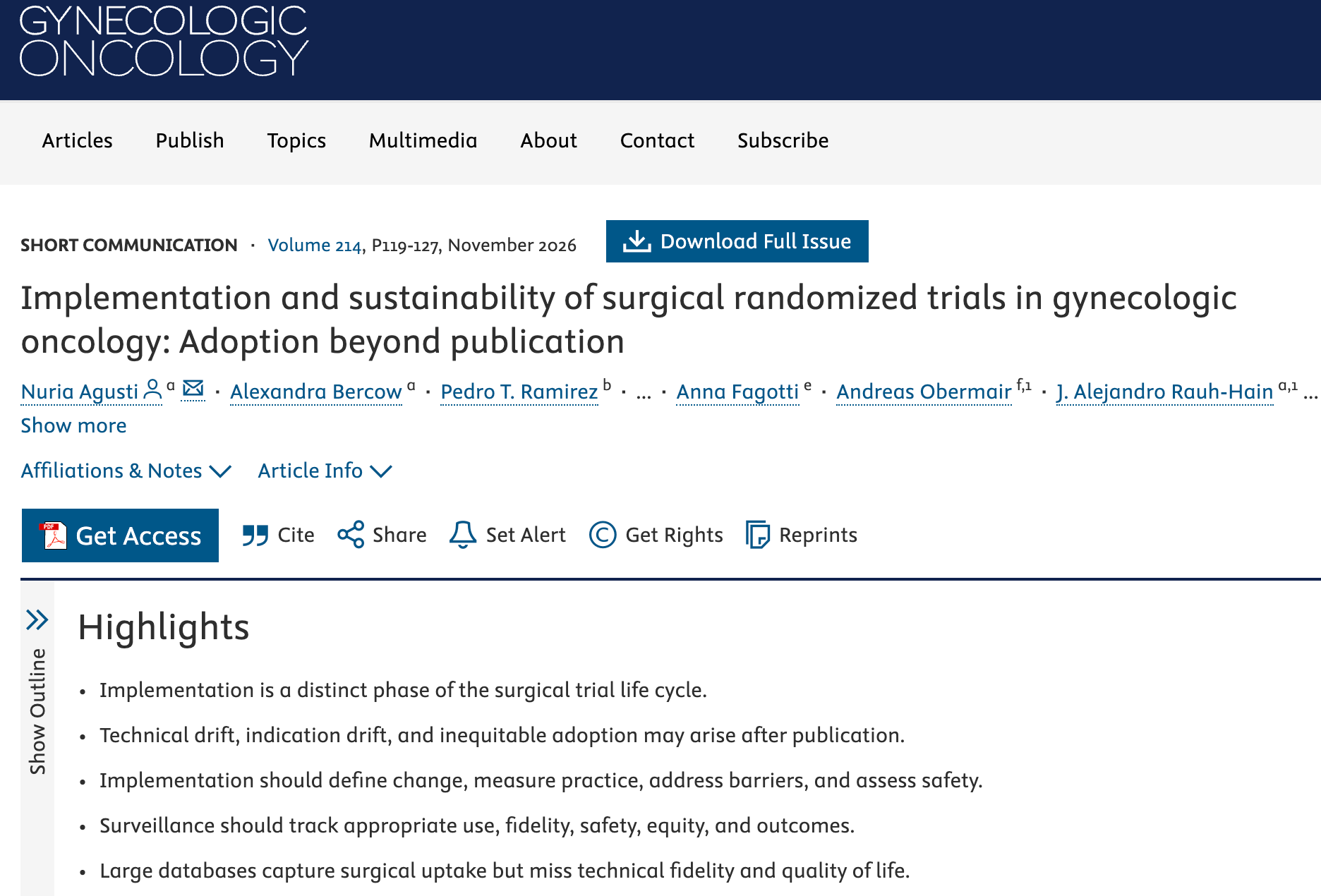
Surgical trials in gynecologic oncology frequently explore de-escalation of procedures or investigate technically demanding innovations. Post-trial, the clinical environment often changes, leading to risks such as technical drift (alterations in how a procedure is performed), indication drift (extension beyond validated patient populations), and heterogeneous adoption across providers and settings. For example, extending de-escalated surgery beyond the tightly controlled criteria used in trials may result in undertreatment and worse outcomes. Conversely, widespread adoption of new complex surgeries without adequate expertise or infrastructure can increase morbidity. Moreover, disparities in access to experienced surgeons, diagnostic imaging, pathology, molecular testing, and perioperative support accentuate these risks and may propagate treatment inequities.
Essential Elements in the Implementation Phase
To responsibly translate surgical trial evidence into practice, trial publications must comprehensively define the conditions under which outcomes were achieved. This includes operator credentialing, institutional capabilities, patient selection criteria, and perioperative protocols. Formal credentialing programs and operative standards serve as foundational safeguards to ensure procedural fidelity and minimize variation. Additionally, developing risk-appropriate, evidence-based guidelines guides clinicians in applying innovations selectively and appropriately. Structured education and dissemination activities can promote uniform understanding of indications and technique nuances, further supporting safe adoption.
Post-Implementation Surveillance: Monitoring Effectiveness and Equity
After evidence sufficiently resolves clinical equipoise, it is critical to monitor whether effective surgical approaches are adopted and ineffective or harmful ones abandoned. Surveillance should assess technical adherence, safety profiles, equity in patient access, and patient-centered outcomes. Large-scale secondary databases provide valuable data on procedure utilization, perioperative complications, and patterns of care at the population level. However, they lack granular clinical details necessary to evaluate appropriateness, detailed surgical technique, long-term oncologic outcomes, recurrence, and quality-of-life metrics.
Therefore, a multilevel surveillance strategy is essential. Combining big data with targeted prospective clinical registries, detailed procedural audits, and patient-reported outcome measures ensures a comprehensive assessment. This approach enables detection of emerging safety signals, underuse or overuse prompted by indication drift, and inequities in access or outcomes.
Implications for Future Surgical Trial Designs
Forethought on implementation and sustainability should be embedded within the design of surgical RCTs. Trials should predefine eligibility criteria, technical nuances, and infrastructure requirements to facilitate later translation. Incorporating quality assurance mechanisms and collecting data amenable to post-trial surveillance enables smoother transitions to real-world practice. Collaboration between trialists, surgical societies, institutional leadership, and payers can foster frameworks for credentialing and surveillance, ensuring innovations benefit patients broadly and safely.
Expert Commentary
Leading experts emphasize that surgical innovation must not only demonstrate efficacy in controlled trials but also ensure reproducibility and safety across diverse clinical environments. Dr. Pedro Ramirez notes, “The true test of a surgical trial’s success is its sustained adoption without compromising patient outcomes or equity.” Echoing this, consensus guidelines now increasingly integrate implementation metrics as quality indicators for surgical oncology care. Nonetheless, variability in resources globally remains a persistent barrier, requiring focused efforts to broaden infrastructural support.
Conclusion
The impact of surgical randomized trials in gynecologic oncology hinges on sustained and equitable implementation beyond publication. Recognizing implementation as an active, structured research phase with defined credentialing, standardized operative protocols, and robust post-implementation surveillance is critical. By adopting a multilevel monitoring framework that blends population data with detailed clinical and patient-reported information, the community can ensure technical fidelity, safety, and equitable access. Ultimately, this comprehensive approach safeguards that surgical innovations deliver consistent, quality outcomes to the appropriate patients in real-world settings.
References
1. Agusti N, Bercow A, Ramirez PT, et al. Implementation and sustainability of surgical randomized trials in gynecologic oncology: Adoption beyond publication. Gynecol Oncol. 2026;214:119-127. doi:10.1016/j.ygyno.2026.10.020